

Expert Insights: Key Takeaways
- DSD256 support is the clearest format differentiator in the H20 Ultra's spec sheet for listeners who keep a local hi-res library.
- The RT6862/RT6863 amplifier stage supports both 4.4mm balanced and 3.5mm single-ended listening, giving users flexibility across different wired headphones.
- For CD-ripping enthusiasts building a lossless local library: the H20 Ultra ships with an included 128GB microSD card and supports microSD cards up to 512GB, so it can hold a substantial FLAC library within the model's supported card and song-count limits.
- Two-way LDAC Bluetooth creates a genuinely usable wireless chain for home listening — not a checkbox feature. Pair with LDAC-capable wireless headphones and the ES9038Q2M DAC still handles conversion rather than the Bluetooth receiver chip.
Why the H20 Ultra Deserves a Serious Look
If you've been searching for a true hi-res DAP with DSD decoding that doesn't compromise on build quality or output power, the HIFI WALKER H20 Ultra Hi-Res Audio Player lands squarely in the conversation. This is a flagship-grade digital audio player engineered from the ground up for audiophiles who demand the real thing — native DSD256, an ESS ES9038Q2M DAC, 4.4mm balanced output, and a zinc-alloy chassis that feels like it was machined rather than assembled.
In this review, we go deep on what the H20 Ultra actually does well: its DAC architecture, real-world DSD performance, USB-DAC flexibility, and why the Hi-Res positioning on this unit is earned, not marketing. Whether you're curating a lossless local library, ripping a CD collection, or flying long-haul with demanding planar headphones, this piece is written for you — the listener who already knows what SNR and balanced drive mean.

- ►1. Why the H20 Ultra Deserves a Serious Look
- ►2. DAC Architecture: ES9038Q2M + Dual Amplifier Stage
- ►3. DSD256 & PCM 768kHz: Real-World Format Handling
- ►4. Zinc-Alloy Build & Physical Controls: Built to Last
- ►5. USB-DAC Mode: Integrating the H20 Ultra Into a Desktop Rig
- ►6. Battery Life, Storage & Wireless: The Practical Flagship
- ►7. Hi-Res Positioning & Who This Player Is Really For
- ►8. Best Bundle: H20 Ultra + A20Pro — Ready to Audition Immediately
DAC Architecture: ES9038Q2M + Dual Amplifier Stage
The heart of the HIFI WALKER H20 Ultra Hi-Res Audio Player is the ESS ES9038Q2M — a chip that appears in desktop-class reference equipment. HIFI WALKER pairs it with a dual RT6862/RT6863 amplifier architecture, delivering a clean, separated power path that keeps noise floors low even at high output levels. This is not a rebadged consumer chip solution; it's a deliberate signal-chain decision.
What the ES9038Q2M Brings
- Native DSD256 decoding — DSD256 support
- PCM support up to 768kHz / 32-bit
- Ultra-low harmonic distortion floor
- Separate I/Q signal paths for stereo integrity
How HIFI WALKER Implements It
- Dual RT6862/RT6863 amp stage for both output jacks
- up to 380mW/32Ω via 4.4mm balanced — for suitable balanced headphones
- FPGA-clocked native DSD path (no software conversion)
- USB DAC I/O mode for desktop integration
The FPGA-clocked DSD path deserves special mention. Many budget players use different DSD implementations. The H20 Ultra's FPGA handles native DSD256 directly — the bitstream goes to the DAC unmodified. For listeners who've spent time building a DSD library from SACDs or high-resolution downloads, this distinction is audible and meaningful.
DSD256 & PCM 768kHz: Real-World Format Handling
Format support on a DAP only matters if the implementation is clean. On the H20 Ultra, native DSD256 playback is designed for local hi-res file playback, including DSD256 support in the listed specification. PCM up to 768kHz/32-bit means the unit is broad enough for common hi-res music libraries..
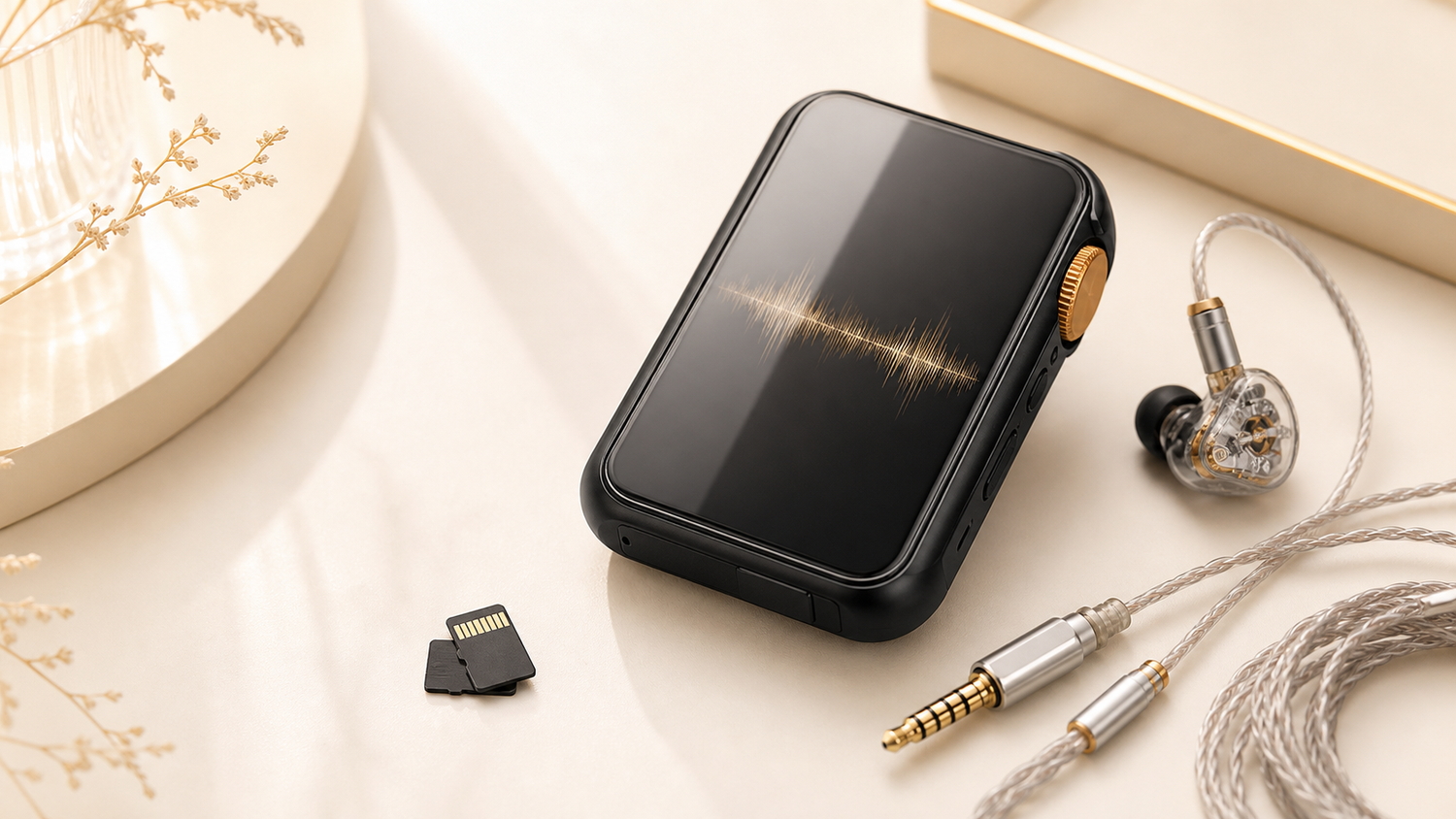
For audiophiles who've digitized a CD or SACD collection, the H20 Ultra handles the entire format spectrum without requiring multiple devices. Load your DSD files onto the the included 128GB card or a supported microSD card up to 512GB, organize by album, and the 4-inch touchscreen makes library navigation genuinely usable — not an afterthought.

Zinc-Alloy Build & Physical Controls: Built to Last
Build quality on a flagship DAP is not cosmetic — it's structural confidence. The H20 Ultra uses a CNC-machined aluminum body with a 9H hardness glass back. The zinc-alloy construction means the chassis doesn't flex under pressure, doesn't scratch from pocket carry, and doesn't feel like consumer electronics. It feels like a measuring instrument.
Physical Build Highlights
- CNC aluminum body — no plastic panels
- 9H tempered glass back — scratch-resistant
- Zinc-alloy frame with tight tolerance fits
- ALPS crown volume knob — tactile and precise
Control & Interface
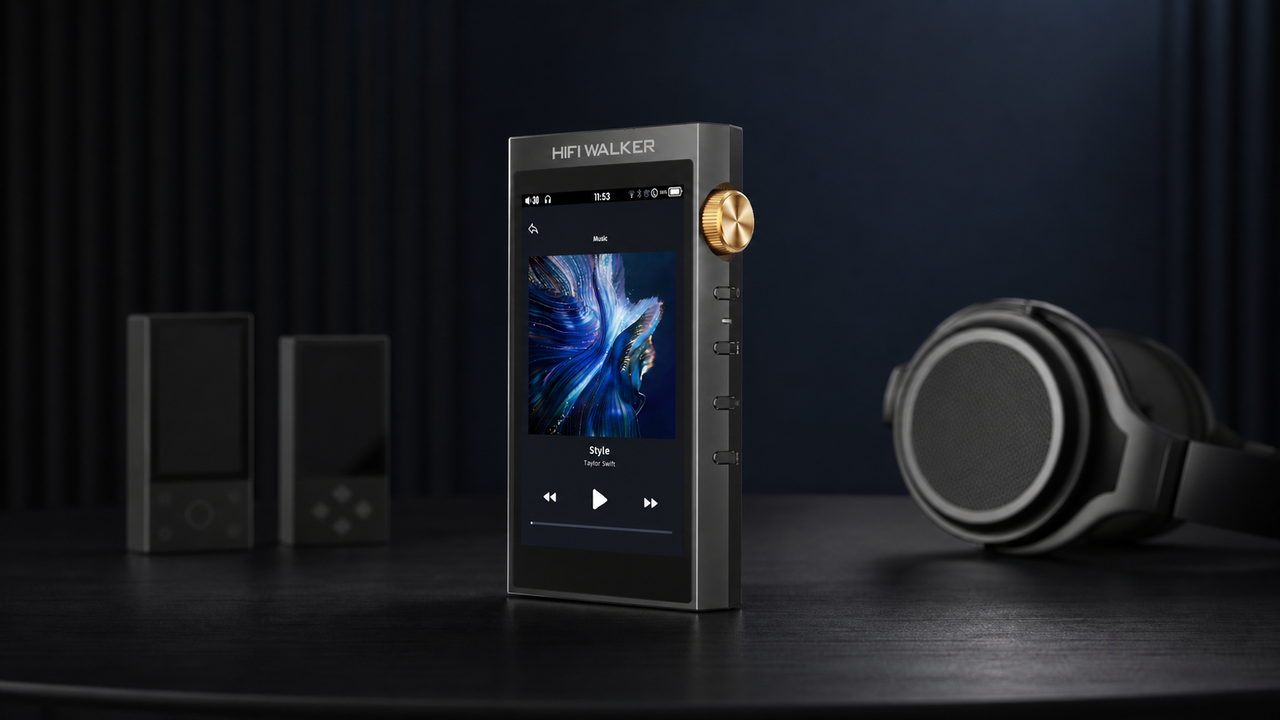
- 4-inch touchscreen for library navigation
- ALPS hardware volume knob — zero digital attenuation artifacts
- Physical playback buttons for eyes-free control
- Ideal for long-haul flights: no screen-wake needed
The ALPS crown volume knob is a detail that experienced listeners will appreciate immediately. Hardware volume control means the attenuation happens before the DAC output stage — you're not degrading the digital signal to lower volume. Combined with the physical playback buttons, the H20 Ultra is fully operable without looking at the screen: useful at 38,000 feet in a dark cabin, or when the player is in a jacket pocket during a long walk through a record collection listening session at home.
USB-DAC Mode: Integrating the H20 Ultra Into a Desktop Rig
One of the most undervalued features on the H20 Ultra is its USB DAC I/O mode. Connect it to a desktop or laptop via USB-C, and the H20 Ultra becomes a standalone DAC/amp — offloading audio processing from the host machine's integrated sound to the ES9038Q2M chipset. For listeners who work at a desk and want reference-quality headphone output without a separate desktop unit, this is a genuine workflow upgrade.
Connect via USB-C
Use a quality USB-C cable between your source machine and the H20 Ultra. The player switches to USB DAC I/O mode from the settings menu.
Select Output Jack
Choose 4.4mm balanced for maximum headroom (up to 380mW/32Ω) or 3.5mm single-ended for standard headphones. Balanced is recommended for planars and high-impedance dynamics.
Set Playback Software to Hi-Res Output
Configure your playback software (Foobar2000, Audirvana, or similar) to output at the native file resolution — up to 768kHz/32-bit PCM or DSD256. The H20 Ultra handles the conversion natively.
Adjust Volume via ALPS Knob
The hardware volume knob remains active in USB DAC mode — use it for precise analog-domain attenuation without touching the source machine.
For those who want a dedicated dongle-style solution on the go, the HIFI WALKER D20 USB-C DAC/Amp Dongle — Balanced Headphone Amplifier ($99.00) is worth pairing alongside — particularly for travel setups where the H20 Ultra stays in the bag while the D20 handles quick headphone connections to a laptop.
↑ Back to Top
Back to Top ↑Battery Life, Storage & Wireless: The Practical Flagship
A flagship DAP that dies mid-flight is a non-starter. The H20 Ultra uses a 3.7V / 3000mA battery and is rated for more than 10 hours of playback in HIFI WALKER's screen-saver standby playback test. Real-world runtime varies by file type, volume, screen use, output mode, Bluetooth use and headphone load.
Storage Configuration
- Included 128GB card for local music libraries
- card support up to 512GB for larger local libraries
- No cloud dependency: your library stays local and private
- Fast file transfer via USB-C from desktop
Bluetooth 5.1 Capabilities
- LDAC codec — up to 990kbps wireless transmission
- aptX HD support for broad receiver compatibility
- Two-way TX/RX mode: use as source or receiver
- LDAC RX: receive hi-res audio from a source device wirelessly
The two-way LDAC implementation is a detail that separates the H20 Ultra from most DAPs in this segment. In RX mode, the player acts as a high-resolution Bluetooth receiver — meaning you can pipe audio from any LDAC-capable source into the H20 Ultra's ES9038Q2M DAC and listen through the 4.4mm balanced output. That's an audiophile-grade wireless chain that's genuinely usable at home without running cables across a room.
Hi-Res Positioning & Who This Player Is Really For
The H20 Ultra carries Hi-Res positioning — a useful category marker for shoppers comparing hi-res players. For any formal certification claim, use only the current product-page language before publication. On the H20 Ultra, the ES9038Q2M + FPGA combination satisfies this with substantial headroom to spare given the DSD256 and 768kHz/32-bit PCM ceiling.
This local Hi-Res playback support matters to collectors and serious listeners because it creates a verifiable quality floor. When you're purchasing headphones above the $300 mark — IEMs with planar magnetic drivers, full-size dynamics requiring real current delivery — you need confidence that the source component isn't the bottleneck. The H20 Ultra's 380mW/32Ω balanced output means it offers stronger headroom for many portable headphones, though final loudness depends on headphone impedance and sensitivity.


Best Bundle: H20 Ultra + A20Pro — Ready to Audition Immediately
For listeners who want a complete, matched system out of the box, the HIFI WALKER H20Ultra +A20Pro earphone bundle ($246.99) pairs the H20 Ultra with the A20Pro Hi-Fi IEM — a tuned-for-detail earphone designed to reveal what the ES9038Q2M is actually resolving. Buying matched source and transducer from the same manufacturer eliminates the guesswork of impedance matching and tonal compensation.

Explore the full range of HIFI WALKER hi-res audio players to compare flagship and mid-tier options, or read the DAP reviews and comparisons blog for in-depth head-to-head analysis across the lineup.
Frequently Asked Questions
Q1: Does the H20 Ultra support native DSD256 or only DoP?
The HIFI WALKER H20 Ultra Hi-Res Audio Player uses an FPGA-clocked native DSD256 decode path — the listed specification supports DSD256. the player is specified for DSD256 playback through its current hardware platform.
Q2: How does USB-DAC mode work on the H20 Ultra?
Connect the H20 Ultra to a desktop or laptop via USB-C. In USB DAC I/O mode (selectable from settings), the player's ES9038Q2M DAC processes the audio from the host machine and outputs through either the 4.4mm balanced or 3.5mm single-ended jack. The ALPS hardware volume knob remains active for analog-domain attenuation.
Q3: What is Hi-Res positioning and does the H20 Ultra have it?
Hi-Res positioning is a useful category marker for shoppers comparing local Hi-Res players. The H20 Ultra supports local Hi-Res playback, backed by the ES9038Q2M DAC's support for PCM up to 768kHz/32-bit and native DSD256.
Q4: How much storage does the H20 Ultra support?
The current selling configuration includes a 128GB card, and the player supports microSD cards up to 512GB. That is sufficient for thousands of lossless FLAC or DSD files without relying on any external service.
Q5: Can the H20 Ultra drive planar magnetic or high-impedance headphones?
Yes. The dual RT6862/RT6863 amplifier stage delivers up to 380mW/32Ω via the 4.4mm balanced output. This output level is sufficient to drive most portable planar magnetic headphones and high-impedance dynamic drivers to reference listening levels without clipping.