

Expert Insights: Key Takeaways
- The ESS9038Q2M chip in the D20 is a flagship DAC silicon — the same class of component used in dedicated audio players priced at $300 and above. Getting it in a $99 pocket dongle is genuinely unusual.
- The ALPS encoder knob is a detail that matters more in daily use than on a spec sheet. Cheap dongles use software volume or a plastic potentiometer. A genuine ALPS encoder has tactile weight and accuracy that transforms the listening experience.
- Balanced output (4.4mm) isn't just about power — it's about channel separation. At >90dB separation on the D20, the stereo image becomes noticeably wider and more precise. For headphone listeners, this translates directly to better instrument placement in recordings.
- At 38 grams, the D20 is lighter than most wireless earbuds cases. The portability argument for carrying an external DAC has effectively disappeared — there's no longer a meaningful weight or size trade-off.
- DSD512 support on a $99 dongle puts the D20 in a class very few devices occupy at any price. For listeners building a lossless library, this future-proofs the purchase against any format advancement in consumer hi-res audio.
The Sound Quality Your Phone Is Hiding From You
You have great headphones. You're listening to a high-quality file. And yet something still sounds… flat. A little compressed. Not quite right. The culprit isn't your headphones — it's the tiny, power-starved audio chip buried inside your phone. This is exactly the problem a hi-res DAC dongle is designed to solve, and once you understand what's happening inside your device, you'll never listen the same way again.
In this guide, we'll break down — in plain English — what a DAC actually is, why your phone's version is holding you back, and how a dedicated dac dongle for phone can transform your everyday listening, whether you're on the train or at your desk.

- ►1. The Sound Quality Your Phone Is Hiding From You
- ►2. What Is a DAC — And Why Does It Matter?
- ►3. DSD and Hi-Res Formats: A Beginner's Translation
- ►4. Meet the HIFI WALKER D20: A Flagship DAC in Your Pocket
- ►5. Single-Ended vs. Balanced: Which Output Should You Use?
- ►6. Real-World Use: Upgrading Your Commute Audio
- ►7. How Does the D20 Compare to Other Ways to Improve Phone Audio?
- ►8. Try It Risk-Free: Free Shipping, 30-Day Returns, 1-Year Warranty
What Is a DAC — And Why Does It Matter?
DAC stands for Digital-to-Analog Converter. Every single audio device you own has one — it's the component responsible for translating the digital 1s and 0s of your music file into the analog electrical signal that physically moves your headphone drivers.
Your Phone's Built-In DAC
- Crammed onto the same chip as your CPU and modem
- Shares power budget with dozens of other processes
- Electrical noise from the phone bleeds into the audio signal
- Limited output power — struggles with demanding headphones
- Rarely supports native high-resolution audio formats
A Dedicated External DAC Dongle
- Dedicated silicon focused 100% on audio conversion
- Clean, isolated power delivery to the audio circuit
- Dramatically lower noise floor — more detail, more clarity
- Enough output power to drive a wide range of headphones
- Native decoding of PCM 32bit/768kHz and DSD formats
Think of it like this: your phone's DAC is a Swiss Army knife. It can do everything, but it's not optimized for any single task. A dedicated dongle is a precision chef's knife — built for one job and built to do it exceptionally well.
DSD and Hi-Res Formats: A Beginner's Translation
You've probably seen the terms DSD, FLAC, or PCM floating around audio forums and felt your eyes glaze over. Here's the short version: standard streaming audio uses a relatively low resolution — like a compressed JPEG photo. Hi-Res audio formats capture and store significantly more sonic information — think RAW image file from a professional camera. The music you love was recorded with all that extra detail. Most playback chains throw it away. A proper dsd decoding dongle keeps it.
The key insight: your phone can receive a DSD or high-resolution PCM file, but its internal chip almost certainly cannot decode it natively. It quietly downsamples or converts the file before it ever reaches your ears. You never hear what the artist intended.

Meet the HIFI WALKER D20: A Flagship DAC in Your Pocket
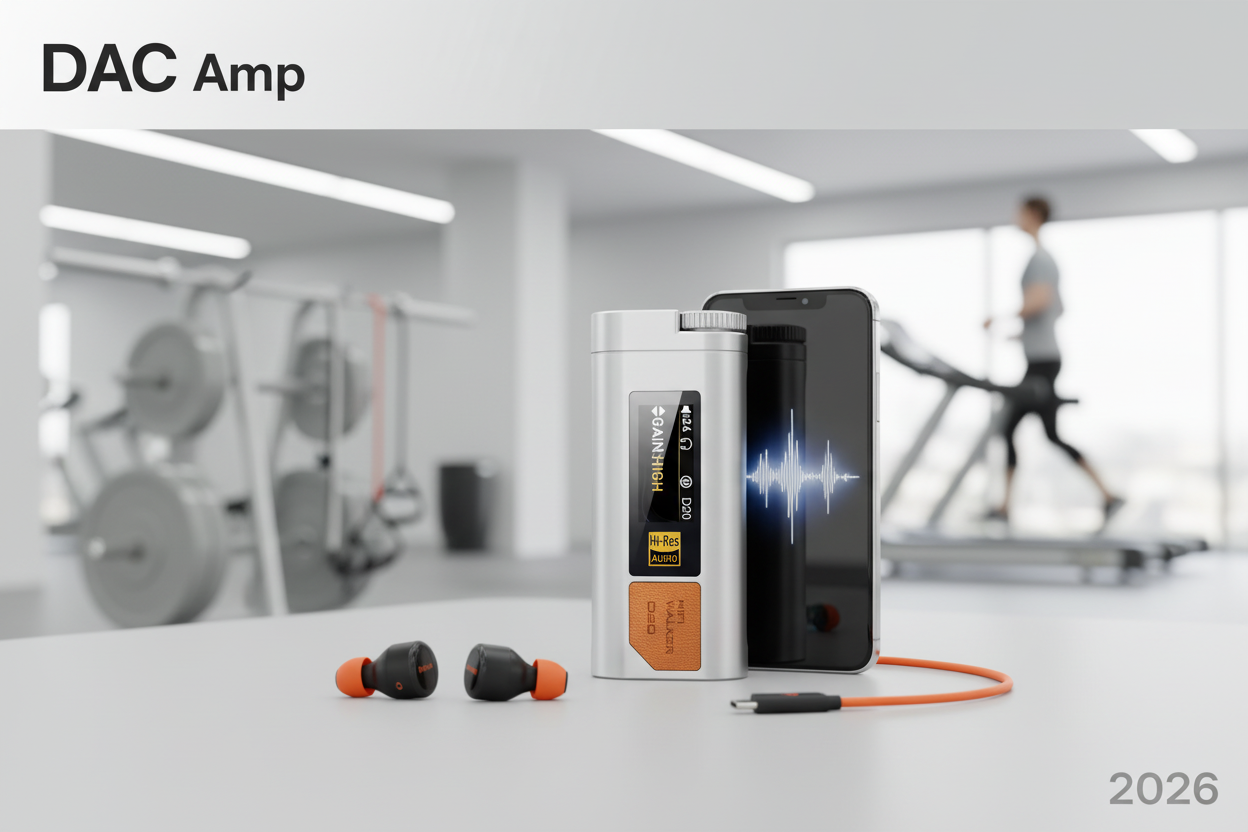
The HIFI WALKER D20 USB-C DAC/Amp Dongle — Balanced Headphone Amplifier is built around one of the most respected audio chips in the industry: the ESS9038Q2M. This is the same class of silicon found in dedicated audio players costing several times more. In a body weighing just 38 grams, it delivers real, measurable improvements over any phone's built-in audio.

What makes the HIFI WALKER D20 USB-C DAC/Amp Dongle stand out isn't just the chip — it's the engineering around it. A CNC-machined aerospace-grade aluminum body keeps electrical interference out. A genuine ALPS encoder knob gives you precise, tactile volume control that no software volume slider can replicate. And the dual output design means you can use virtually any headphone you already own.
ESS9038Q2M DAC Chip
Flagship-tier silicon that natively decodes PCM up to 32bit/768kHz and DSD512 — the highest resolution audio formats in consumer use today.
Up to 380mW Balanced Output
Via the 4.4mm balanced port, the D20 delivers 380mW+380mW at 32Ω — enough authority to drive headphones rated anywhere from 8Ω to 300Ω.
SNR ≥115dB / Dynamic Range >118dB
These numbers translate to a vanishingly low noise floor — the quiet between notes is truly quiet, and soft passages retain all their detail.
Channel Separation >90dB (Balanced)
Balanced output physically separates left and right audio circuits, resulting in a wider, more precise stereo image — music sounds like it has real space around it.
Plug and Play
USB-C connection. No drivers needed on most platforms. Works with Windows XP through 10, macOS 10+. Connect to your phone or laptop and it works immediately.
Single-Ended vs. Balanced: Which Output Should You Use?
The HIFI WALKER D20 USB-C DAC/Amp Dongle — Balanced Headphone Amplifier offers two physical outputs: a 3.5mm single-ended jack and a 4.4mm balanced port. If you're new to this, here's the practical difference — and which one you should plug into.
3.5mm Single-Ended
- Works with any standard headphone or IEM cable
- No special cable required — use what you already have
- Great output quality for the vast majority of headphones
- Ideal starting point if you're new to external DAC/amps
4.4mm Balanced
- Requires a balanced cable (4.4mm Pentaconn termination)
- Delivers up to 380mW+380mW — nearly double the power headroom
- Channel separation jumps to >90dB for a wider stereo stage
- The upgrade path once you're ready to go further
For most beginners, start with 3.5mm SE — you'll still hear a dramatic improvement over your phone's output. When you're ready to explore balanced DAC dongle territory, simply swap to a 4.4mm balanced cable and the D20 is already there waiting for you.
↑ Back to Top
Back to Top ↑Real-World Use: Upgrading Your Commute Audio
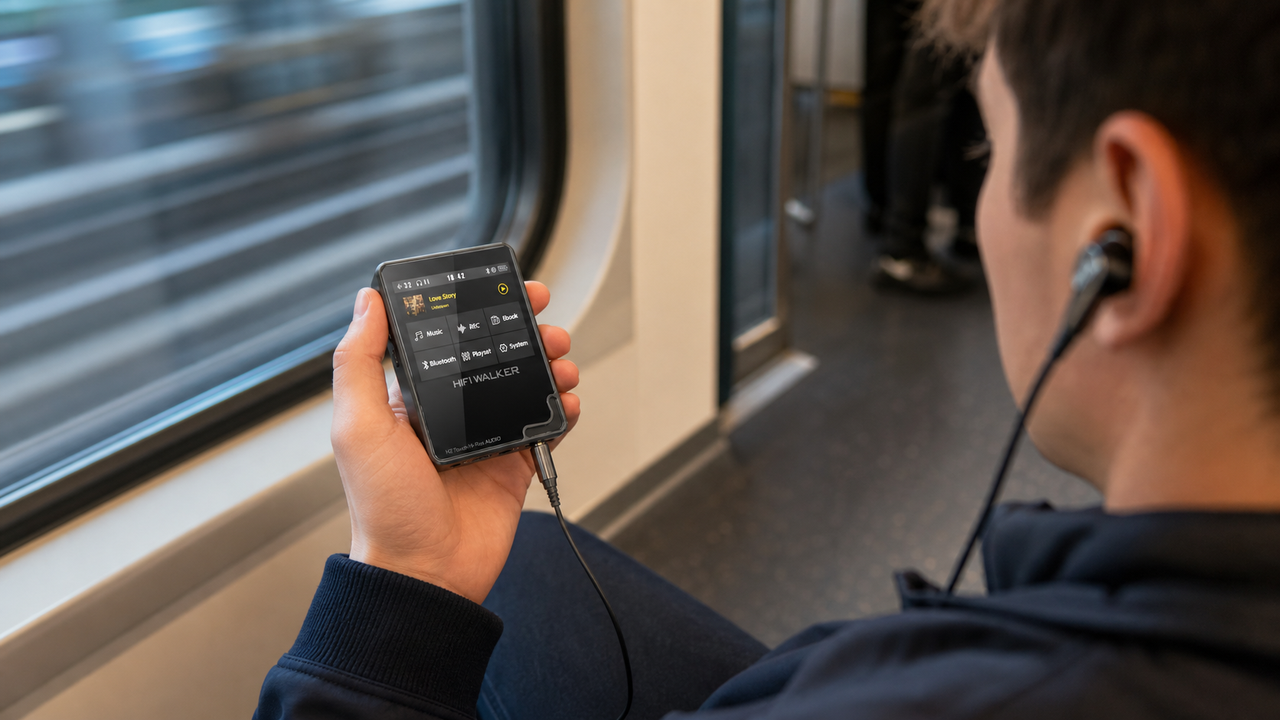
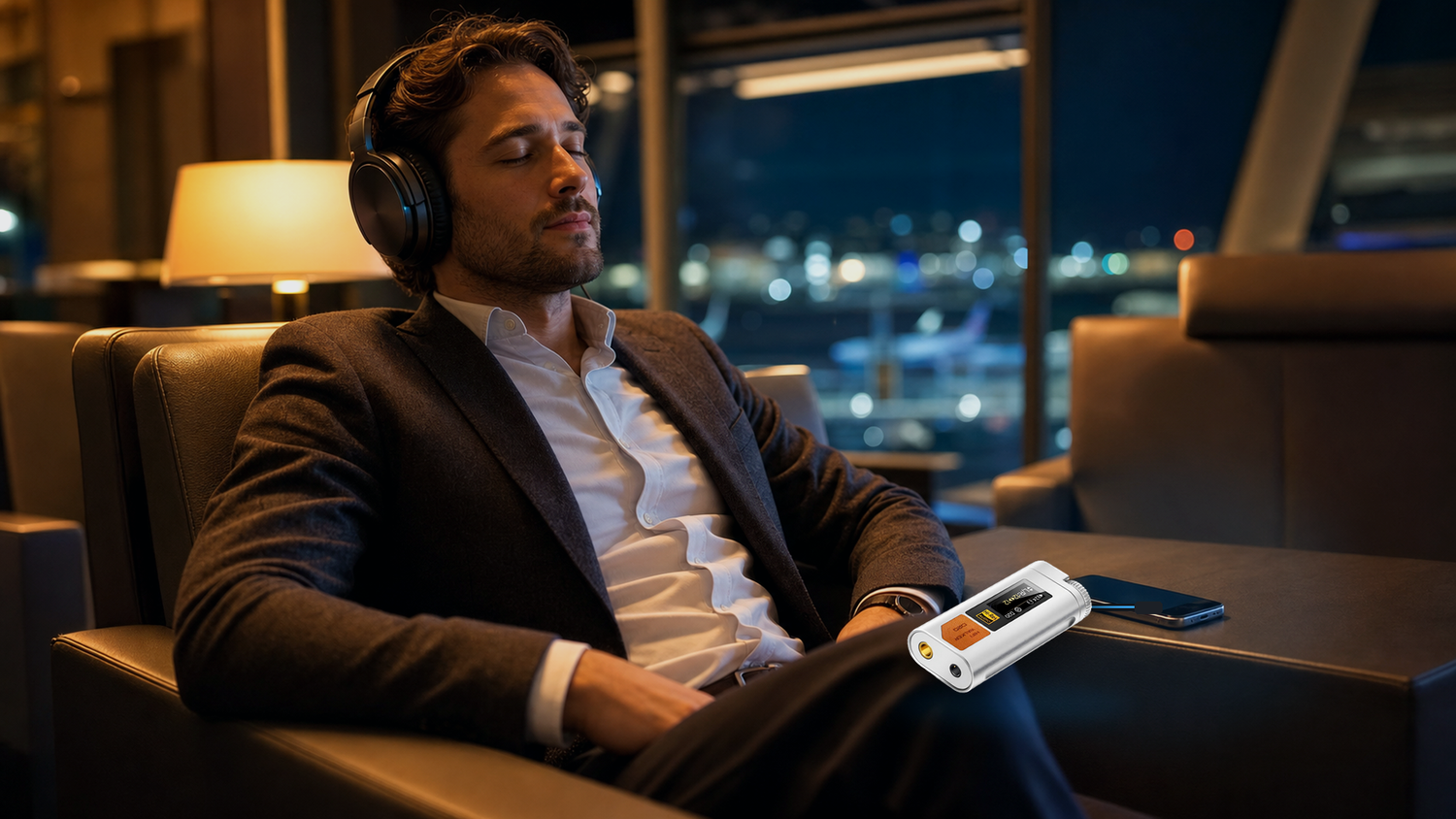
The most compelling use case for a balanced dac dongle commute setup isn't in an audiophile listening room — it's in the real world. On a busy train or bus, a low noise floor and higher output power mean you can hear more musical detail at lower volume levels, reducing listening fatigue over a long journey.

At just 38 grams, the D20 adds almost nothing to your carry weight. It fits in a jacket pocket alongside your phone. The ALPS encoder knob means you can adjust volume by feel — no need to pull out your phone and tap a screen. For anyone commuting daily with good IEMs or headphones, this is the single highest-impact upgrade you can make to your audio chain.
It also works just as well at a laptop. Students, producers, and remote workers plugging into a MacBook or Windows machine get the same ESS9038Q2M-powered improvement — cleaner output for mixing reference, video editing audio, or simply enjoying music while working. No drivers needed on most platforms.
How Does the D20 Compare to Other Ways to Improve Phone Audio?
When people want to improve phone audio quality, they typically consider a few routes: better headphones, wireless earbuds, or an external DAC/amp. Here's how those options actually stack up against adding a dedicated usb-c headphone amp dongle.
Better headphones matter — a lot. But they can only reproduce what they receive. If the signal coming out of your phone is already compromised by noise and limited resolution, even a $500 pair of IEMs can't recover what was lost. The D20 fixes the source first, then your good headphones can finally show you what they're truly capable of.
Looking to explore the full HIFI WALKER lineup? Browse all HIFI WALKER audio players and accessories — or read more buying guides on the HIFI WALKER blog.
Try It Risk-Free: Free Shipping, 30-Day Returns, 1-Year Warranty
Upgrading your audio chain is a sensory decision — you need to hear the difference yourself. That's why every HIFI WALKER D20 USB-C DAC/Amp Dongle ships with free shipping, a 30-day hassle-free return window, and a full 1-year warranty. If you plug it in and don't hear a meaningful improvement over your phone's output, send it back — no questions asked.
For listeners who want an even more complete portable audio system, the HIFI WALKER H2 Hi-Res Audio Player pairs beautifully with the D20's philosophy — dedicated hardware for dedicated sound quality.

Whether you start with the D20 alone or build out a full portable rig, HIFI WALKER's risk-free purchase policy means the only thing you have to lose is the mediocre sound you're settling for right now.
Frequently Asked Questions
Q1: Will a hi-res DAC dongle actually make a noticeable difference to my ears?
Yes — and typically immediately. The most obvious improvements are a lower noise floor (less hiss between tracks), better detail in complex passages like orchestral music, and significantly more headroom if you use demanding headphones. Most first-time listeners describe it as the music opening up or gaining depth they didn't know was missing.
Q2: Does the HIFI WALKER D20 work with my iPhone or Android phone?
The D20 connects via USB-C, so it works natively with Android phones and USB-C iPads. For iPhone (Lightning or USB-C depending on your model), a compatible USB-C cable or adapter may be required. It is plug-and-play on Windows XP/Vista/7/8.1/10 and macOS 10+ with no drivers needed on most platforms.
Q3: What headphones work best with a DAC dongle like the D20?
The D20 drives headphones rated from 8Ω to 300Ω — so it covers everything from sensitive in-ear monitors to full-size over-ear headphones. Via the 4.4mm balanced output it delivers up to 380mW+380mW at 32Ω, which is more than enough for most high-impedance headphones. In short: whatever you already own will benefit.
Q4: What does DSD decoding actually mean for a regular listener?
DSD (Direct Stream Digital) is a high-resolution audio format used in professional studio masters and SACD releases. Native DSD decoding — which the D20 supports up to DSD512 — means the dongle processes the DSD bitstream directly without converting it to a different format first. The result is a smoother, more analog-like sound that many listeners describe as less fatiguing on long sessions.
Q5: Is the HIFI WALKER D20 worth it at $99?
At $99 with free shipping, a 30-day return policy, and a 1-year warranty, the D20 delivers ESS9038Q2M-based audio quality that would cost significantly more in a standalone audio player. If you already own good headphones or IEMs, it is almost certainly the highest-ROI audio upgrade available at this price point. And if you disagree after listening, you can return it within 30 days.