

Expert Insights: Key Takeaways
- The ES9038Q2M paired with a dedicated amplifier stage is a deliberate separation of concerns: the DAC handles digital-to-analog conversion with its HyperStream II modulator, while the RT6862/RT6863 architecture ensures the analog output stage has a clean, stable power rail independent of the digital section — the single most impactful design choice for measured noise floor performance.
- FPGA native DSD256 is not just a spec-sheet line item. The FPGA takes the DSD data path off the main processor, which means no DSD-to-PCM software conversion, no CPU thermal noise injection into the analog stage, and deterministic timing — all of which contribute to the subjective sense of 「ease」 that experienced listeners associate with well-implemented DSD playback.
- 380mW @ 32Ω balanced output is the inflection point where the H20 Ultra crosses from 「portable player」 into 「portable amplifier」 territory. For listeners using harder-to-drive wired headphones, the RT6862/RT6863 stage gives the H20 Ultra more output headroom than basic portable players without turning the article into a guarantee for every headphone model.
Why the DAC Chip Is the Heart of Any Serious Hi-Res Player
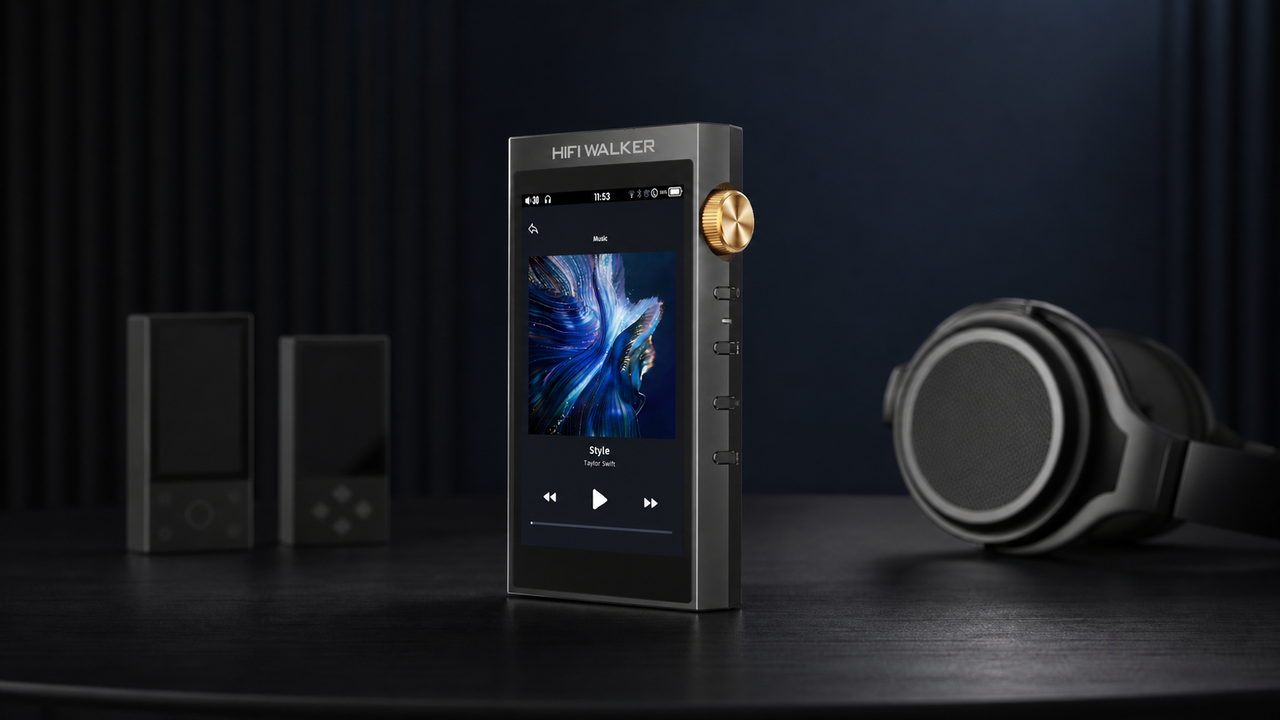
If you are serious about h20 ultra dac player specs, the conversation starts — and largely ends — with silicon. The DAC chip determines how faithfully a digital file is converted to an analog signal, and every downstream component either honors or squanders that conversion. This deep dive covers the HIFI WALKER H20 Ultra Hi-Res Audio Player, a flagship-grade classic DAP built specifically for audiophiles who care about measurable performance: SNR floors, DSD headroom, PCM ceilings, and output power that can actually drive demanding headphones.
What a Mediocre DAC Stage Costs You
- Elevated noise floor masks micro-detail in complex passages
- Clipping or intermodulation distortion on high-dynamic-range material
- Insufficient output power forces volume maxing, adding harmonic coloration
- Single-ended-only output limits balanced headphone compatibility
What a Flagship DAC Stage Delivers
- ES9038Q2M with dual RT6862/RT6863 amp architecture — clean, transparent conversion
- Native DSD256 and PCM up to 768kHz/32-bit — full hi-res headroom
- 380mW @ 32Ω balanced output — useful headroom for many wired headphones
- 4.4mm balanced + 3.5mm SE — broad headphone ecosystem compatibility

- ►1. Why the DAC Chip Is the Heart of Any Serious Hi-Res Player
- ►2. ESS ES9038Q2M: The Flagship Chip Unpacked
- ►3. DSD256 Native Playback: What the Numbers Actually Mean
- ►4. Output Power & Headphone Pairing: 380mW Is Not a Marketing Number
- ►5. CD Ripping & Local Library Management: The Collector's Use Case
- ►6. Bluetooth LDAC & USB DAC: Extending the Signal Chain
- ►7. Build Quality, Controls & the More-Than-10-Hour Playback
- ►8. How the H20 Ultra Positions Against the HIFI WALKER Lineup
ESS ES9038Q2M: The Flagship Chip Unpacked
The ESS ES9038Q2M sits at the top of ESS Technology's mobile DAC lineup. In the HIFI WALKER H20 Ultra Hi-Res Audio Player, it is paired with a RT6862/RT6863 amplifier architecture — a discrete amp stage that separates power delivery between channels, reducing crosstalk and keeping the noise floor impressively low. This is the kind of engineering decision you see in desktop-class gear, not entry-level portables.
The ES9038Q2M's HyperStream II modulator and Time Domain Jitter Eliminator work together to suppress jitter artifacts that smear transient attack. For audiophiles who have ripped their CD collections to lossless FLAC — a core use case for this hi-res DAC player CD ripping audience — the result is a presentation that recovers the spatial cues and harmonic texture that lossy codecs discard.
DSD256 Native Playback: What the Numbers Actually Mean
Native DSD256 playback means the HIFI WALKER H20 Ultra processes DSD data in its natural 1-bit pulse-density modulated form, bypassing the PCM conversion step entirely. The alternative — DoP (DSD over PCM) or software DSD-to-PCM conversion — introduces a mathematical transformation that, while often inaudible, is an unnecessary step in a chain where you are paying for precision.
FPGA-assisted native DSD256 also means the player's hardware is explicitly programmed to handle the DSD data path. The FPGA handles the decoding pipeline before handing off to the ES9038Q2M, which means lower CPU load, lower thermal noise injection, and a cleaner analog output stage. For a lossless audio player DAC chip benchmark discussion, this matters: DSD256 content sampled at 11.2MHz delivers theoretical noise shaping that pushes quantization noise well above 100kHz — far outside the audible band.

PCM headroom tops out at 768kHz/32-bit — a ceiling that comfortably covers every hi-res release format currently available, from 44.1kHz CD-ripped FLAC up through 384kHz studio masters. The 32-bit depth provides ~192dB theoretical dynamic range, ensuring the DAC's analog noise floor — not the bit depth — is the limiting factor. That is precisely the architecture an audiophile should demand from a classic DAP hi-res 2026 contender.
Output Power & Headphone Pairing: 380mW Is Not a Marketing Number
Headphone sensitivity and impedance determine how much output voltage and current you need. The H20 Ultra's 380mW @ 32Ω balanced output gives it useful portable headroom for many wired headphone pairings. For harder-to-drive planar magnetic or high-impedance dynamic headphones, final loudness and control still depend on the specific headphone model and listening volume.
Choose Your Output Jack
Use the 4.4mm balanced output when you want the highest listed output power and balanced-cable compatibility. Reserve the 3.5mm SE jack for single-ended headphones or IEMs that do not have a balanced cable.
Match Gain to Headphone Sensitivity
High-sensitivity IEMs (>110dB/mW) benefit from low-gain mode to maximize volume resolution and minimize channel imbalance at low listening levels. Check the H20 Ultra's gain settings in the audio menu.
Set the Volume via the ALPS Crown Knob
The CNC-machined ALPS crown knob provides precise analog volume steps — far more tactile and repeatable than a touchscreen slider. For critical listening sessions, dial in by ear rather than targeting a specific percentage.
Enable Two-Way LDAC for Wireless Rigs
Bluetooth 5.1 with LDAC (up to 990kbps) and aptX HD operates in both TX and RX modes. Use TX mode to feed LDAC-capable wireless headphones; use RX mode to receive hi-res wireless audio from a source device into your headphone amp chain.

CD Ripping & Local Library Management: The Collector's Use Case
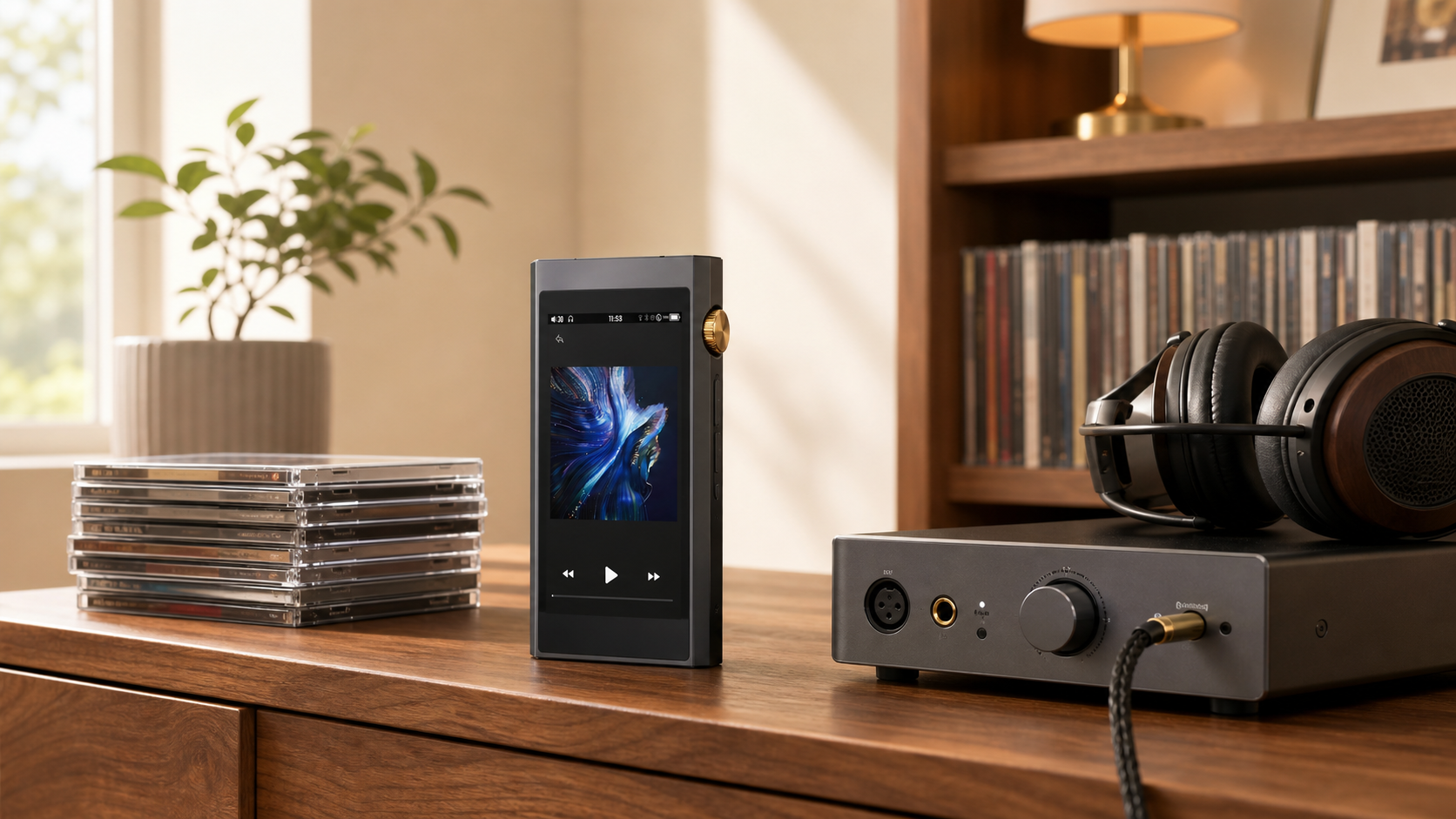
For audiophiles engaged in hi-res DAC player CD ripping workflows, the H20 Ultra's storage architecture is purpose-built. The current selling configuration includes a 128GB card, and the player supports T cards up to 512GB for a substantial local lossless library. A ripped CD in lossless FLAC (16-bit/44.1kHz) averages roughly 300MB per album; capacity depends on your files and card choice.
The HIFI WALKER H20 Ultra Hi-Res Audio Player reads FLAC, WAV, APE, WMA, AAC, MP3, and native DSD files from the local storage, playing them back through the ES9038Q2M without any re-encoding step. Your rips stay bit-perfect from the storage medium all the way to the DAC input. For a collector who has spent years curating a physical CD or SACD library, this is the device that finally does justice to that investment.
Storage & Format Capability
- included 128GB card + up to 512GB T card
- FLAC, WAV, APE, DSD, AAC, MP3 support
- Bit-perfect local playback — no re-encoding
- Handles 24-bit/96kHz and 24-bit/192kHz hi-res masters
Why Collectors Choose Dedicated DAPs
- No background processes competing for audio resources
- Dedicated hardware clock minimizes jitter on long playback sessions
- Physical controls navigate large libraries without screen fatigue
- more than 10 hours of playback supports long local-library sessions
↑ Back to Top
Back to Top ↑Bluetooth LDAC & USB DAC: Extending the Signal Chain
The HIFI WALKER H20 Ultra is not a closed ecosystem. Bluetooth 5.1 with LDAC (the highest-bandwidth standard Bluetooth audio codec at up to 990kbps) and aptX HD means you can push hi-res wireless audio to compatible headphones without the bottleneck of SBC. The two-way TX/RX architecture adds flexibility: RX mode turns the H20 Ultra into a Bluetooth-fed DAC/amp, useful when your source is fixed across the room.
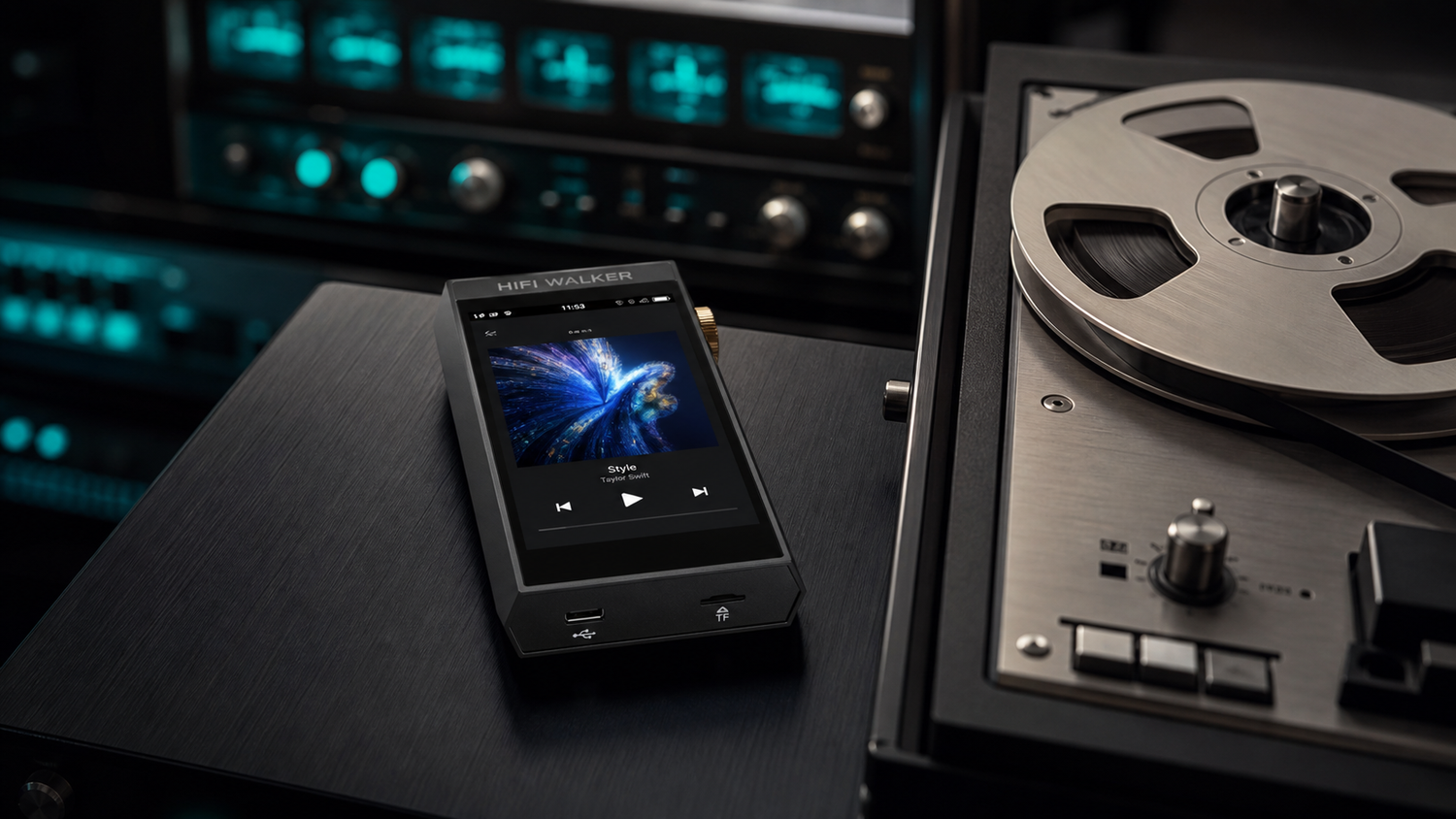
The USB DAC I/O function is equally valuable for desktop audiophiles who want to anchor the H20 Ultra in a stationary rig. Connect it via USB to a computer, and the ES9038Q2M handles the DAC duty for the entire desktop system — bypassing the host machine's integrated audio entirely. For those building a audiophile DAC player SNR benchmark test rig, this dual-role capability means one device serves both portable and desktop measurement setups. Explore the full HIFI WALKER DAP lineup to see how the H20 Ultra fits within the broader ecosystem.

Build Quality, Controls & the More-Than-10-Hour Playback
Specs on paper require a chassis worthy of the silicon inside. The H20 Ultra uses a CNC-machined aluminum body with a 9H hardness glass back — the same glass hardness rating used in premium watch crystals. The 4-inch touchscreen handles library navigation and EQ adjustments, while the ALPS crown knob handles volume with the tactile precision that touchscreens simply cannot replicate during active listening.
The H20 Ultra uses a 3.7V / 3000mA battery and is rated for more than 10 hours of playback in HIFI WALKER's screen-saver standby playback test. Charging takes about 3.5 hours. For a collector working through a 10-hour archival listening session, this is the difference between a device that survives the day and one that needs a power bank tether. For long sessions, the key point is predictable local playback rather than app-driven background drain.

Pair the H20 Ultra with the Protective PU Leather Case for H20 Ultra ($25.99) to protect the CNC aluminum finish during transit between listening rooms or storage shelves. The case maintains access to all ports and the volume knob without removing it.
How the H20 Ultra Positions Against the HIFI WALKER Lineup
For audiophiles evaluating where the H20 Ultra sits, the HIFI WALKER range offers multiple entry points. The HIFI WALKER H20 Pro Hi-Res Audio Player ($192.00) covers the upper-mid segment with solid hi-res credentials. The HIFI WALKER H2 Touch Hi-Res Audio Player ($143.20) is the touchscreen option for listeners prioritizing interface over maximum output power. But for the audiophile who wants the ES9038Q2M, FPGA native DSD256, 380mW balanced output, and more than 10 hours — the H20 Ultra is the unambiguous answer at the top of the range.
Read more technical comparisons and real-world listening notes in our DAP Reviews & Comparisons blog. The buying decision for a dsd256 portable dac player-class device should be anchored in measurable specifications and confirmed by listening — this article covers the former; your ears will confirm the latter.
H20 Ultra Is Right For You If...
- You own a large lossless local library (CD rips, hi-res downloads, DSD files)
- You use planar magnetic or high-impedance dynamic headphones
- You want one device to serve both portable and desktop DAC roles
- Battery life on long archival sessions is non-negotiable
Purchase Confidence
- Free shipping on all HIFI WALKER orders
- 30-day hassle-free return and exchange policy
- 1-year manufacturer warranty on all devices
- No subscription, no account required — just plug in and play your library
Frequently Asked Questions
Q1: What DAC chip does the HIFI WALKER H20 Ultra use?
The H20 Ultra uses the ESS ES9038Q2M DAC chip, paired with a RT6862/RT6863 amplifier architecture. This combination delivers native DSD256 and PCM up to 768kHz/32-bit with a clean, low-noise output stage.
Q2: Does the H20 Ultra support native DSD256 playback?
Yes. The H20 Ultra features FPGA-assisted native DSD256 playback, meaning DSD files are decoded in their native pulse-density modulated form without conversion to PCM. This preserves the noise-shaping characteristics of DSD-format recordings.
Q3: How much output power does the H20 Ultra deliver on the balanced output?
The H20 Ultra outputs up to 380mW at 32Ω through its 4.4mm Pentaconn balanced jack. This gives the player useful headroom for many wired headphone pairings, especially from the balanced output.
Q4: How much storage can the H20 Ultra hold for a lossless CD-rip library?
The H20 Ultra ships with an included 128GB microSD card in the current selling configuration and supports cards up to 512GB. A standard CD ripped to lossless FLAC averages roughly 300MB, so library size depends on file size, format, and card choice.
Q5: Can the H20 Ultra be used as a USB DAC connected to a computer?
Yes. The H20 Ultra supports USB DAC I/O mode over USB, allowing it to act as an external DAC and headphone amplifier for a desktop computer. This routes audio from the host machine through the ES9038Q2M chip and dual amp stage, bypassing any integrated audio hardware.