

Expert Insights: Key Takeaways
- The single most important DAC spec for IEM users isn't dynamic range — it's output impedance. A DAC with 10Ω output impedance will measurably distort the frequency response of a 16Ω balanced-armature IEM. Always check this spec first.
- ESS Technology's HyperStream II architecture is one of the few modulator designs that maintains its THD+N performance across the full frequency range, not just at 1 kHz test tones. This makes ESS-based DACs sound consistently clean on real music, not just on measurement rigs.
- Battery life in a dedicated DAP is a sonic advantage, not just a convenience feature. When a DAC draws power from a shared source with noise-generating processors, interference can degrade the noise floor. The H2 Mini's isolated power architecture is a genuine audio engineering benefit.
- Bit-perfect output matters more than headline specs. A DAP that claims 32-bit/384kHz but applies software EQ or volume normalization before the DAC chip is not delivering bit-perfect audio. The H2 Mini's direct playback mode bypasses these stages for true source fidelity.
- Hi-Res Audio certification is a meaningful quality floor — it requires third-party testing, not just spec sheet claims. When evaluating any DAC, look for the Japan Audio Society Hi-Res Audio logo as an objective baseline.
How to Choose a DAC: What the Numbers Actually Mean
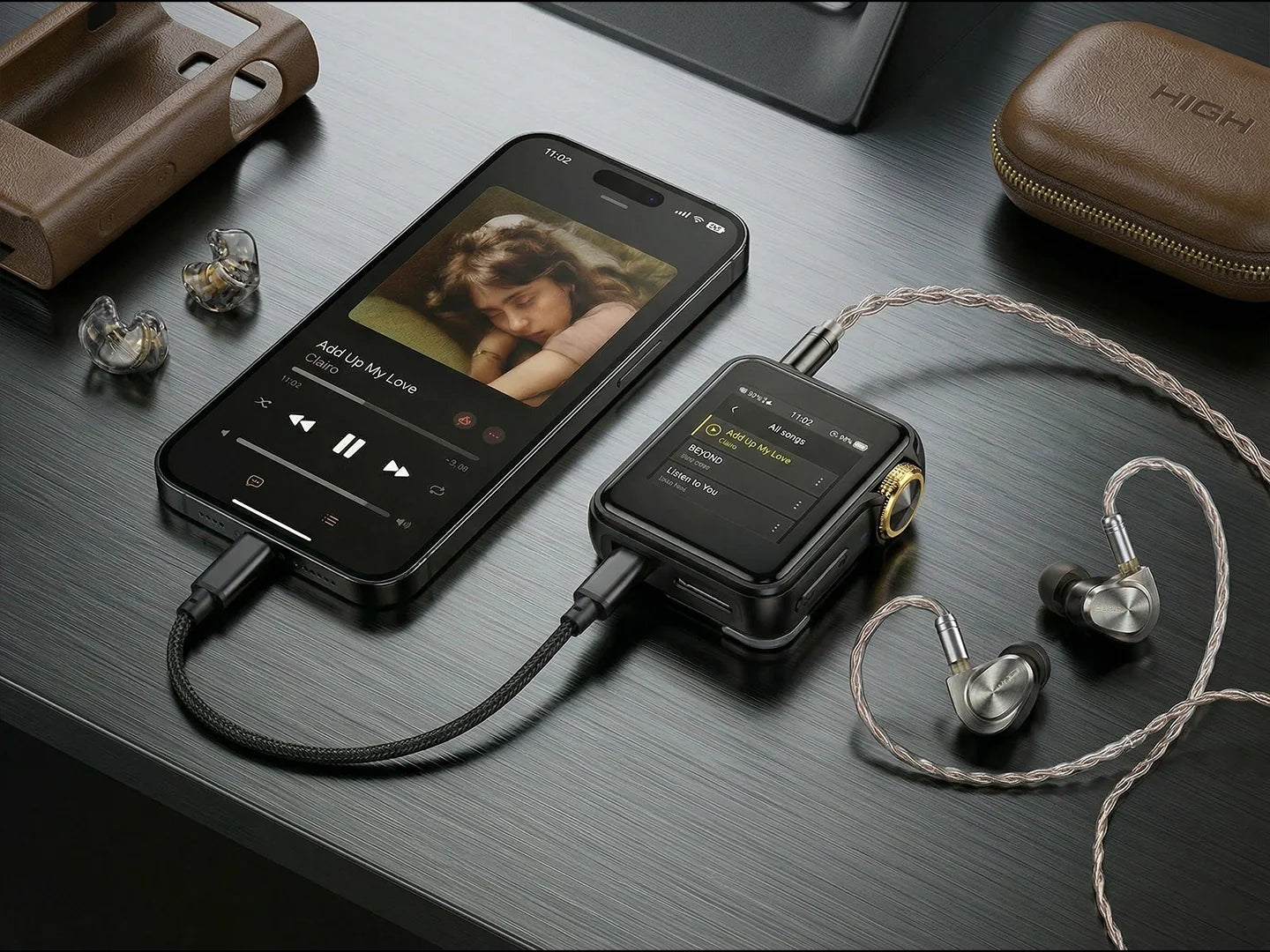
If you've been researching how to choose a DAC, you've probably drowned in spec sheets and marketing jargon. Dynamic range, SNR, THD+N — it's a lot. But one real-world device can cut through all that noise: the HIFI WALKER H2 Mini Hi-Res Music Player. Its ESS9218PC DAC chip is a textbook example of how to balance audiophile performance with everyday practicality — and studying it will teach you exactly what to look for in any DAC purchase.
A DAC (Digital-to-Analog Converter) is the heart of any high-fidelity audio chain. It takes the 1s and 0s stored in your FLAC, WAV, or DSD files and converts them into the analog waveforms that drive your headphones. The quality of that conversion determines everything you hear.

- ►1. How to Choose a DAC: What the Numbers Actually Mean
- ►2. What Is a DAC — And Why Does the Chip Choice Matter?
- ►3. Key DAC Specs Decoded: A Practical Buyer's Cheat Sheet
- ►4. The H2 Mini Head-to-Head: How It Compares in the DAC Market
- ►5. DAC Use Cases: Matching the Right Device to Your Listening Life
- ►6. The ESS9218PC Advantage: Why Chip Architecture Is a Deal-Breaker
- ►7. Stepping Up: When to Consider the H2 or H20 Pro
- ►8. Your 5-Step DAC Buying Framework for 2026
What Is a DAC — And Why Does the Chip Choice Matter?
Understanding what a DAC is at a component level is the first step to making a smart purchase. Every digital audio device has one — the question is whether it's a generic integrated circuit or a purpose-built audiophile-grade chip. The difference is audible.
Generic Integrated DAC
- Built for general-purpose tasks, not pure audio fidelity
- High noise floor from shared circuit board components
- Limited dynamic range — typically under 100 dB
- No dedicated headphone amplifier stage
- Compressed codec support only (AAC, MP3)
Purpose-Built Audiophile DAC (ESS9218PC)
- Designed exclusively for high-fidelity audio conversion
- Dedicated low-noise power architecture
- Dynamic range up to 120+ dB — reference-class territory
- Integrated headphone amplifier with clean gain stages
- Native lossless support: FLAC, WAV, DSD, APE, AIFF
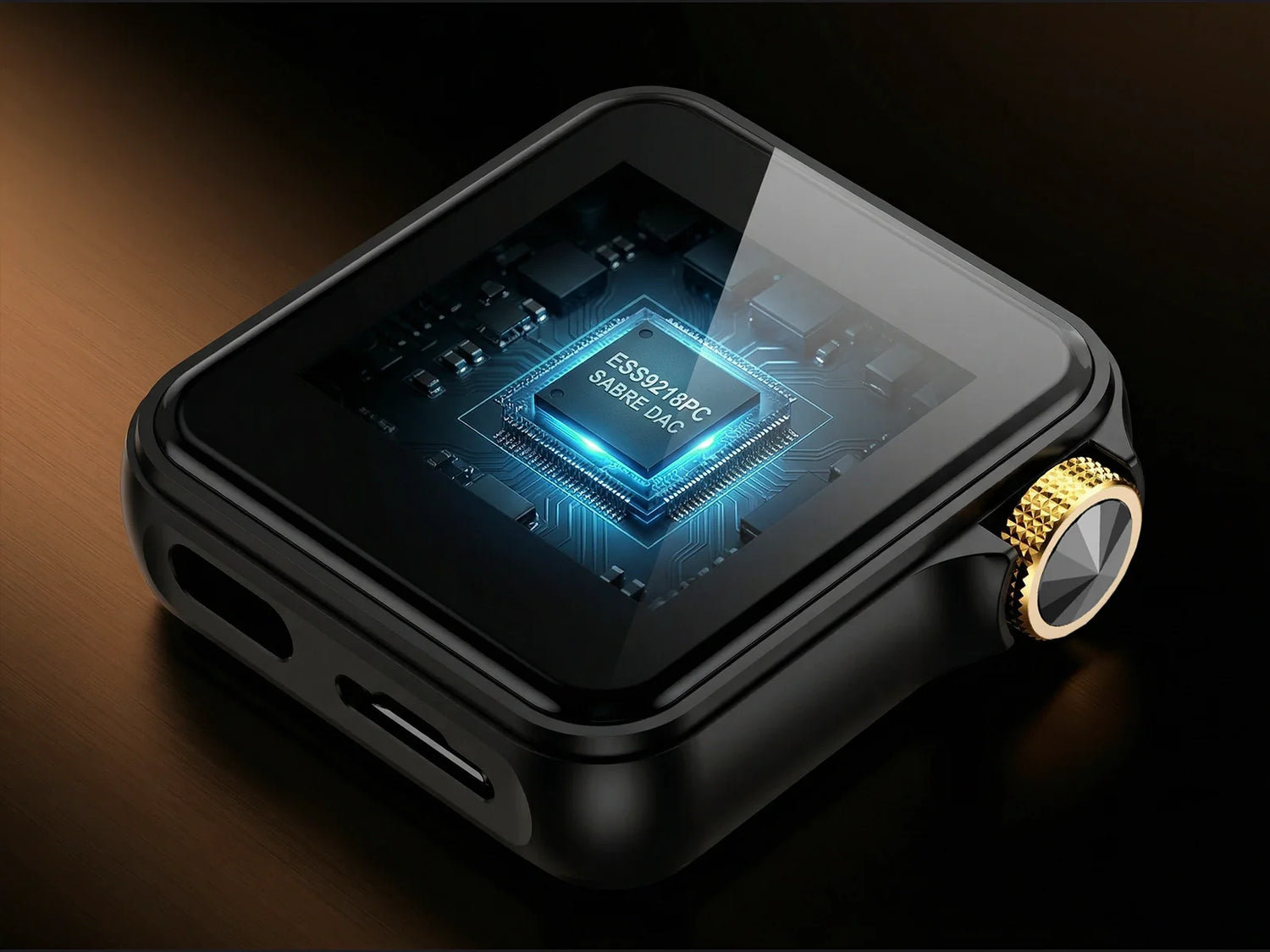
The ESS Technology ES9218PC found in the HIFI WALKER H2 Mini Hi-Res Music Player is the same DAC family trusted by professional audio engineers. ESS chips are celebrated for their HyperStream II modulator architecture, which dramatically reduces harmonic distortion — the subtle, fatiguing coloration that makes cheap DACs tiring to listen to over long sessions.
Key DAC Specs Decoded: A Practical Buyer's Cheat Sheet
When you're figuring out how to choose a DAC, these are the five metrics that actually move the needle on your listening experience. Here's what each one means — illustrated with the H2 Mini's real measurements.
Signal-to-Noise Ratio (SNR)
Measured in dB — higher is better. SNR tells you how loud the music signal is compared to the background hiss. Consumer-grade DACs often hit 95–100 dB. The ESS9218PC achieves ≥120 dB SNR, meaning virtually zero audible noise floor on sensitive IEMs.
Total Harmonic Distortion + Noise (THD+N)
This measures unwanted overtones added during conversion. A figure below -100 dB (0.001%) is considered transparent — you cannot distinguish the distortion from silence. The H2 Mini operates well within that threshold.
Bit Depth & Sample Rate Ceiling
CD quality is 16-bit/44.1 kHz. Hi-Res audio extends to 32-bit/384 kHz PCM and DSD256. The H2 Mini supports up to 32-bit/384 kHz PCM and DSD64 natively — covering every format in a serious local music library.
Output Impedance
Lower is better for multi-driver IEMs. High output impedance (>2Ω) distorts the frequency response of balanced-armature earphones. The H2 Mini's 3.5mm output is tuned for sensitive, low-impedance IEMs used by most audiophiles on the go.
Output Power (mW @ load)
More power = ability to drive demanding headphones. The H2 Mini delivers enough headroom to push 32–150Ω headphones to reference listening levels without clipping — no external amplifier required for most portable setups.

The H2 Mini Head-to-Head: How It Compares in the DAC Market
Numbers only tell part of the story. Let's put the HIFI WALKER H2 Mini Hi-Res Music Player into a competitive context — comparing it against a USB DAC dongle and a mid-range portable DAC/amp. This table gives you a real-world framework for your decision.
The value proposition becomes clear: for $109.99, the H2 Mini delivers a self-contained audiophile experience. No host device dependency, no battery sharing — just a dedicated music machine with a genuinely excellent DAC at its core. Browse the full HIFI WALKER Hi-Res Player collection to see where it sits in the lineup.

DAC Use Cases: Matching the Right Device to Your Listening Life
Knowing what a DAC does is only useful if you can match it to how you actually listen. The right DAC for a studio mixing engineer looks very different from the right one for a commuter who wants pristine FLAC playback on the train. Here's how to frame your decision.
You Need a Dedicated DAP (like H2 Mini) If:
- You own a large local library of lossless FLAC, WAV, or DSD files
- Battery life is critical — 15 hours vs 6 hours matters on long hauls
- You want a dedicated device that never interrupts music with notifications
- You use sensitive IEMs that benefit from a low-noise, low-impedance source
- Budget is $100–$150 and you want an all-in-one solution
A USB DAC Dongle Makes Sense If:
- You primarily want to upgrade the audio output of an existing device
- Portability means single-cable simplicity over standalone operation
- Your existing device holds all your music in local storage
- You don't need long battery life from the DAC itself
- Budget is under $50 and standalone playback isn't required
For most audiophiles who take their music seriously, the standalone DAP route — epitomized by the HIFI WALKER H2 Mini Hi-Res Music Player — wins on every practical measure. The 15-hour battery alone is transformative for extended listening sessions, whether that's a long-haul flight or a focused late-night listening session at home.

↑ Back to Top
Back to Top ↑The ESS9218PC Advantage: Why Chip Architecture Is a Deal-Breaker
Not all ESS chips are equal, and the ESS9218PC in the H2 Mini deserves its own spotlight. It belongs to ESS Technology's premium portable lineup — a chip engineered specifically for the thermal constraints and power budgets of compact devices. That's a fundamentally different design challenge than a desktop DAC chip.
The 9218PC integrates the DAC and headphone amplifier on a single die, which dramatically shortens the analog signal path. Shorter signal path = fewer opportunities for noise pickup and impedance mismatches. This is why audiophiles who've AB-tested the H2 Mini against DAP competitors at twice the price often describe the H2 Mini's presentation as surprisingly clean and controlled.
ESS9218PC Technical Highlights
- HyperStream II modulator — ultra-low THD architecture
- Integrated headphone amplifier — minimal signal path
- 32-bit/384kHz PCM + DSD64 native decoding
- ≥120 dB dynamic range — reference-class SNR
- Optimized for low-power portable operation
What This Means in Your Ears
- Zero audible distortion on complex orchestral passages
- Pin-quiet background on sensitive IEMs at low volume
- Full texture and resolution in DSD recordings
- Micro-detail retrieval that reveals subtle reverb tails
- 8+ hours of playback without thermal throttling artifacts
If you want to go deeper on how the H2 Mini performs versus its siblings in the lineup, check out our DAP Reviews & Comparisons blog for detailed head-to-head breakdowns.
Stepping Up: When to Consider the H2 or H20 Pro
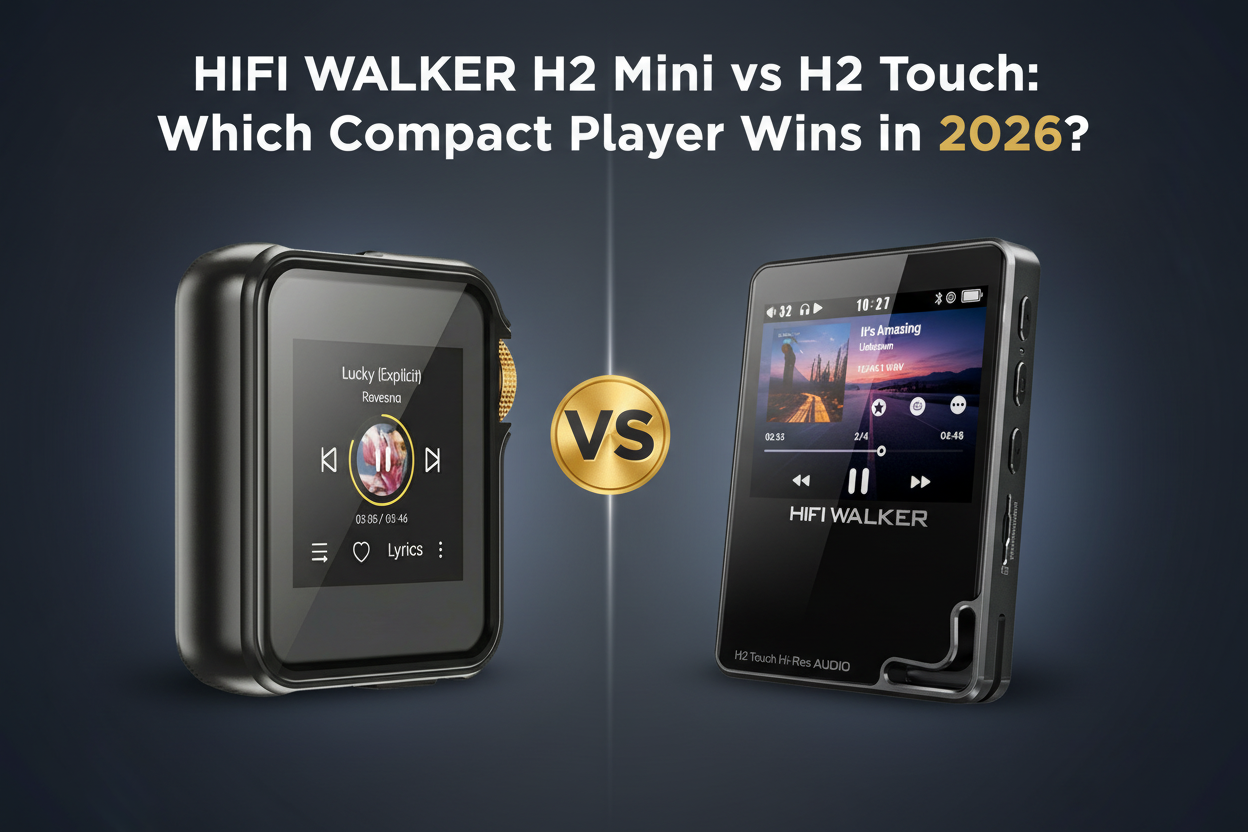
The HIFI WALKER H2 Mini is exceptional for its price — but context matters. If you find yourself consistently driving planar magnetic headphones above 100Ω, or you want a larger physical interface, two other options in the lineup deserve your attention.


That said, for the majority of listeners pairing the H2 Mini with quality IEMs or 32–80Ω headphones, the ESS9218PC delivers everything you need. Don't spend more than your headphones can reveal — it's a classic audiophile trap. The H2 Mini is the honest, technically correct answer for most portable setups under $120.
Your 5-Step DAC Buying Framework for 2026
Pulling everything together: here's the exact framework to use the next time you're deciding how to choose a DAC. Apply these five steps in order and you'll cut through the marketing noise every time.
Define Your Headphone Load
Start with your headphones/IEMs. What's their impedance and sensitivity? Sensitive IEMs (≤32Ω, ≥100dB/mW) need low output impedance and low noise floor — exactly what the H2 Mini delivers. Power-hungry planars need more headroom.
Identify Your Source Format
Do you own FLAC, WAV, DSD, or APE files? Make sure your DAC supports native playback — not just hardware decoding but proper bit-perfect output. The H2 Mini handles all major lossless formats natively with no transcoding step.
Set a Realistic Budget Ceiling
Diminishing returns in DAC performance kick in hard above $300. For most listeners, a well-implemented chip like the ESS9218PC in the $100–$150 range is sonically indistinguishable from units costing 3× more on standard IEM setups.
Decide: Standalone vs. Dependent
A standalone DAP like the H2 Mini gives you dedicated battery, storage via microSD (512GB+), and physical playback controls. A USB DAC depends on a host device. For serious listeners, standalone always wins on reliability and listening longevity.
Verify Certification, Not Just Claims
Look for official Hi-Res Audio certification — it's a third-party verified standard requiring ≥96kHz/24-bit playback, ≥90dB SNR, and <0.1% THD. The H2 Mini carries this certification. Many competitors claim 'hi-res' without backing it up.
Ready to take the leap? The HIFI WALKER H2 Mini Hi-Res Music Player is the embodiment of this framework in a $109.99 package — certified, chip-verified, and purpose-built for lossless audio lovers. Explore the full lineup at the HIFI WALKER Hi-Res Player collection.
Frequently Asked Questions
Q1: What is a DAC and do I really need one?
A DAC (Digital-to-Analog Converter) converts digital audio files into the analog signal your headphones need to produce sound. Every audio device has one, but quality varies enormously. If you own lossless audio files (FLAC, WAV, DSD) and good headphones, a dedicated audiophile DAC like the one in the HIFI WALKER H2 Mini Hi-Res Music Player will deliver noticeably cleaner, more detailed sound compared to a generic integrated chip.
Q2: How do I choose a DAC for IEMs vs. over-ear headphones?
For IEMs (in-ear monitors with low impedance, typically 8–32Ω), prioritize low output impedance (≤1Ω) and a very low noise floor (SNR ≥115 dB) — otherwise you'll hear background hiss. For over-ear headphones above 80Ω, output power (mW) becomes more important. The HIFI WALKER H2 Mini is optimized for sensitive IEM use, making it ideal for the majority of portable audiophile setups.
Q3: Is the ESS9218PC a good DAC chip?
Yes — the ESS ES9218PC is one of the most respected portable DAC chips in the audiophile world. It features ESS's proprietary HyperStream II modulator, delivers ≥120 dB SNR, and integrates a headphone amplifier on a single die for a minimal signal path. It's found in devices costing far more than the HIFI WALKER H2 Mini, making the H2 Mini's $109.99 price point exceptional value for the underlying hardware.
Q4: What audio formats does the H2 Mini support?
The HIFI WALKER H2 Mini Hi-Res Music Player supports all major lossless and lossy formats for local file playback: FLAC, WAV, AIFF, DSD64, APE, MP3, AAC, WMA, and OGG. It plays files natively from a microSD card (expandable to 512GB+), making it suitable for large high-resolution libraries.
Q5: How much storage does the H2 Mini support?
The HIFI WALKER H2 Mini Hi-Res Music Player uses a microSD card slot that supports cards up to 512GB and beyond, depending on the card format. At typical Hi-Res FLAC file sizes (~50MB per track), a 512GB card holds roughly 10,000 high-resolution tracks — a genuinely massive portable library.