

Expert Insights: Key Takeaways
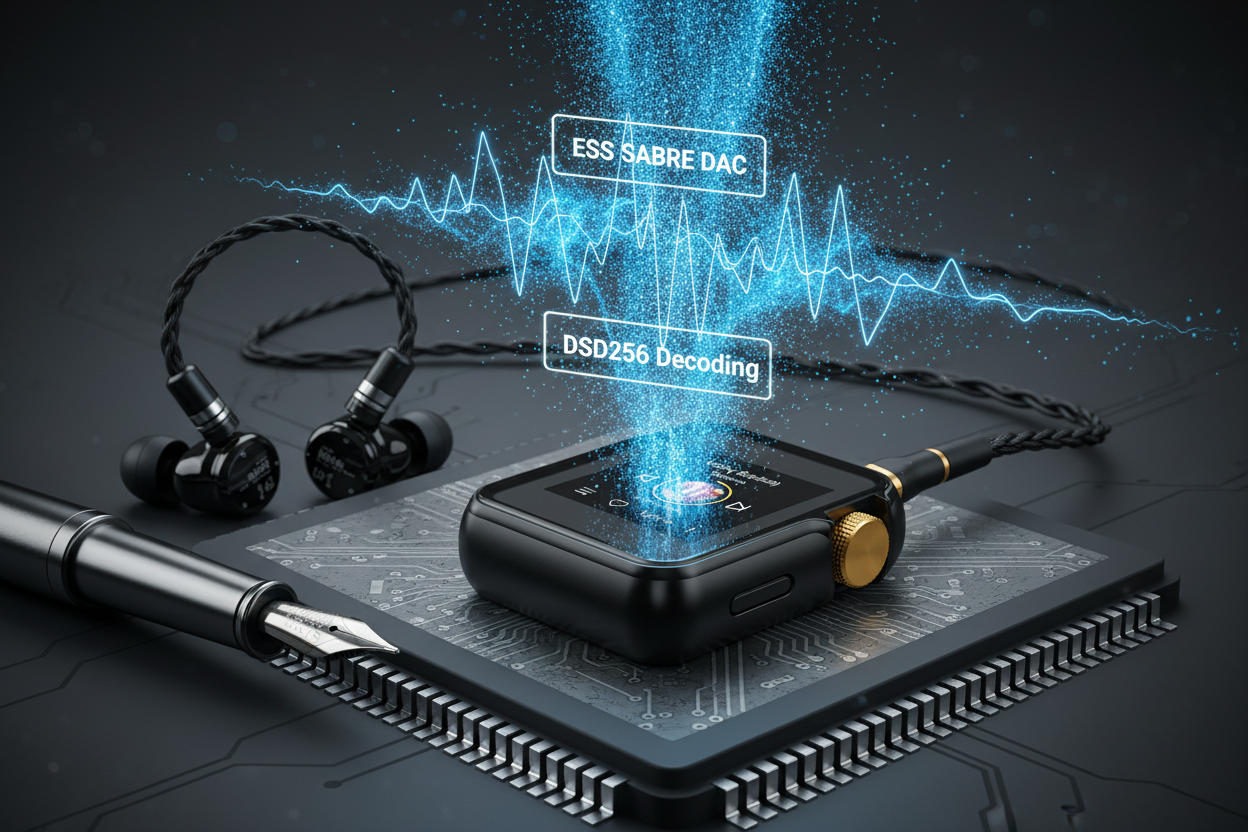
- The biggest audible improvement when switching from a smartphone to a dedicated DAP isn't the DAC chip alone — it's the dramatically lower noise floor. Smartphone audio circuits share board space with radios, processors, and modems. A standalone player like the H2 Mini isolates the audio circuitry entirely, which is why quiet passages in classical music or jazz reveal detail you simply didn't know was there.
- MicroSD card quality matters more than most buyers realize. A cheap card can cause audible dropouts or slow library scanning even on a premium player. Invest in a reputable brand — Samsung EVO or SanDisk Ultra — and you'll never have issues. This is especially true when playing high-bitrate DSD files that demand fast read speeds.
- Streaming fatigue is a real, documented phenomenon among audio enthusiasts. After years of relying on platforms for music discovery, more listeners are returning to curated local libraries because ownership gives them a fundamentally different relationship with music. You listen more carefully when you chose each album deliberately, rather than letting an algorithm shuffle through a catalog of 100 million tracks.
Why Offline Music Players Are Having a Moment in 2026
The best offline music player in 2026 isn't your phone — and millions of audio enthusiasts are finally admitting it. Between subscription price hikes, compressed streaming codecs, and the creeping anxiety of needing a signal just to hear your favorite album, the case for a dedicated portable music player has never been stronger.
Whether you're commuting underground, hiking in the backcountry, or simply done paying monthly fees for music you already own, a standalone FLAC player or hi-fi music player puts you back in control. This guide reviews the top devices worth buying today — with a clear winner for most listeners.

The Streaming Problem
- Lossy AAC/MP3 compression degrades audio quality
- No signal = no music (subway, flights, rural areas)
- Monthly fees keep climbing year after year
- Algorithmic playlists replace personal curation
- Phone battery drains fast during long listening sessions
The Offline DAP Solution
- Lossless FLAC, WAV, DSD playback at full resolution
- Works anywhere — zero internet dependency
- Own your library once, listen forever
- You decide exactly what plays and when
- Dedicated battery designed purely for audio playback
- ►1. Why Offline Music Players Are Having a Moment in 2026
- ►2. What Makes a Great Offline Music Player in 2026?
- ►3. HIFI WALKER H2 Mini: The Best Offline Music Player for Most People
- ►4. H2 Mini vs. The Competition: How Does It Stack Up?
- ►5. Other HIFI WALKER Players Worth Considering
- ►6. Best Use Cases: Who Should Buy an Offline Music Player?
- ►7. How to Set Up Your Offline Music Library (Step-by-Step)
- ►8. Final Verdict: The Best Offline Music Player to Buy in 2026
What Makes a Great Offline Music Player in 2026?
Not every portable music player is built equal. Before we get into specific recommendations, here's what separates a genuinely great offline device from a glorified MP3 player you'll abandon in a drawer after two weeks.
Hi-Res Format Support
Look for native support for FLAC, WAV, AIFF, DSD64/128, and ideally APE or Ogg Vorbis. If a device caps out at 16-bit/44.1kHz, you're leaving quality on the table.
Dedicated DAC Chip
A purpose-built ESS Sabre or similar DAC chip makes an audible difference over smartphone SoCs. This is the single biggest reason dedicated players sound better.
MicroSD Expandability
Internal storage fills fast. Support for 256GB+ MicroSD cards means you can carry your entire library — thousands of lossless files — in your pocket.
Battery Life Built for Music
Aim for 10+ hours of real-world playback. A device that dies after 6 hours isn't suitable for long travel days or outdoor adventures.
Compact, Pocket-Friendly Design
The best offline players are ones you'll actually carry. Bulky devices stay at home. Look for something slim enough to clip or drop into a jacket pocket.
Price matters too. You don't need to spend $500 to get excellent offline audio in 2026. The sweet spot sits between $100–$250, where dedicated DAC hardware, solid build quality, and generous storage converge at a sensible price point.
HIFI WALKER H2 Mini: The Best Offline Music Player for Most People
If you're looking for a single recommendation, here it is: the HIFI WALKER H2 Mini Hi-Res Music Player is the most compelling offline music player under $150 in 2026. It punches well above its $109.99 price tag, combining genuine hi-res audio hardware with a form factor small enough to forget you're carrying it.

The HIFI WALKER H2 Mini Hi-Res Music Player earns its "hi-res" label honestly. It handles FLAC, WAV, APE, and DSD files natively — meaning no on-the-fly transcoding that degrades your carefully ripped collection. Pair it with a decent set of IEMs and the difference versus your phone is immediately obvious: wider soundstage, cleaner instrument separation, and a low noise floor that lets quiet passages breathe.
The truly standout feature, though, is the size. This is a device that fits on a keyring, clips to a collar, or disappears into a shirt pocket. For runners, gym-goers, and commuters who want offline audio without the bulk of a larger DAP, the H2 Mini fills a gap that almost nothing else does at this price.
H2 Mini vs. The Competition: How Does It Stack Up?
Let's put the HIFI WALKER H2 Mini in context against common alternatives listeners consider — including other HIFI WALKER models and the ever-present smartphone. Numbers tell a clear story.

The takeaway is simple: the H2 Mini delivers dedicated-DAC audio quality and all-day battery life at a price that undercuts even mid-range smartphones. For pure offline listening, it's not a close race.
Other HIFI WALKER Players Worth Considering
The H2 Mini is the hero of this roundup, but your ideal offline music player depends on your specific needs. Here are two other strong options from the HIFI WALKER lineup — one for listeners who want a touchscreen upgrade, and one for those ready to go flagship.

For those who want the absolute best offline audio experience without compromise, the H20Ultra Hi-Res Audio Player at $239.99 steps up with more powerful amplification and a larger display — ideal for home-to-commute listening with full-size headphones. But for most users, the H2 Mini delivers 90% of the performance at half the price.
Browse the full HIFI WALKER portable music player collection to compare all current models side by side, including specs, accessories, and bundle options.
↑ Back to Top
Back to Top ↑Best Use Cases: Who Should Buy an Offline Music Player?
A dedicated portable music player isn't for everyone — but for these specific types of listener, it's genuinely transformative. Here's who gets the most from going offline and dedicated.
Perfect Fit For
- 🏃 Runners & gym users (no phone bulk, great clip form factor)
- ✈️ Frequent flyers (offline = no airplane mode anxiety)
- 🎧 Audiophiles on a budget (real DAC, real difference)
- 🚇 Commuters in subway/underground areas
- 🌲 Hikers & outdoor enthusiasts (offline, rugged use)
- 📀 Vinyl fans who also want a portable option
- 👧 Kids & teens (safe, no apps, no social media)
May Prefer Streaming If
- 📶 You're always online and rarely leave Wi-Fi coverage
- 🎵 You prefer discovering new music over owning a library
- 💳 You already pay for Hi-Fi tier Tidal/Apple Music
- 📱 You use your phone for everything and want minimal devices
- 🔄 You update your music library multiple times daily

The runner/athlete use case is where the HIFI WALKER H2 Mini Hi-Res Music Player truly shines. Its ultra-compact size means it clips to clothing without bouncing, and you're not risking a $1,000 smartphone on a sweaty track session. Load it with your training playlist, go, and never think about buffering again.
How to Set Up Your Offline Music Library (Step-by-Step)
One reason people hesitate to switch to an offline player is the perceived hassle of building a local music library. In reality, it takes less than 30 minutes to set up a proper lossless collection. Here's the quick-start process for any new FLAC player.
Rip Your CDs (or Buy Digital Downloads)
Use a free tool like Exact Audio Copy (Windows) or XLD (Mac) to rip CDs to FLAC at lossless quality. Alternatively, buy FLAC downloads from Bandcamp, HDtracks, or Qobuz.
Organize Your Files
Create a folder structure: Artist > Album > Tracks. Keep filenames consistent (01 - Track Name.flac). Add proper ID3 tags using MusicBrainz Picard — your player will thank you with correct metadata display.
Format a MicroSD Card
Use a 128GB–512GB MicroSD card formatted as FAT32 or exFAT. The HIFI WALKER H2 Mini supports up to 512GB, which holds thousands of lossless albums.
Transfer Your Library
Connect your H2 Mini via USB-C to your computer. Drag and drop your music folder directly onto the MicroSD card. No proprietary software required — it works like a USB drive.
Scan and Play
On the player, run a library scan. The H2 Mini will index all your files and populate your artist, album, and genre views automatically. You're ready to listen offline, anywhere.
For a deeper dive into format choices and DAP setup tips, check out the HIFI WALKER DAP Reviews & Comparisons blog — packed with practical guides for new and experienced listeners alike.

Final Verdict: The Best Offline Music Player to Buy in 2026
After testing across formats, battery scenarios, and real-world use cases, the verdict is clear. For the vast majority of people searching for the best offline music player in 2026, the answer is the HIFI WALKER H2 Mini Hi-Res Music Player — and it's not particularly close at this price point.
At $109.99, it delivers genuine hi-res audio hardware, lossless FLAC and DSD playback, up to 15 hours of battery life, and an ultra-compact form factor that makes it the only dedicated audio device most people will actually carry every day. It's the rare product that over-delivers on its spec sheet in real-world listening.
If you want more screen real estate, step up to the H2 Touch Hi-Res Audio Player. If you want flagship-level performance, the H20Ultra Hi-Res Audio Player is the choice. But for most listeners? The H2 Mini is perfect.
Frequently Asked Questions
Q1: What is the best offline music player in 2026?
The HIFI WALKER H2 Mini Hi-Res Music Player is our top pick for 2026. At $109.99, it offers genuine hi-res audio with a dedicated DAC chip, lossless FLAC and DSD support, up to 512GB MicroSD expansion, approximately 15 hours of battery life, and an ultra-compact form factor. It's the best combination of audio quality, portability, and value available at this price point.
Q2: Can I use an offline music player without Wi-Fi or internet?
Yes — that's the core advantage of a dedicated offline music player. Devices like the HIFI WALKER H2 Mini store your music locally on internal memory or a MicroSD card and play it back entirely without any internet connection. This makes them perfect for subways, flights, hiking, areas with poor coverage, or anyone who prefers not to rely on streaming services.
Q3: What music formats do offline music players support?
Quality offline music players support a wide range of lossless and lossy formats. The HIFI WALKER H2 Mini supports FLAC, WAV, AIFF, APE, DSD (DSD64/DSD128), MP3, AAC, OGG, and more. The key advantage over smartphones is native playback of lossless formats without transcoding — meaning you hear your music exactly as it was recorded.
Q4: How much storage do I need for a lossless music library?
A typical FLAC album at 16-bit/44.1kHz takes about 300–400MB. A 256GB MicroSD card holds roughly 600–800 lossless albums — more than enough for most collections. The HIFI WALKER H2 Mini supports MicroSD cards up to 512GB, which can hold well over 1,000 lossless albums. If you mainly use MP3 files, you can fit several thousand albums even on a 128GB card.
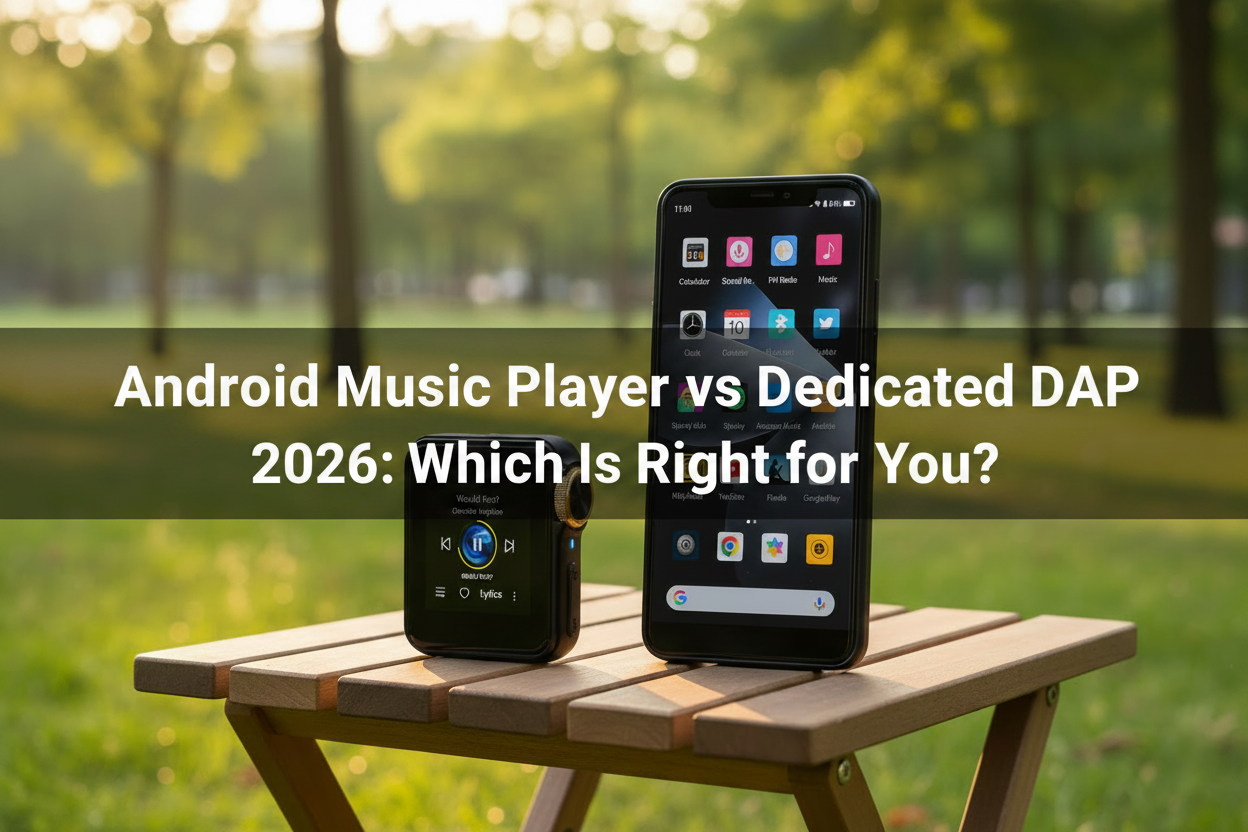
Q5: Is a dedicated offline music player better than using a smartphone for music?
For pure audio quality and offline reliability, yes. Smartphones use integrated audio chips optimized for calls and general media — not hi-res music playback. A dedicated player like the H2 Mini uses a purpose-built DAC chip that produces a noticeably cleaner, more detailed sound, especially with quality IEMs or headphones. You also get far better battery life (15 hours vs 4–6 hours on most smartphones), no interruptions from notifications, and zero dependency on streaming services or internet connectivity.