

Expert Insights
- The law of diminishing returns applies heavily to DACs - the jump from $100 to $300 is more noticeable than $1000 to $3000
- System matching matters more than individual component cost - a $200 DAC with appropriate headphones beats a $2000 converter with mismatched gear
- Format support futureproofs your investment more than theoretical specifications - ensure your DAC handles the formats you actually use
What Makes the Best Digital to Analog Converter
Finding the best digital to analog converter transforms your listening experience from compressed digital files to rich, detailed analog sound. A quality DAC serves as the crucial bridge between your digital music library and your ears, converting 1s and 0s into the warm, nuanced audio that audiophiles crave.
Standard Audio Problems
- Smartphone DACs compress dynamic range
- Built-in laptop audio lacks detail
- Streaming services limit bit depth
- Digital noise affects sound quality
Premium DAC Benefits
- Supports DSD256 and 32-bit/768kHz
- Dedicated power supply reduces noise
- Balanced outputs for professional setups
- Multiple filter options for sound tuning
The key specifications that separate exceptional DACs from mediocre ones include the DAC chip architecture (Delta-Sigma vs R-2R), signal-to-noise ratio (aim for >120dB), and format support. Modern audiophile-grade converters handle everything from hi-res FLAC files to native DSD, ensuring your entire music collection sounds its absolute best.

- ►1. What Makes the Best Digital to Analog Converter
- ►2. Portable DAC Players: Music on the Go
- ►3. Desktop DAC Systems: Reference Quality Audio
- ►4. Budget vs Premium DAC Converters: Value Analysis
- ►5. DAC Specifications Decoded: What Really Matters
- ►6. Matching DACs to Your Audio Chain
- ►7. Future-Proofing Your DAC Investment
Portable DAC Players: Music on the Go
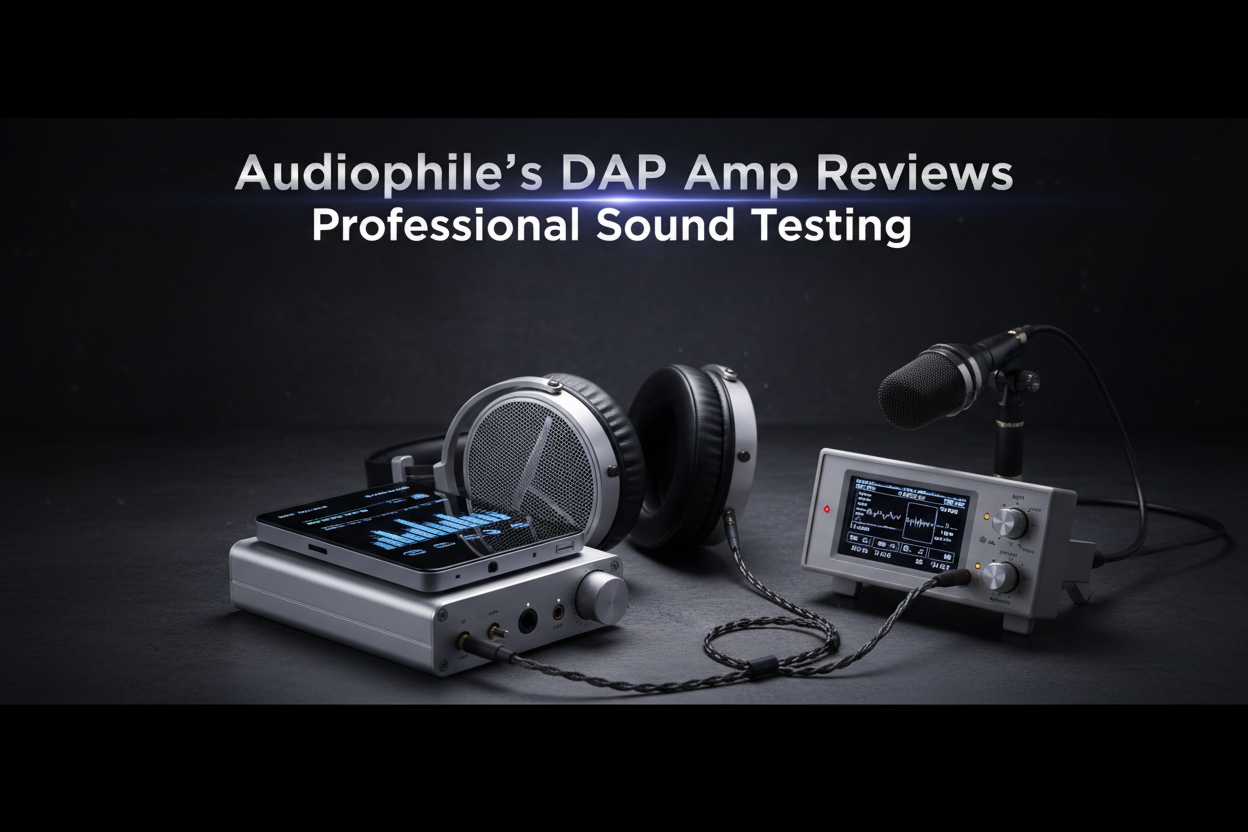
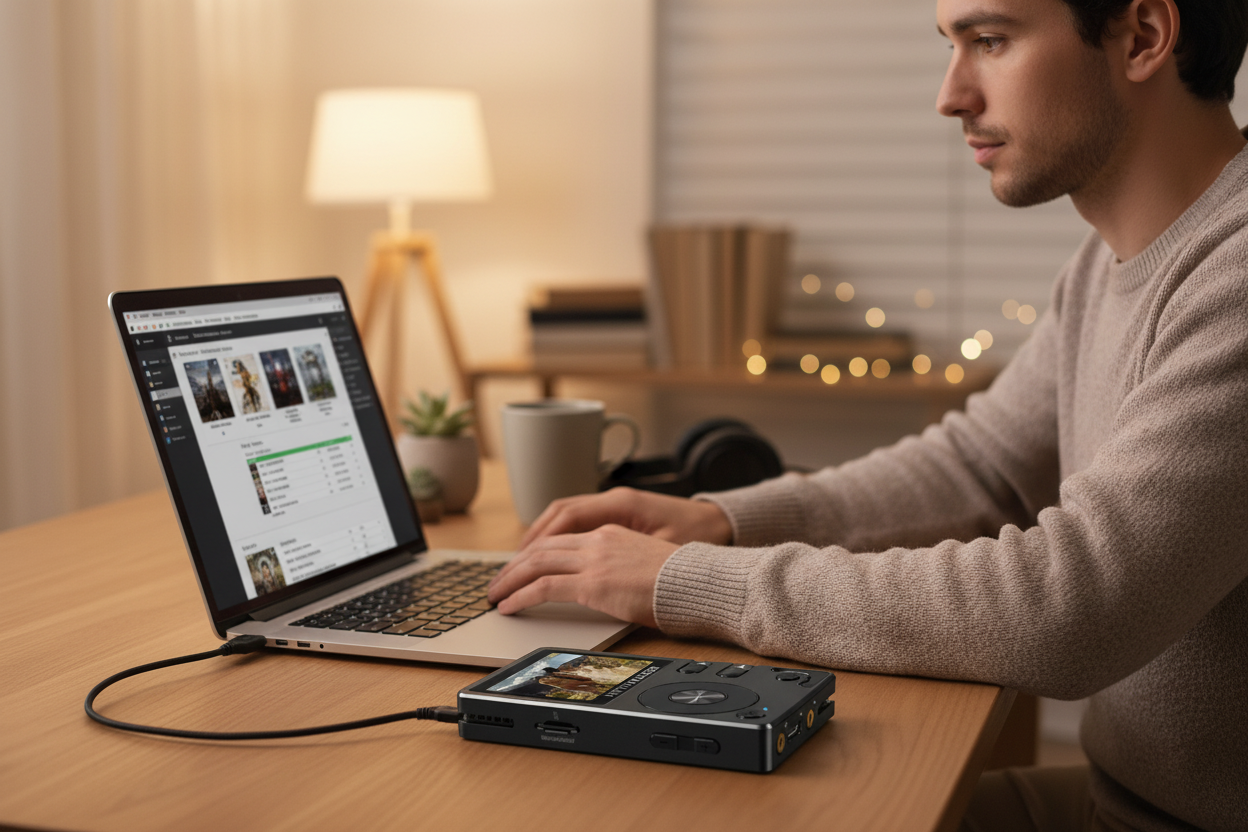
Portable digital audio players represent the perfect fusion of convenience and audio quality. Unlike smartphone audio, dedicated portable DAC players prioritize sound reproduction over multitasking, delivering exceptional battery life and audiophile-grade components in pocket-sized packages.

Choose Your Format Support
Ensure your portable DAC supports your preferred file types. High-resolution formats like DSD256, MQA, and 32-bit FLAC require specific chip capabilities.
Consider Power Output
Match the DAP's amplification to your headphones. High-impedance studio monitors need more power than sensitive IEMs.
Evaluate Storage Options
Look for devices with expandable microSD slots. Hi-res files consume significant space, and 1TB+ capacity ensures room for growth.
The best portable DACs balance power efficiency with audio performance. Modern devices like those in our hi-res audio player collection achieve 15-20 hour battery life while maintaining reference-quality output that rivals desktop systems.
Desktop DAC Systems: Reference Quality Audio
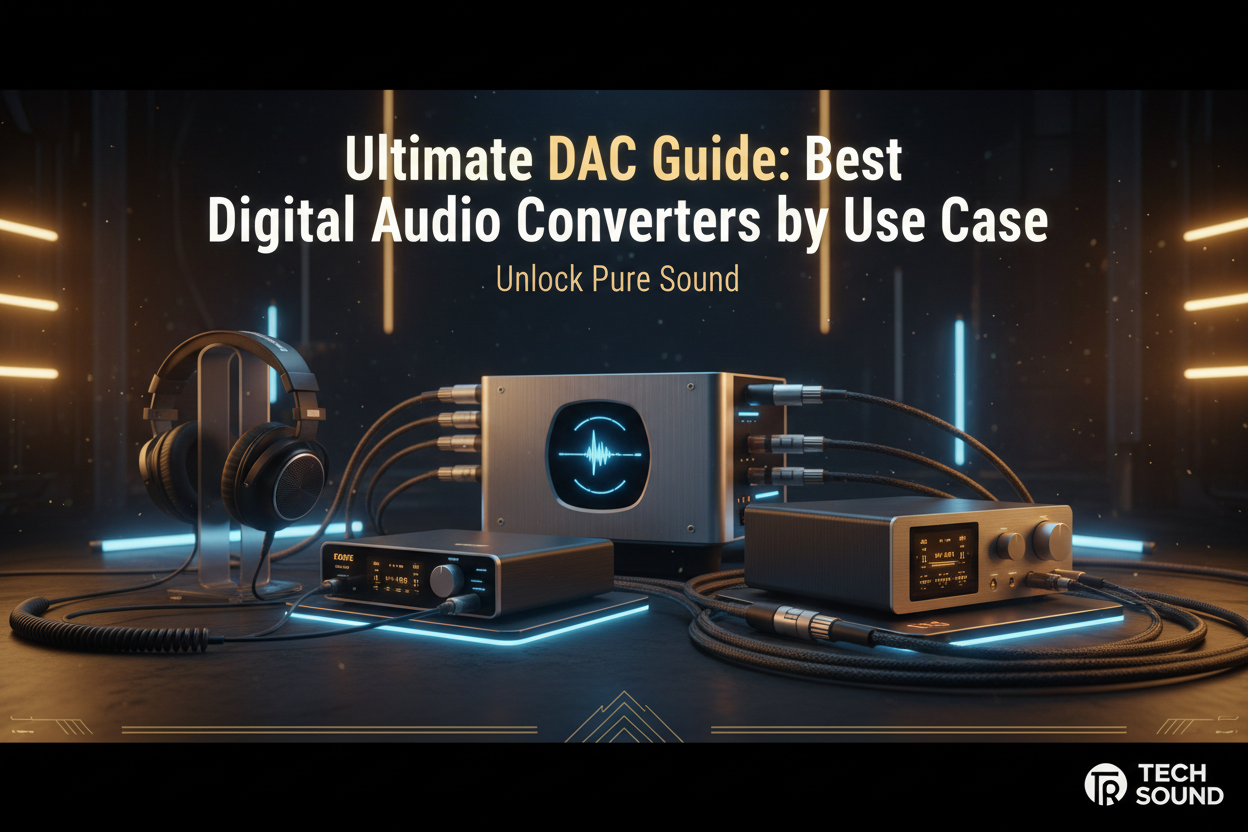
Desktop digital to analog converters represent the pinnacle of home audio reproduction. These dedicated units leverage larger power supplies, advanced analog stages, and premium components to extract every detail from your digital music library with surgical precision.
Desktop DAC Advantages
- Dedicated linear power supplies
- Multiple digital inputs (USB/Coax/Optical)
- Balanced XLR outputs for studio monitors
- Advanced digital filters and upsampling
Ideal Use Cases
- Critical listening environments
- Home studio monitoring setups
- High-impedance headphone systems
- Multi-room audio distribution

When selecting a desktop DAC, prioritize connectivity options that match your source devices. USB inputs should support high-resolution formats up to DSD256, while SPDIF inputs provide galvanic isolation from computer noise. Premium units often include multiple filter settings, allowing you to fine-tune the sound signature to match your preferences and room acoustics.
Budget vs Premium DAC Converters: Value Analysis
The digital to analog converter market spans from $100 entry-level units to $10,000+ reference systems. Understanding the performance differences helps you invest wisely based on your audio system and listening habits.

The sweet spot for most audiophiles lies in the $180-400 range, where premium DAC chips like the ES9038Q2M deliver 90% of flagship performance at a fraction of the cost. These devices typically offer excellent signal-to-noise ratios above 120dB, comprehensive format support, and build quality that ensures years of reliable service.

↑ Back to Top
Back to Top ↑DAC Specifications Decoded: What Really Matters
Marketing specifications can mislead buyers into focusing on meaningless numbers while ignoring crucial performance factors. Understanding which digital audio converter specifications actually impact sound quality helps you make informed purchasing decisions.
Signal-to-Noise Ratio (SNR)
Look for >115dB SNR. Higher numbers indicate cleaner backgrounds and better dynamic range, especially important for quiet classical passages.
Total Harmonic Distortion (THD)
Seek <0.001% THD. Lower distortion preserves the original recording's integrity, though some tube DACs intentionally add pleasant harmonics.
Format Support Range
Ensure compatibility with your music library. DSD256, 32-bit/768kHz PCM, and MQA support future-proof your investment.
Output Impedance
Match to your headphones. Low impedance (<1Ω) works with all headphones, while high impedance may cause frequency response issues.
Critical Specifications
- SNR ratio above 115dB
- THD below 0.001%
- DSD256 native support
- Output impedance matching
Marketing Fluff to Ignore
- Theoretical 32-bit/768kHz if not supported
- Oversampling rates without context
- "Audiophile grade" capacitors claims
- Frequency response beyond 20Hz-20kHz
The most revealing specification is often the least advertised: output impedance. A DAC with 10Ω output impedance will significantly alter the frequency response of low-impedance headphones, creating bass bloat and rolled-off highs. Professional units maintain <1Ω output impedance to ensure accurate sound reproduction across all headphone types.
Matching DACs to Your Audio Chain
The best digital to analog converter for your system depends entirely on your existing audio chain. A $2000 DAC paired with $50 headphones wastes money, while a budget DAC can bottleneck high-end monitoring systems.

System synergy matters more than individual component cost. A well-matched $300 DAC with appropriate headphones often outperforms a flagship $1500 converter paired with mismatched gear. Consider your headphone impedance, amplifier input sensitivity, and listening preferences when selecting your digital-to-analog converter.
For portable setups, integrated DAP solutions like those in our detailed player comparisons often provide better value than separate DAC and amplifier combinations, offering optimized component matching and superior battery efficiency.
Future-Proofing Your DAC Investment
Digital audio technology evolves rapidly, with new formats and connection standards emerging regularly. Choosing a future-ready digital audio converter protects your investment and ensures compatibility with tomorrow's high-resolution audio standards.
Future-Ready Features
- USB-C connectivity with USB Audio Class 2.0
- DSD512 native processing capability
- Bluetooth LDAC and aptX HD support
- Firmware updateability for new codecs
Obsolescence Risks
- Micro-USB ports on new devices
- Limited to DSD64 processing
- No wireless connectivity options
- Fixed firmware without update path
Streaming services increasingly offer hi-resolution content, making native DSD and MQA support essential for accessing the full quality of services like Tidal Masters and Qobuz Hi-Res. Modern DACs should handle these formats without conversion, preserving the artist's intended sound signature.


Frequently Asked Questions
Q1: What's the difference between a DAC and a digital audio player?
A DAC (Digital-to-Analog Converter) only converts digital signals to analog, while a digital audio player includes a DAC plus storage, user interface, and often an integrated amplifier. Standalone DACs require a separate source device and typically offer better performance for desktop setups.
Q2: Do I need an expensive DAC if I use streaming services?
It depends on the streaming quality. For standard 320kbps streams, a basic DAC suffices. However, hi-res streaming from Tidal, Qobuz, or Amazon Music HD benefits significantly from quality DACs that support MQA, DSD, and high-resolution PCM formats.
Q3: How do I know if my headphones need a powerful DAC?
Check your headphone impedance and sensitivity ratings. High-impedance headphones (>150Ω) or low-sensitivity models (<95dB/mW) require DACs with robust amplification sections. Most modern DAC/amp combos specify their maximum output power.
Q4: Can a DAC improve the sound of compressed MP3 files?
A quality DAC can make compressed files sound cleaner and more detailed by reducing digital noise and improving dynamics, but it cannot restore information lost during compression. The improvement is more noticeable with lossless formats like FLAC or DSD.
Q5: What's the benefit of balanced outputs on a DAC?
Balanced outputs provide better noise rejection over long cable runs and can deliver more power to headphones. They're essential for professional setups but offer diminishing returns in typical consumer environments with short cable runs.