


Expert Insights
- The transition from MP3 to hi-res isn't just about higher numbers—it's about preserving the emotional impact and artistic intent that compression destroys
- Dedicated audio players represent a return to purposeful design, where every circuit and component serves music reproduction rather than competing priorities
- Battery optimization in DAPs isn't just about longevity—it's about stable voltage delivery that maintains consistent audio performance throughout the charge cycle
The Great Audio Divide: Understanding DAP vs MP3 Player Differences
In the world of portable audio, the mp3 vs hi res player vs dap debate continues to evolve as music lovers seek the perfect balance between convenience and sound quality. While smartphones dominate casual listening, dedicated Digital Audio Players (DAPs) are experiencing a renaissance among audiophiles who refuse to compromise on audio fidelity.
Traditional MP3 Players
- Limited to compressed formats
- Basic amplification circuits
- Consumer-grade DAC chips
- Short battery life during playback
- Minimal audio customization
Modern DAP Hi-Res Players
- Support for lossless FLAC, WAV, and model-specific DSD support
- Dedicated headphone amplifiers
- Audiophile-grade DAC implementations
- Extended battery optimized for audio
- Extensive EQ and sound tuning options

The distinction isn't merely technical—it's philosophical. MP3 players prioritized portability and storage capacity when digital music was nascent, while today's DAPs focus on preserving the artist's original intent through superior audio reproduction. This fundamental shift reflects our evolving relationship with music consumption.
- ►1. The Great Audio Divide: Understanding DAP vs MP3 Player Differences
- ►2. Audio Quality: Where Hi-Res Players Truly Shine
- ►3. Format Support: Beyond the MP3 Limitation
- ►4. Power and Amplification: Driving Your Headphones Properly
- ►5. Battery Life and Usage Patterns
- ►6. User Interface and Audio-Centric Design
- ►7. Cost Analysis: Value Beyond the Price Tag
- ►8. Making Your Choice: Which Path Suits Your Audio Journey?
Audio Quality: Where Hi-Res Players Truly Shine
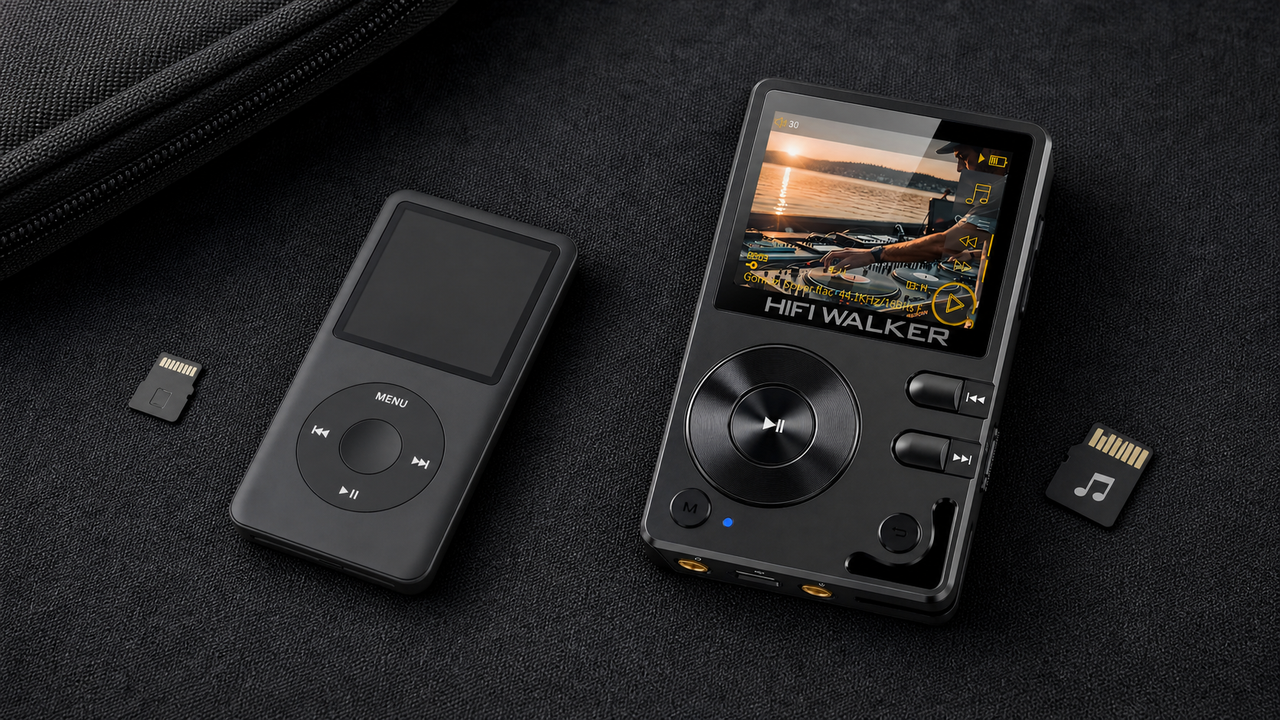
The most compelling argument for choosing a DAP over traditional MP3 players lies in audio quality. Modern hi-res players like the HIFI WALKER H20Ultra Hi-Res Audio Player employ ESS9038Q2M DAC, delivering dynamic range and signal-to-noise ratios that dwarf conventional players.

These specifications translate into tangible listening experiences. Where MP3 compression discards musical information deemed 'inaudible,' hi-res formats preserve the complete frequency spectrum, spatial cues, and dynamic nuances that define professional recordings.
Format Support: Beyond the MP3 Limitation
Traditional MP3 players were designed around lossy compression formats when storage was expensive. Today's landscape demands flexibility across multiple high-resolution formats, and this is where dedicated DAPs excel dramatically over their predecessors.
Lossless Formats
FLAC, ALAC, and WAV files preserve every bit of the original recording, unlike MP3's 10:1 compression ratio that permanently removes audio data.
Hi-Res Formats
DSD64/128/256 and PCM up to 32-bit/384kHz capture studio-master quality, revealing details impossible to hear through compressed formats.
Streaming Integration
Modern DAPs support verified format support for services like Tidal, bridging the gap between physical media and streaming convenience.

This format versatility matters because your music library likely spans multiple sources: ripped CDs, downloaded hi-res purchases, and streaming services. A capable DAP handles all these seamlessly, while MP3 players force you into a single, compromised format.
Power and Amplification: Driving Your Headphones Properly
One of the most overlooked advantages of dedicated DAPs is their superior amplification capabilities. While MP3 players typically output 5-15mW, serious audio players provide the clean power necessary to drive demanding headphones properly.
Underpowered Scenarios
- High-impedance headphones sound thin
- Dynamic drivers lack impact
- Planar magnetics barely audible
- Constant volume cranking
- Distortion at higher levels
Proper Amplification Benefits
- Full dynamic range utilization
- Tight, controlled bass response
- Effortless headroom
- Clean sound at all volumes
- Headphone versatility
The HIFI WALKER H20 Pro Hi-Res Audio Player exemplifies this philosophy with both single-ended and balanced outputs, providing up to 150mW of clean power. This isn't about loudness—it's about control, dynamics, and the ability to reveal your headphones' true potential.
Battery Life and Usage Patterns
Dedicated music players offer a focused approach to battery optimization that smartphones and general-purpose devices simply cannot match. Without background apps, notifications, and cellular radios competing for power, DAPs achieve impressive playback duration.
This extended battery life transforms your relationship with music. Instead of constantly monitoring charge levels or carrying power banks, you can focus entirely on the listening experience. For commuters, travelers, and anyone who values uninterrupted audio sessions, this reliability is invaluable.

User Interface and Audio-Centric Design
While smartphones offer general-purpose interfaces cluttered with notifications and distractions, dedicated audio players prioritize the music experience above all else. This focused approach creates a more immersive and less interrupted listening environment.
Simplified Navigation
Direct access to your music library without navigating through multiple apps or dealing with notification interruptions.
Physical Controls
Tactile buttons and scroll wheels allow operation without looking at the screen, perfect for pocket use or dark environments.
Audio-First Features
Built-in EQ, gain settings, and output selection are prominently featured rather than buried in submenus.
Gapless Playback
Seamless transitions between tracks, essential for classical music, live albums, and concept albums as intended by artists.

This design philosophy extends to the overall user experience. When you power on a DAP, you're immediately in your music library, not checking emails or social media notifications. This singular focus helps maintain the contemplative state that serious music listening requires.
Cost Analysis: Value Beyond the Price Tag
The initial cost of a quality DAP often raises questions among newcomers to hi-res audio. However, when analyzed against the total cost of audio enjoyment and the longevity of dedicated devices, the value proposition becomes clear.
Hidden Smartphone Costs
- Frequent replacement cycles (2-3 years)
- Battery degradation affecting playback
- Storage limitations requiring streaming
- Dongles and adapters for good headphones
- Compromised audio in favor of other features
DAP Long-term Value
- 5-10 year lifespan focused on audio
- Replaceable batteries in many models
- Extensive local storage options
- Native support for audiophile headphones
- Dedicated audio components maintain quality

Consider that a mid-range smartphone costs $600-800 but compromises audio quality, while a dedicated player like the HIFI WALKER H2 Hi-Res Audio Player at $119.20 delivers superior audio performance with a singular focus on music reproduction.
Making Your Choice: Which Path Suits Your Audio Journey?
The decision between DAP vs MP3 player ultimately depends on how seriously you approach music listening. If audio is background entertainment, a smartphone suffices. If music is a passion demanding respect for the artist's vision, a dedicated hi-res player becomes essential.
For those ready to explore beyond compressed audio, HIFI WALKER's complete range offers entry points at every level, from the accessible H2 series to the reference-class H20 Ultra. Each model represents a commitment to audio excellence over general-purpose compromise.

Frequently Asked Questions
Q1: What's the real difference between MP3 and hi-res audio quality?
MP3 compression removes approximately 90% of the original audio data to reduce file size, while hi-res formats like FLAC preserve every bit of the studio master. This translates to better dynamic range, spatial imaging, and frequency response that reveals details impossible to hear in compressed formats.
Q2: Can I hear the difference between a DAP and smartphone audio?
Yes, especially with quality headphones. DAPs use dedicated DAC chips and amplification circuits designed specifically for audio, while smartphones prioritize size and battery life over audio quality. The difference is most noticeable in dynamics, clarity, and the ability to drive demanding headphones properly.
Q3: Are DAPs worth the investment for casual listeners?
If you listen to music regularly and own decent headphones, a DAP provides immediate benefits in battery life, sound quality, and distraction-free listening. Entry-level models like the HIFI WALKER H2 offer significant improvements over smartphone audio at accessible prices.
Q4: Do I need expensive headphones to benefit from a hi-res DAP?
While high-end headphones reveal more of a DAP's capabilities, even modest earphones sound better with clean amplification and superior DAC conversion. However, investing in both components simultaneously provides the most dramatic improvement.
Q5: How long do DAP batteries typically last compared to smartphones?
Dedicated audio players typically achieve 15-18 hours of playback compared to 4-6 hours on smartphones during music listening. This is because DAPs lack power-hungry features like cellular radios, cameras, and background apps that drain smartphone batteries.