

Expert Insights
- FLAC's open-source nature ensures long-term format viability and universal compatibility across all audio equipment
- MQA's file size advantage makes it practical for mobile listening and bandwidth-limited streaming scenarios
- The debate often overshadows the fact that both formats deliver substantially better quality than standard compressed audio
Understanding MQA vs FLAC: The Ultimate Audio Format Battle
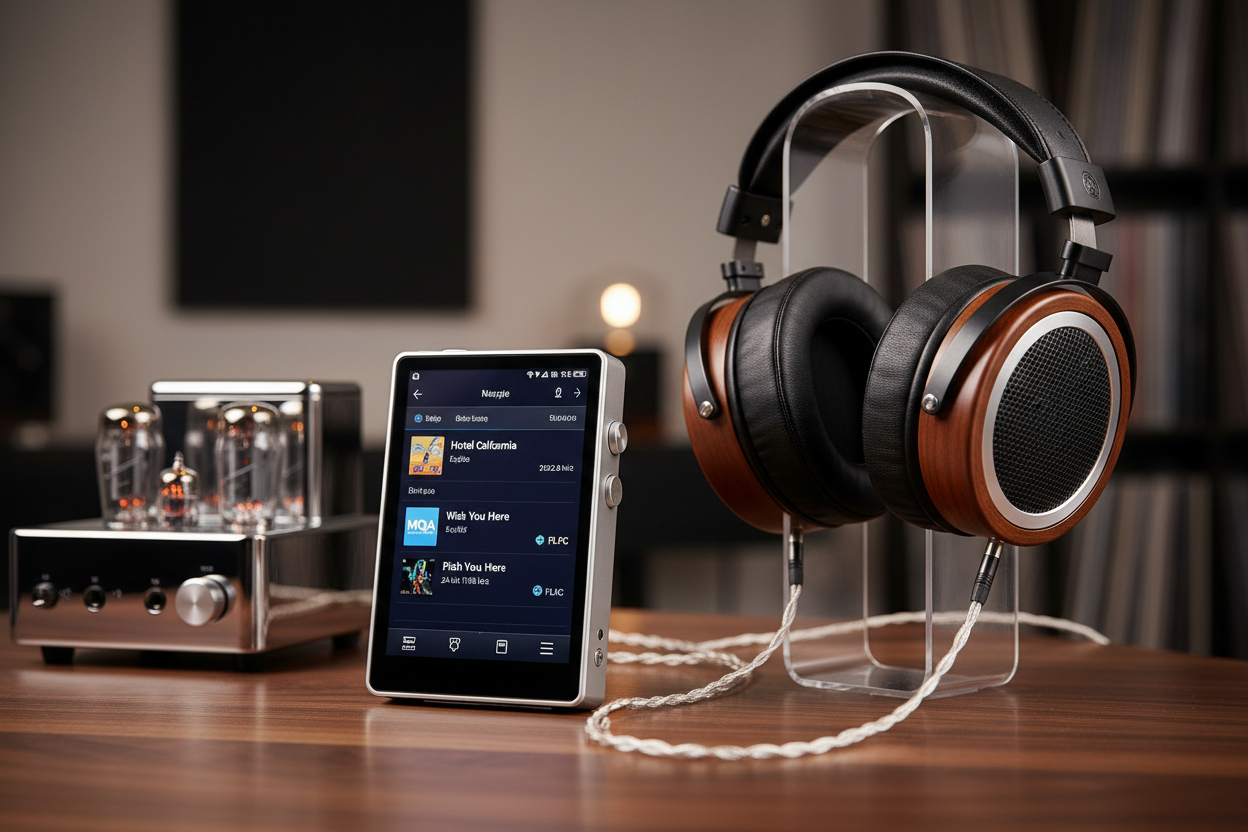
When diving into high-resolution audio, the MQA vs FLAC debate becomes crucial for every audiophile. Both formats promise superior sound quality over standard MP3, but they achieve this through completely different approaches. MQA (Master Quality Authenticated) uses proprietary compression technology to deliver studio-quality sound in smaller files, while FLAC (Free Lossless Audio Codec) provides bit-perfect reproduction without any compression artifacts.
What Matters to Audiophiles
- Authentic studio sound reproduction
- Efficient storage without quality loss
- Wide device compatibility
- Future-proof format choice
Key Decision Factors
- File size vs quality trade-offs
- Hardware decoder requirements
- Streaming service availability
- Long-term format support

- ►1. Understanding MQA vs FLAC: The Ultimate Audio Format Battle
- ►2. Technical Deep Dive: How MQA and FLAC Actually Work
- ►3. Sound Quality Analysis: Which Format Delivers Better Audio?
- ►4. File Size and Storage Considerations
- ►5. Device Compatibility and Hardware Requirements
- ►6. Streaming Services and Content Availability
- ►7. Cost Analysis: Which Format Offers Better Value?
- ►8. Making the Right Choice: MQA or FLAC for Your Setup?
Technical Deep Dive: How MQA and FLAC Actually Work
Understanding the fundamental technology behind each format reveals why audiophiles often have strong preferences. FLAC operates as a mathematically lossless codec, meaning every bit of the original recording is preserved during compression and playback.
FLAC Compression Process
Analyzes audio redundancy patterns and compresses without discarding any data, achieving 50-70% size reduction while maintaining perfect bit-for-bit accuracy.
MQA Encoding Method
Uses 'audio origami' to fold high-frequency information into lower frequencies, then applies psychoacoustic masking to achieve dramatic file size reduction.
Playback Differences
FLAC plays identically on any compatible device, while MQA requires specific hardware or software decoders to 'unfold' the compressed high-frequency content.

Sound Quality Analysis: Which Format Delivers Better Audio?
The sound quality debate between MQA and FLAC often generates passionate discussions among audiophiles. FLAC's bit-perfect reproduction means you hear exactly what the mastering engineer intended, without any algorithmic interpretation.
FLAC Advantages
- Mathematically perfect reproduction
- No artifacts from compression
- Consistent quality across all playback systems
- Wide dynamic range preservation
MQA Benefits
- Optimized for streaming bandwidth
- Studio authentication verification
- Temporal blur correction claimed
- Smaller file sizes for mobile use
Independent measurements by audio engineering experts have shown that while MQA can sound excellent, FLAC maintains absolute fidelity to the original master recording. The choice often depends on your priorities: convenience versus absolute accuracy.

File Size and Storage Considerations
Storage efficiency plays a crucial role in format selection, especially for portable audio enthusiasts. MQA's primary advantage lies in its dramatically reduced file sizes without completely sacrificing high-resolution audio benefits.

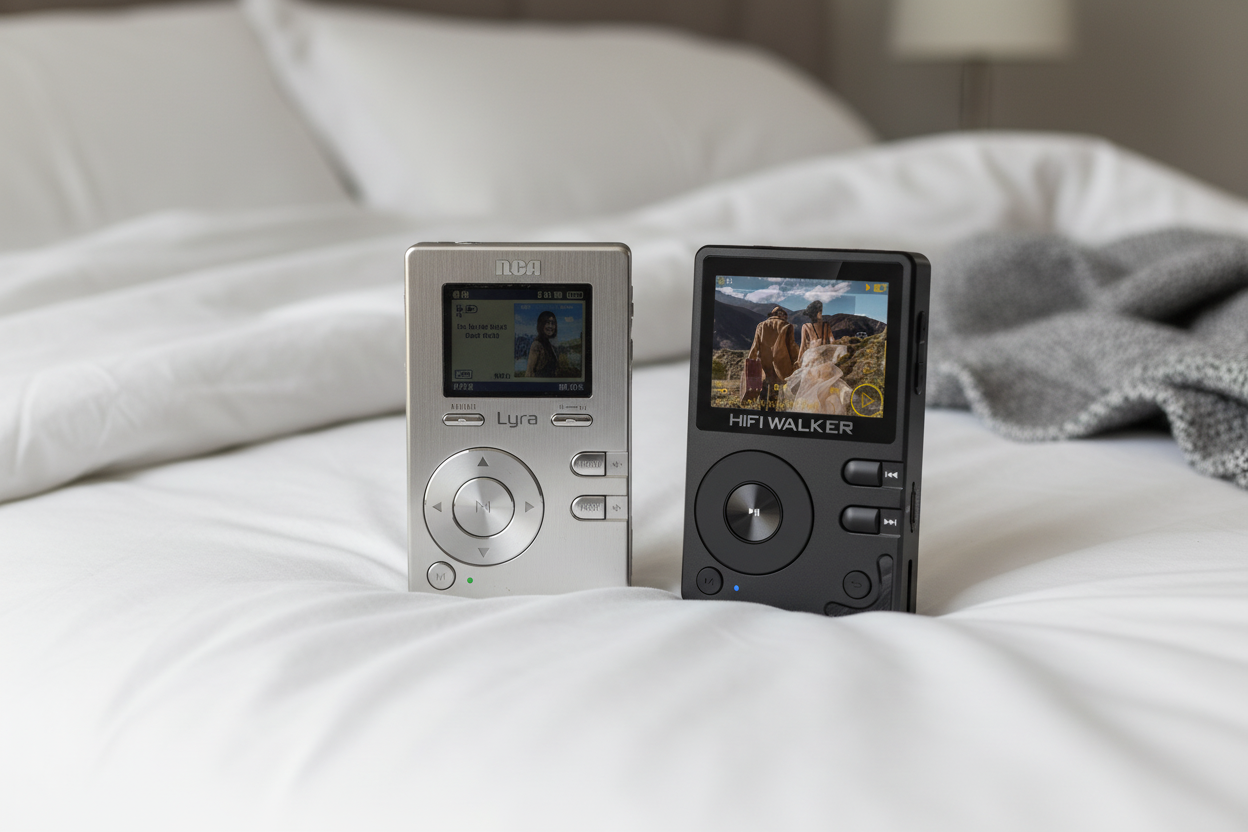
For portable listening, MQA's compression advantage becomes particularly valuable. A typical 256GB hi-res audio player can store significantly more MQA tracks than FLAC equivalents, making it practical for extended travel or commuting.
Device Compatibility and Hardware Requirements
Hardware compatibility represents one of the most significant practical differences between these formats. FLAC enjoys universal support across virtually every audio device and software player, while MQA requires specific licensed decoders.
FLAC Compatibility
- Universal codec support
- Works on any DAP or smartphone
- No licensing fees for manufacturers
- Open-source implementation available
MQA Requirements
- Licensed hardware decoder needed
- Software rendering possible but limited
- Tidal exclusive streaming partnership
- Additional cost for full implementation
Check MQA Hardware Support
Verify your DAP, DAC, or headphone amplifier includes official MQA decoding. Look for the MQA logo or certification in specifications.
Understand Rendering Levels
MQA offers three unfolding stages - software rendering provides basic benefits, while full hardware decoding delivers complete format advantages.
Consider Future Upgrades
FLAC files remain playable on any future device, while MQA tracks may require continued hardware support for optimal quality.

↑ Back to Top
Back to Top ↑Streaming Services and Content Availability
Content availability significantly impacts your format choice. MQA has gained traction primarily through Tidal's exclusive partnership, while FLAC dominates high-resolution download stores and personal music libraries.

The streaming landscape continues evolving, with most services now offering lossless FLAC streaming. However, MQA's exclusive relationship with Tidal means accessing this format often requires a specific subscription choice.
Cost Analysis: Which Format Offers Better Value?
Beyond audio quality, the financial implications of choosing MQA versus FLAC extend across hardware, software, and content acquisition costs. Understanding these expenses helps make an informed decision.
FLAC Cost Advantages
- No licensing fees for playback
- Wide hardware selection drives competition
- Free encoding and decoding software
- Abundant free and affordable content
MQA Additional Costs
- Premium hardware with MQA decoding
- Tidal HiFi Plus subscription required
- Limited hardware vendor options
- Higher-priced MQA-certified equipment
Hardware Investment
MQA-capable DAPs typically cost $50-200 more than equivalent FLAC-only players due to licensing and specialized decoding chips.
Subscription Costs
Tidal HiFi Plus costs $19.95/month for MQA access, while Qobuz offers similar FLAC quality for comparable pricing with broader catalog options.
Long-term Ownership
FLAC files purchased once remain playable forever, while MQA streaming requires ongoing subscription payments for continued access.
Making the Right Choice: MQA or FLAC for Your Setup?
Selecting between MQA and FLAC ultimately depends on your specific listening habits, hardware preferences, and quality priorities. Both formats serve different audiophile needs effectively.
Choose FLAC If You
- Prioritize bit-perfect accuracy
- Own diverse audio equipment
- Prefer file ownership over streaming
- Value open-source standards
- Need maximum format flexibility
Choose MQA If You
- Stream music primarily via Tidal
- Require efficient mobile storage
- Trust proprietary audio processing
- Want studio authentication
- Prioritize convenience over absolute fidelity
Many serious audiophiles choose capable players that support both formats, allowing format selection based on specific content and listening scenarios. This approach provides maximum flexibility as the digital audio landscape continues evolving.

For comprehensive format support and exceptional sound quality, explore our complete range of hi-res audio players that handle both MQA and FLAC with audiophile-grade precision.
Frequently Asked Questions
Q1: Is MQA actually better than FLAC for sound quality?
FLAC provides bit-perfect reproduction of the original recording, while MQA uses psychoacoustic compression that some argue enhances certain aspects. Independent measurements show FLAC maintains absolute accuracy, making it technically superior for pure fidelity.
Q2: Can I play MQA files without special hardware?
Yes, but with limitations. Software rendering provides basic MQA benefits, but full hardware decoding with certified MQA DACs delivers the complete intended sound quality and all format features.
Q3: Which format takes up less storage space?
MQA files are significantly smaller, typically 60-70% smaller than equivalent FLAC files. A 24-bit/96kHz track might be 70MB in FLAC versus 25MB in MQA format.
Q4: Do I need Tidal to listen to MQA music?
Currently, Tidal is the primary streaming source for MQA content. Some high-resolution download stores offer MQA purchases, but the selection is much more limited compared to FLAC availability.
Q5: Will my current DAP play both MQA and FLAC?
Most modern DAPs play FLAC natively, but MQA requires specific hardware support or software licensing. Check your device specifications for MQA certification or rendering capabilities.