

Expert Insights
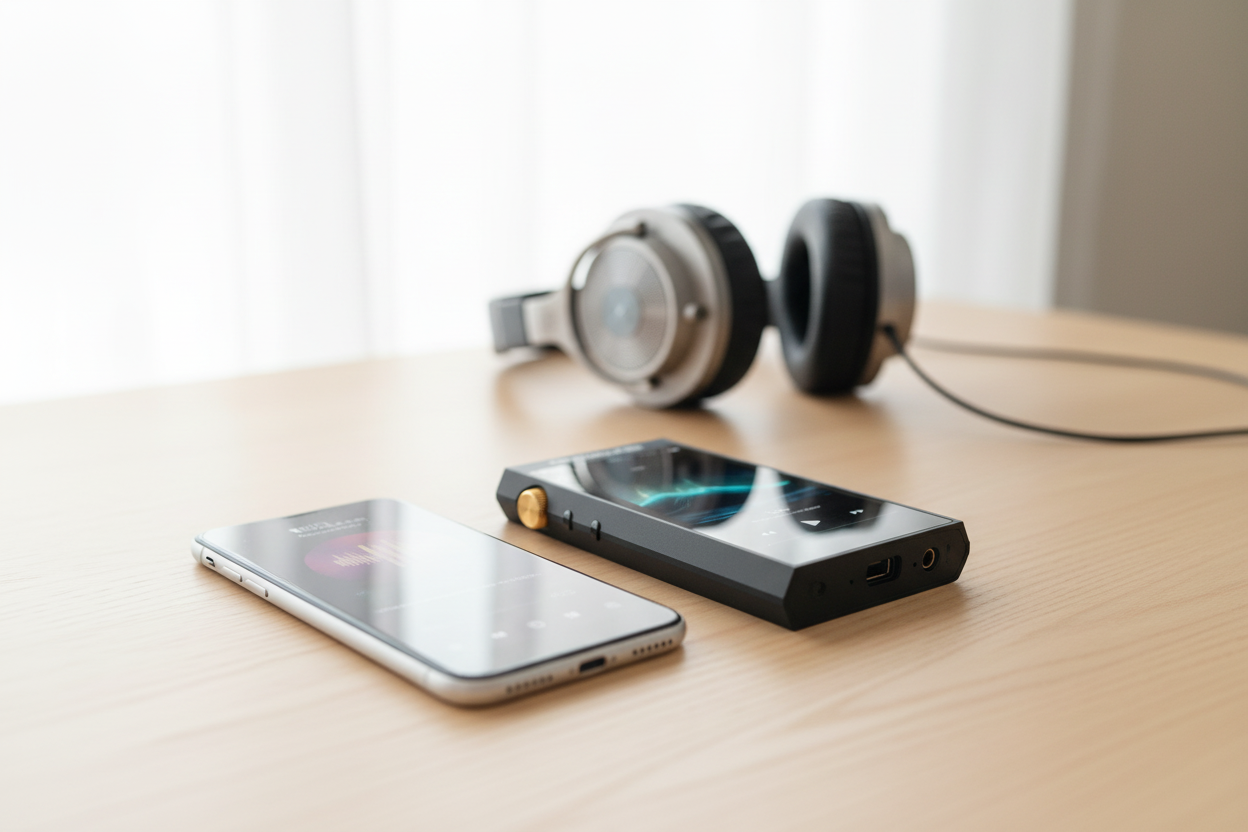
- The choice between apps and dedicated players ultimately reflects your relationship with music: casual background listening versus intentional, focused sessions
- Hybrid approaches often work best - using apps for discovery and convenience while maintaining a dedicated player for critical listening
- Battery life differences become more significant for long commutes, travel, or extended listening sessions where phone preservation matters
Introduction: The Modern Music Player Landscape
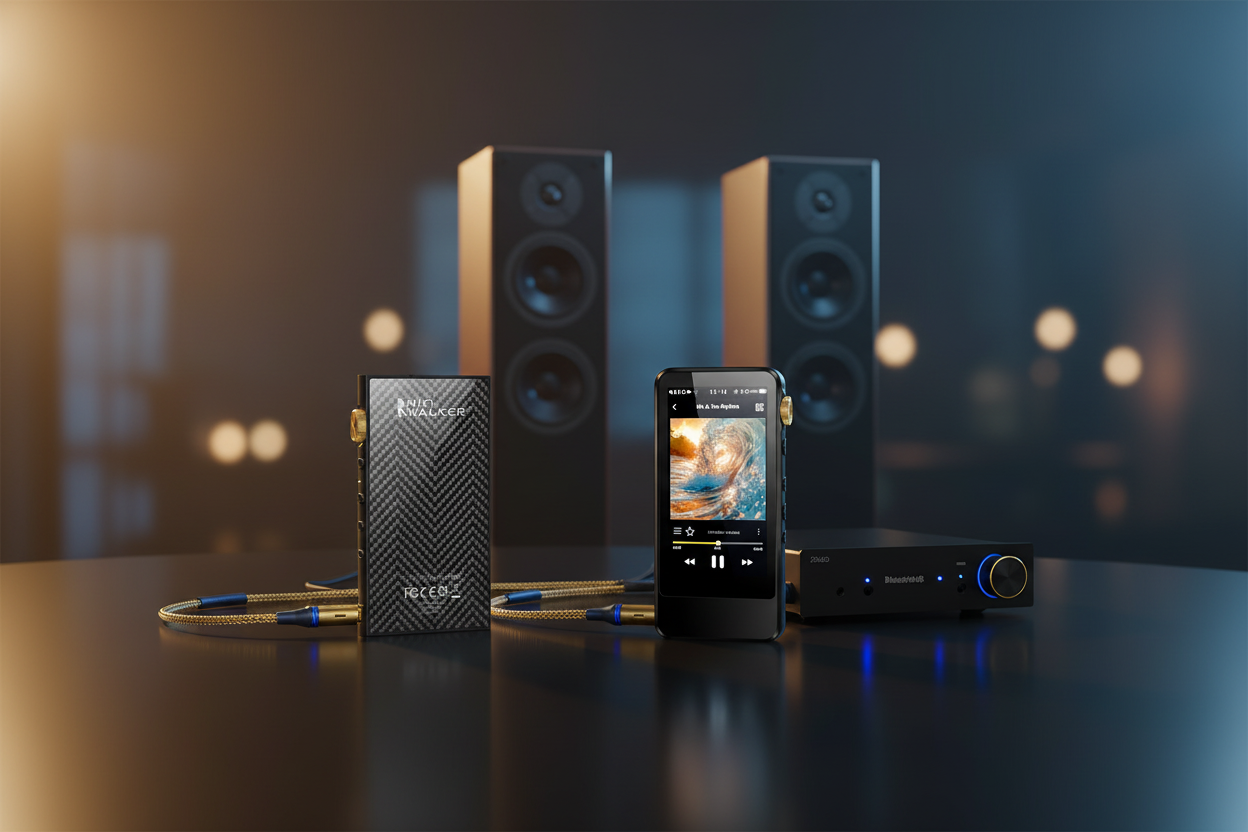
The search for the perfect music player app has evolved dramatically in 2026. While smartphone apps dominate convenience, dedicated audio players are experiencing a renaissance among serious listeners. This comprehensive guide examines both worlds to help you make an informed decision.
App-Based Solutions
- Instant access on existing devices
- Streaming integration
- Social sharing features
- Regular updates and new features
Dedicated Hardware
- Superior audio circuitry
- Extended battery for music only
- Lossless format support
- Interference-free playback
Understanding your listening habits, audio quality expectations, and lifestyle needs will determine which path serves you best. Let's explore every aspect of this fascinating comparison.

- ►1. Introduction: The Modern Music Player Landscape
- ►2. Sound Quality: Where the Rubber Meets the Road
- ►3. Battery Life and Usage Patterns
- ►4. User Experience and Interface Design
- ►5. Cost Analysis and Value Proposition
- ►6. Format Support and Library Management
- ►7. Real-World Usage Scenarios
- ►8. Making the Right Choice for Your Needs
Sound Quality: Where the Rubber Meets the Road
Audio quality represents the fundamental difference between casual listening and audiophile-grade experiences. Modern smartphones compress audio through multiple processing layers, while dedicated players prioritize signal purity.
The technical specifications tell only part of the story. Dedicated players like professional DAPs eliminate electromagnetic interference from cellular radios, WiFi, and processing cores that smartphones cannot avoid.

Battery Life and Usage Patterns
Battery performance dramatically impacts your listening experience. Smartphone music player apps compete with dozens of background processes, while dedicated devices focus solely on audio playback.
Morning Commute
Smartphone: 2-3 hours depletes 30-40% battery. Dedicated player: Full day listening with 15-20% usage.
Work Day Background
Apps drain additional power from notifications, calls, and multitasking. DAPs maintain consistent power draw.
Evening Sessions
Critical listening requires full battery. Smartphones often need charging; dedicated players continue for days.
Smartphone Limitations
- Background app refresh
- Cellular signal searching
- Screen activations
- System updates during use
- Emergency reserve needed
DAP Advantages
- Single-purpose power allocation
- Optimized sleep modes
- Larger capacity batteries
- No emergency reserve needed
- Consistent performance
User Experience and Interface Design
Interface design philosophy differs significantly between app-based and hardware solutions. Music player apps prioritize visual appeal and social features, while dedicated players focus on audio controls and library management.

Modern apps excel at playlist curation, social sharing, and cross-device synchronization. However, this complexity can overwhelm users who simply want to play their music collection without distractions.
App Experience
- Gesture-based navigation
- Social integration
- Streaming service compatibility
- Cloud library sync
- Visual customization
Dedicated Player Experience
- Physical controls available
- Distraction-free interface
- Direct file access
- Customizable sound settings
- Simplified operation
Cost Analysis and Value Proposition
Initial investment varies dramatically between music player app solutions and dedicated hardware. However, total cost of ownership includes subscription fees, storage expansion, and replacement cycles.
The value equation extends beyond pure cost. Dedicated players preserve your existing phone battery, eliminate listening interruptions from calls or notifications, and often provide superior audio quality that enhances your entire music collection.

↑ Back to Top
Back to Top ↑Format Support and Library Management
File format compatibility determines which music collections you can access. Smartphone apps typically support common formats, while dedicated players embrace the full spectrum of audiophile formats.
Standard Formats
Both solutions handle MP3, AAC, and basic FLAC files effectively for casual listening.
Hi-Res Audio
Dedicated players support DSD, MQA, and high-resolution FLAC files that apps often cannot decode properly.
Library Organization
Apps rely on metadata and streaming integration; DAPs provide direct folder access and custom organization.

Library management approaches differ fundamentally. Apps depend on internet connectivity for metadata, album art, and artist information, while dedicated players can operate completely offline with locally stored information.
Real-World Usage Scenarios
Different listening environments and use cases favor either app-based or dedicated solutions. Understanding these scenarios helps identify which approach suits your lifestyle.
Apps Excel When
- Discovering new music through algorithms
- Sharing tracks with friends instantly
- Switching between music and other tasks
- Traveling light with minimal devices
- Using wireless earbuds primarily
Dedicated Players Excel When
- Critical listening sessions at home
- Long commutes without interruption
- Using high-impedance headphones
- Preserving phone battery for calls
- Accessing personal FLAC collections


Making the Right Choice for Your Needs
Your ideal music player app or dedicated device depends on prioritizing convenience versus audio quality, multitasking versus focused listening, and immediate access versus long-term value.
Assess Your Priorities
Rank importance of sound quality, battery life, convenience, and budget to guide your decision.
Evaluate Your Collection
Consider your music formats, storage needs, and whether you prefer streaming or local files.
Consider Your Lifestyle
Match your choice to listening patterns, travel habits, and device preferences.
Many audiophiles find success with a hybrid approach: using apps for discovery and casual listening while maintaining a dedicated player for serious sessions. This combination maximizes both convenience and audio quality. Explore our complete collection of dedicated audio players to find your perfect listening companion.

Frequently Asked Questions
Q1: Are music player apps good enough for audiophile listening?
While modern apps have improved significantly, they're limited by smartphone hardware constraints including shared DACs, electromagnetic interference, and compressed signal paths. Dedicated players provide cleaner audio circuits and higher-quality components specifically designed for music reproduction.
Q2: Do dedicated audio players work with streaming services?
Many modern DAPs, including HIFI WALKER's Android-based models like the G7 Pro, support streaming apps while maintaining superior audio hardware. This combines streaming convenience with audiophile-quality playback.
Q3: How much better is the battery life on dedicated players?
Dedicated audio players typically provide 15-25 hours of continuous playback compared to 4-8 hours from smartphones running music apps. This difference comes from single-purpose optimization and elimination of background processes.
Q4: Can I use my existing headphones with dedicated players?
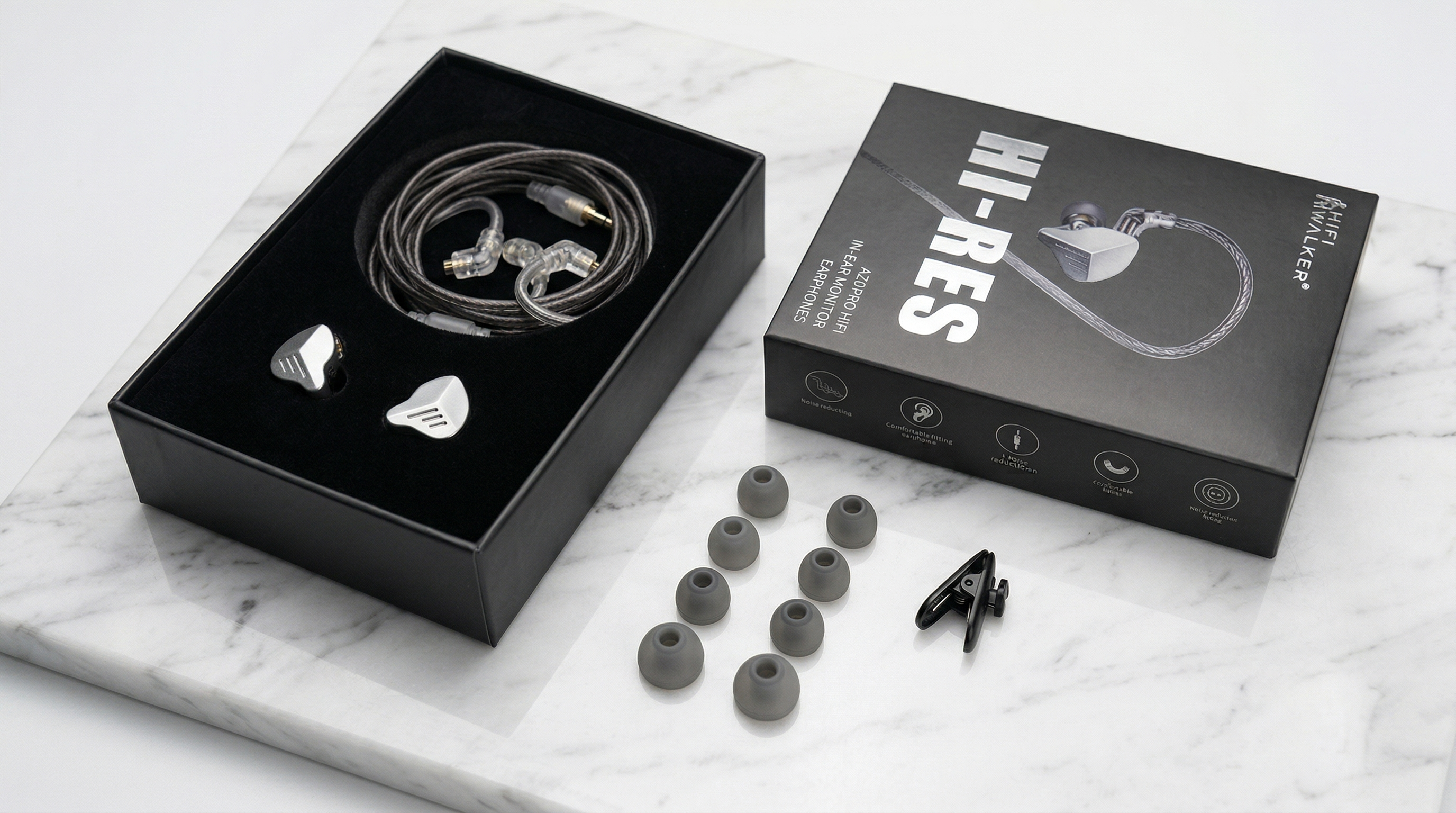
Yes, dedicated players often provide better headphone compatibility, especially for high-impedance models that smartphones struggle to drive properly. Many DAPs include multiple output options including balanced connections.
Q5: What's the learning curve for switching from apps to DAPs?
Most users adapt within a few days. While dedicated players focus more on audio controls than social features, their simplified interfaces often prove more intuitive for music-focused use cases.