

Expert Insights
- Hi-res music's benefits extend beyond frequency response to include improved dynamics, reduced distortion, and better spatial reproduction
- The recording and mastering quality matters more than format specifications - a well-mastered CD can outperform a poorly produced hi-res file
- Dedicated audio players provide significant advantages over smartphones through optimized power supplies, quality DACs, and minimal electromagnetic interference
What Is Hi-Res Music and Why Does It Matter?
Hi-res music represents the pinnacle of digital audio quality, delivering sound that exceeds CD resolution with sampling rates of 96kHz or higher and bit depths beyond 16-bit. Unlike compressed formats like MP3 that discard audio information, hi-res music preserves every nuance of the original recording, offering audiophiles an experience closer to what artists intended in the studio.
Standard Digital Audio
- CD Quality: 44.1kHz/16-bit
- MP3: Compressed, data loss
- Limited dynamic range
- Artifacts from compression
Hi-Res Music Benefits
- 96kHz-768kHz sampling rates
- 24-bit or 32-bit depth
- Full frequency spectrum
- No compression artifacts

The difference becomes immediately apparent when listening to acoustic instruments, vocals, and spatial imaging. Hi-res music captures subtle reverb tails, micro-dynamics, and the natural decay of instruments that standard formats simply cannot reproduce. For serious listeners, this translates to a more emotional and engaging musical experience.
- ►1. What Is Hi-Res Music and Why Does It Matter?
- ►2. Understanding Hi-Res Audio Formats and Technical Specifications
- ►3. The Science Behind Hi-Res Music: Why Higher Numbers Matter
- ►4. Where to Find and Buy Hi-Res Music
- ►5. Essential Equipment for Hi-Res Music Playback
- ►6. Comparing Hi-Res Music to Other Audio Formats
- ►7. Getting Started with Hi-Res Music: A Practical Guide
- ►8. The Future of Hi-Res Music and Emerging Trends
Understanding Hi-Res Audio Formats and Technical Specifications
Hi-res music encompasses several formats, each with distinct characteristics and applications. The most common include FLAC, DSD, MQA, and high-resolution PCM files, with varying levels of compression and quality retention.
FLAC (Free Lossless Audio Codec)
Most versatile format, perfect compression without quality loss, widely supported across devices and platforms.
DSD (Direct Stream Digital)
Single-bit format used in SACD production, offers incredibly smooth and natural sound reproduction.
MQA (Master Quality Authenticated)
Tidal's streaming format that 'unfolds' to reveal hi-res quality, though technically lossy compression.
High-Resolution PCM
Uncompressed linear PCM at 24-bit/192kHz or higher, the gold standard for archival quality.

The Science Behind Hi-Res Music: Why Higher Numbers Matter
Sample rate and bit depth work together to determine audio quality, but understanding their roles requires diving into digital signal processing fundamentals. Sample rate defines frequency response, while bit depth determines dynamic range and noise floor.
Sample Rate Impact
- 44.1kHz = 22kHz max frequency
- 96kHz = 48kHz frequency ceiling
- 192kHz = 96kHz theoretical limit
- Higher rates reduce aliasing
Bit Depth Benefits
- 16-bit = 96dB dynamic range
- 24-bit = 144dB dynamic range
- 32-bit = 192dB theoretical range
- Lower noise floor, more headroom
While human hearing typically tops out around 20kHz, the benefits of higher sample rates extend beyond frequency response. Oversampling improves anti-aliasing filter performance and reduces temporal smearing, leading to more accurate transient reproduction and improved stereo imaging.

Where to Find and Buy Hi-Res Music
The hi-res music ecosystem has expanded dramatically, with numerous platforms offering everything from mainstream pop to audiophile recordings. Each service has unique catalogs, pricing models, and format specialties.
Streaming Services
Qobuz, Tidal HiFi Plus, Amazon Music HD, and Apple Music offer hi-res streaming with vast catalogs and offline downloads.
Download Stores
HDtracks, 7digital, ProStudioMasters, and Bandcamp provide permanent hi-res file ownership with multiple format options.
Label Direct Sales
Blue Coast Records, 2L, and Linn Records offer reference-quality recordings directly from audiophile labels.
Physical to Digital
SACD ripping and vinyl digitization allow converting existing collections to hi-res digital formats.
Pricing varies significantly, with streaming services around $15-20 monthly and individual album downloads ranging from $18-40. Many audiophiles combine streaming for discovery with selective high-quality purchases for favorite albums.

Essential Equipment for Hi-Res Music Playback
Experiencing hi-res music's full potential requires a carefully assembled playback chain. Each component from source to transducer plays a crucial role in preserving audio fidelity and revealing the format's advantages.

Critical Components
- High-quality DAC (ES9038, AK4499)
- Low-noise amplification
- Impedance matching
- Quality cables and connections
Performance Factors
- THD+N under 0.001%
- SNR above 120dB
- Flat frequency response
- Adequate power output
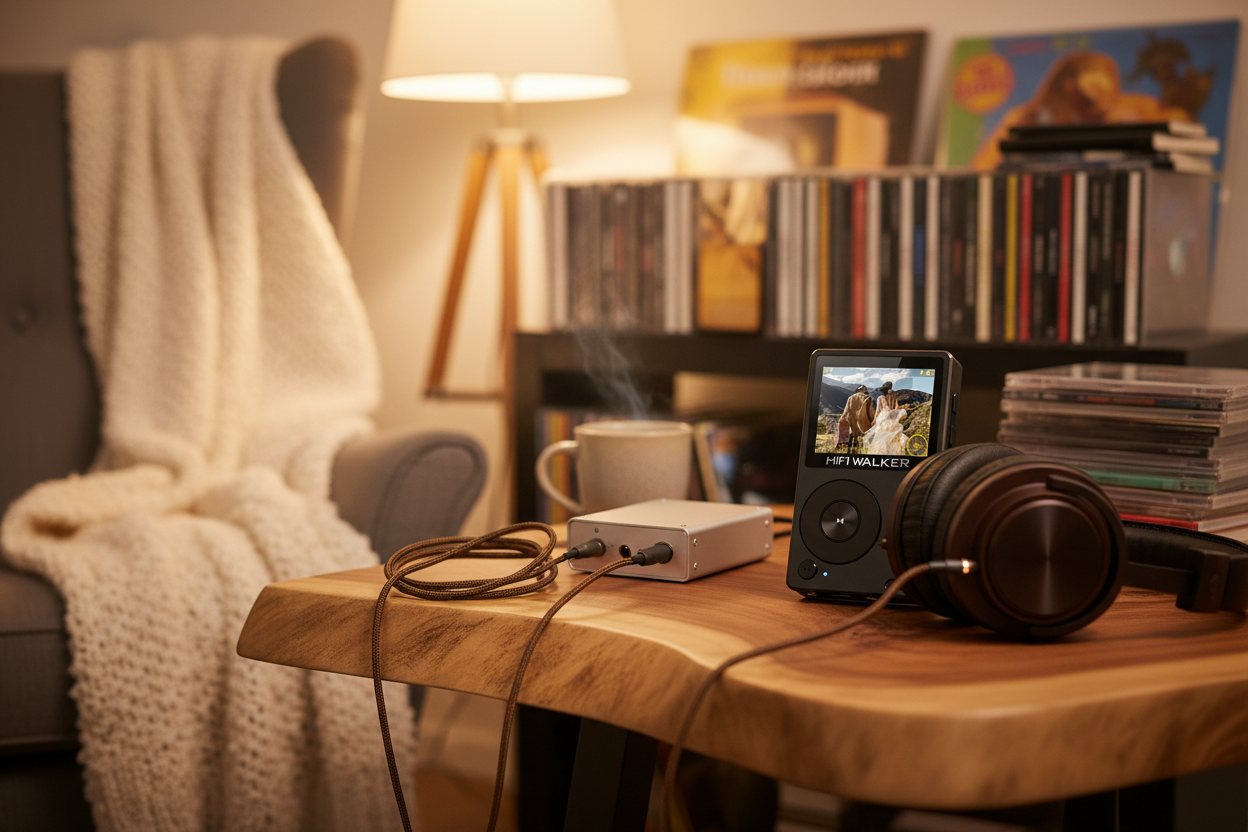
Dedicated hi-res audio players like the HIFI WALKER collection offer optimized hardware and software specifically designed for audiophile playback, avoiding the compromises inherent in smartphone audio systems.


Comparing Hi-Res Music to Other Audio Formats
Understanding hi-res music requires context within the broader audio format landscape. Each format represents different compromises between quality, convenience, and file size, serving distinct use cases and listener priorities.
The sweet spot for many audiophiles lies in FLAC 24/96 files, offering significant quality improvements over CD while maintaining reasonable file sizes and broad compatibility. This format captures most audible benefits without the storage demands of higher resolution variants.

When Hi-Res Shines
- Acoustic instruments and vocals
- Classical and jazz recordings
- Spatial and ambient music
- Reference monitoring
When Standard Formats Suffice
- Heavily compressed modern pop
- Background listening
- Portable/mobile use
- Bandwidth-limited streaming
Getting Started with Hi-Res Music: A Practical Guide
Beginning your hi-res music journey requires strategic planning to maximize both sonic benefits and budget efficiency. The key lies in building a foundation that can grow with your developing appreciation for high-quality audio.
Start with Quality Headphones
Invest in reference-grade headphones first, as they'll reveal improvements across all source quality levels and remain relevant long-term.
Choose Your Player
Select a dedicated DAP with native hi-res support, avoiding the compromises of smartphone audio processing and power management.
Build Your Library Gradually
Focus on well-recorded albums in genres that benefit most from hi-res, starting with acoustic and classical recordings.
Optimize Your Setup
Ensure proper gain staging, use quality cables, and create a distraction-free listening environment to appreciate the improvements.
Many newcomers make the mistake of expecting dramatic differences immediately. Hi-res music's benefits often become apparent through extended listening as your ear develops sensitivity to improved dynamics, imaging, and tonal accuracy.

For comprehensive equipment recommendations and detailed reviews, explore our DAP reviews and comparisons to find the perfect player for your hi-res music journey.
The Future of Hi-Res Music and Emerging Trends
Hi-res music continues evolving with advancing technology, new formats, and changing consumer expectations. Understanding these trends helps audiophiles make informed decisions about long-term investments in equipment and music collections.
Emerging Technologies
- Spatial audio and object-based mixing
- AI-enhanced upsampling algorithms
- Immersive formats like Dolby Atmos Music
- Quantum audio processing concepts
Market Developments
- Mainstream streaming adoption
- Improved mobile device DACs
- Cloud-based hi-res libraries
- Affordable audiophile equipment
The integration of AI and machine learning in audio processing promises exciting developments, from intelligent upsampling that can extract additional detail from lower-resolution sources to personalized EQ curves that adapt to individual hearing characteristics and preferences.

As hi-res music becomes more accessible through improved streaming infrastructure and declining storage costs, the format is positioned to become the new standard for serious music listening, much as CD replaced cassette tape in the previous generation.
Frequently Asked Questions
Q1: Is hi-res music worth it for casual listeners?
Hi-res music offers subtle but meaningful improvements that become more apparent with quality equipment and focused listening. Casual listeners may prefer the convenience of standard formats, while dedicated music lovers typically appreciate the enhanced detail and dynamics.
Q2: What's the minimum equipment needed to hear hi-res differences?
A dedicated DAC supporting 24-bit/96kHz playback and quality headphones form the foundation. Smartphones and basic earbuds won't reveal hi-res benefits, making a proper DAP like the HIFI WALKER H20 series essential for experiencing the format's advantages.
Q3: Can I convert CD or MP3 files to hi-res quality?
Upsampling can increase file specifications but cannot add information that wasn't originally captured. True hi-res benefits require native high-resolution recordings made with appropriate equipment throughout the recording and mastering chain.
Q4: How much storage space does hi-res music require?
Hi-res files range from 50MB to 300MB per song depending on format and duration. A 256GB storage device can hold approximately 1,000 FLAC 24/96 songs or 500 DSD tracks, making storage planning important for large collections.
Q5: Do streaming services offer the same quality as downloaded hi-res files?
Quality streaming services like Qobuz and Tidal deliver bit-perfect hi-res audio when network conditions allow. However, downloaded files ensure consistent quality regardless of internet connectivity and avoid potential streaming compression or buffering issues.