


Expert Insights
- Professional installations benefit from dedicated DAP units rather than smartphone-based solutio ns due to superior audio processing and battery life
- Synchronization accuracy improves dramatically when using identical audio players and speakers rather than mixed component systems
- The investment in quality portable DAPs pays dividends in both immediate performance and future system expandability
Understanding Music Group Player Systems
A music group player system enables synchronized audio playback across multiple devices, creating immersive listening experiences for shared spaces. Whether you're hosting parties, running restaurants, or simply want family-wide audio control, these systems transform how we experience music together.

Traditional Single-Device Limitations
- One listener per high-quality source
- Volume disputes in shared spaces
- Limited range and portability
- Expensive per-room installations
Group Player Advantages
- Synchronized multi-room playback
- Individual volume control per zone
- Portable hi-fi quality anywhere
- Cost-effective scalable solutions
Types of Music Group Player Technologies
Modern group audio systems fall into several categories, each designed for specific use cases and environments. Understanding these technologies helps you choose the right solution for your shared listening needs.
Wireless Network Systems
Wi-Fi based solutions like Sonos that stream from cloud services or local libraries. Great for permanent installations but limited by network dependence.
Bluetooth Multi-Cast
Single source broadcasting to multiple Bluetooth speakers. Simple setup but suffers from compression and sync issues over 30+ feet.
Dedicated DAP Networks
High-resolution audio players with synchronized playback capabilities. Offers audiophile quality with portable flexibility.
Hybrid Solutions
Combining wired and wireless technologies for maximum flexibility and sound quality in both fixed and mobile scenarios.
Setting Up Portable Hi-Fi Group Systems
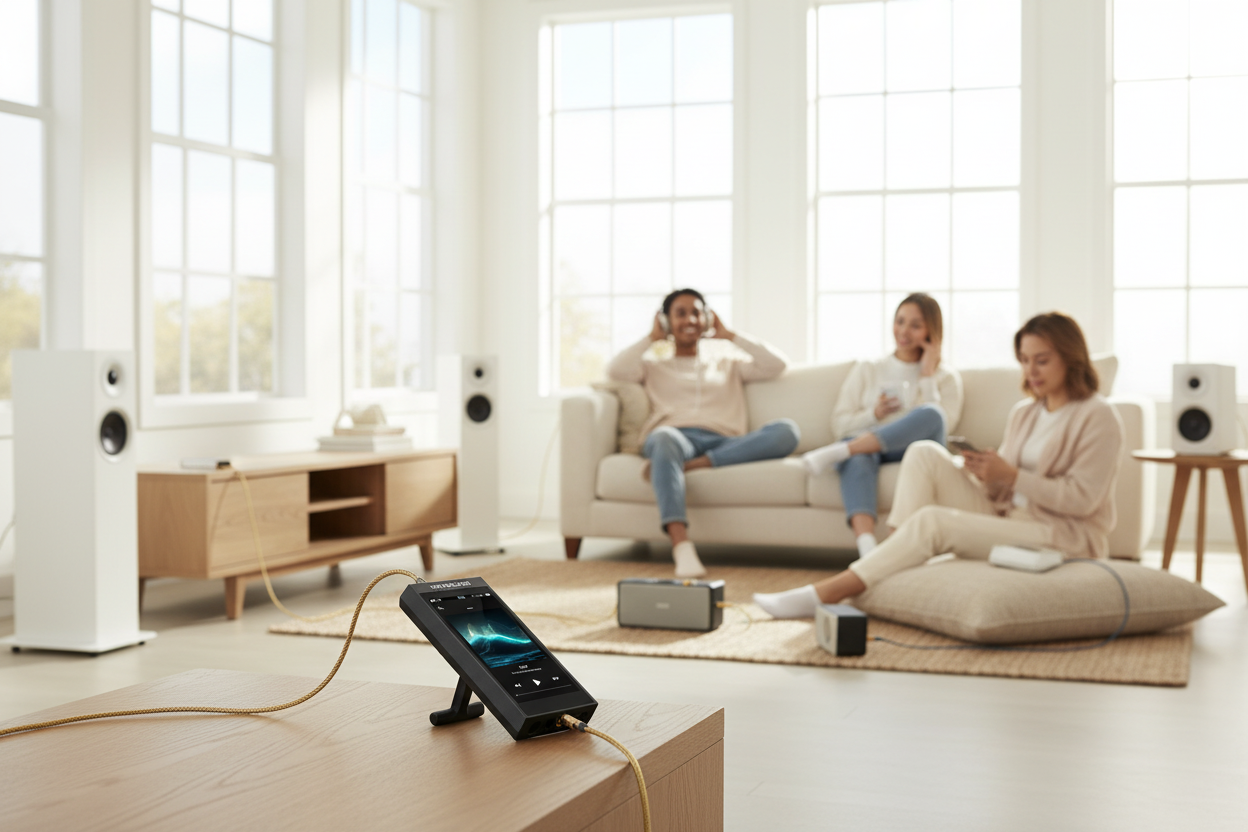
Portable music group player setups offer the ultimate flexibility for audiophiles who refuse to compromise on sound quality. These systems excel in temporary installations, outdoor events, and spaces where permanent wiring isn't feasible.

Source Selection
Choose a primary DAP with excellent battery life and storage capacity. Load identical music libraries across all devices for seamless switching.
Strategic Placement
Position players 15-25 feet apart for optimal coverage. Consider room acoustics and minimize reflective surfaces that could cause timing issues.
Output Matching
Use identical headphones or speakers per zone to maintain consistent frequency response. Different drivers can create jarring sonic differences.
Volume Balancing
Set initial levels using SPL meter apps, then fine-tune based on room dynamics and user preferences throughout the listening area.

Advanced Group Audio Configurations
Professional installations require careful planning and specialized equipment to achieve reliable synchronization across multiple zones.
Timing and Synchronization
- Manual timing adjustment per zone
- Account for room size variations
- Consider speaker driver delays
- Test with percussive content
Audio Quality Optimization
- Match impedance across all outputs
- Use identical cable lengths
- Implement proper grounding
- Regular level calibration

Professional group systems often incorporate dedicated hi-fi audio players as zone controllers, providing local processing power and reducing network dependencies that can cause dropouts during critical listening sessions.
↑ Back to Top
Back to Top ↑Commercial and Residential Applications
Music group player systems serve diverse markets, from intimate home theaters to large commercial installations. Each application demands specific features and performance characteristics.
Assess Space Requirements
Calculate coverage area, identify acoustic challenges, and determine the number of zones needed for optimal listening experience.
Choose Control Strategy
Decide between centralized control, zone-specific controllers, or hybrid systems based on user needs and operational complexity.
Plan Installation Logistics
Schedule deployment during off-hours, prepare backup systems, and train operators on basic troubleshooting procedures.

Troubleshooting Common Group Audio Issues
Even well-designed music group player systems encounter challenges. Understanding common problems and their solutions ensures consistent performance and user satisfaction.
Synchronization Problems
- Audio delay between zones
- Stuttering or dropouts
- Echo effects in open spaces
- Timing drift over long sessions
Quick Solutions
- Adjust buffer sizes individually
- Check network bandwidth allocation
- Reposition speakers strategically
- Restart systems every 4-6 hours
Battery management becomes critical in portable setups. Stagger charging schedules and maintain spare DAP units to ensure uninterrupted service during extended events or daily commercial operations.

Future of Group Music Systems
The music group player market continues evolving with advances in wireless protocols, AI-driven room correction, and higher resolution audio formats. These developments promise even better shared listening experiences.
AI Room Optimization
Smart systems will automatically adjust EQ, timing, and levels based on room acoustics and listener positions using machine learning algorithms.
Ultra-Low Latency Protocols
New wireless standards promise sub-1ms latency for perfect synchronization, eliminating timing issues that plague current systems.
Personalized Audio Zones
Individual listeners will receive customized frequency response and volume levels while maintaining group synchronization.
Voice and Gesture Control
Natural interaction methods will replace complex control interfaces, making group systems more intuitive for all users.
Investment in quality portable DAP systems today ensures compatibility with emerging technologies while delivering immediate benefits. The latest HIFI WALKER models already incorporate many forward-looking features for future-proof installations.
Frequently Asked Questions
Q1: What's the maximum number of devices in a music group player setup?
Most systems support 8-32 synchronized zones, though practical limits depend on your network bandwidth and processing power. For portable DAP setups, 6-8 units typically provide optimal performance without timing issues.
Q2: Can I mix different audio player brands in one group system?
While technically possible, mixing brands often creates synchronization and quality inconsistencies. Using identical models like multiple HIFI WALKER units ensures perfect timing and matching frequency response across all zones.
Q3: How much does a professional music group player system cost?
Costs range from $500 for basic home setups to $10,000+ for commercial installations. Portable DAP-based systems using quality players like the H20 Ultra typically cost $1,500-4,000 for professional results.
Q4: What audio formats work best for group playback systems?
Lossless formats like FLAC and WAV provide the best quality and reliability. While compressed formats work, they can introduce artifacts that become more noticeable in synchronized multi-zone playback.
Q5: Do group audio systems work outdoors?
Yes, portable DAP-based systems excel outdoors since they don't rely on Wi-Fi networks. Battery-powered units like the H20 Ultra can run model-specific playback time, making them ideal for outdoor events and temporary installations.