


Expert Insights: Key Takeaways
- The ESS9038Q2M's hyperstream architecture in the H20 Ultra uses all eight internal DAC channels in stereo operation, which measurably improves dynamic range and noise floor compared to simpler two-channel implementations of the same chip.
- FPGA-based DSD clock management eliminates the jitter accumulation that plagues software-only DSD implementations — the difference is audible on DSD256 recordings with complex spatial information and fast transients.
- The RT6862/6863 split amp architecture means the balanced and single-ended outputs are electrically isolated with separate gain stages — a topology that prevents ground-loop interference when switching between output types mid-session.
- At 380mW into 32Ω from the 4.4mm balanced output, the H20 Ultra offers serious portable headroom for compatible headphones while still depending on headphone sensitivity, impedance, and listening level.
- For a DSD library strategy, use the included 128GB card for favorite DSD256 masters and the T-card slot, which supports cards up to 512GB, for larger FLAC, WAV, or DSD64 archives.
Why DAC Chip Architecture Matters for Native DSD Decoding
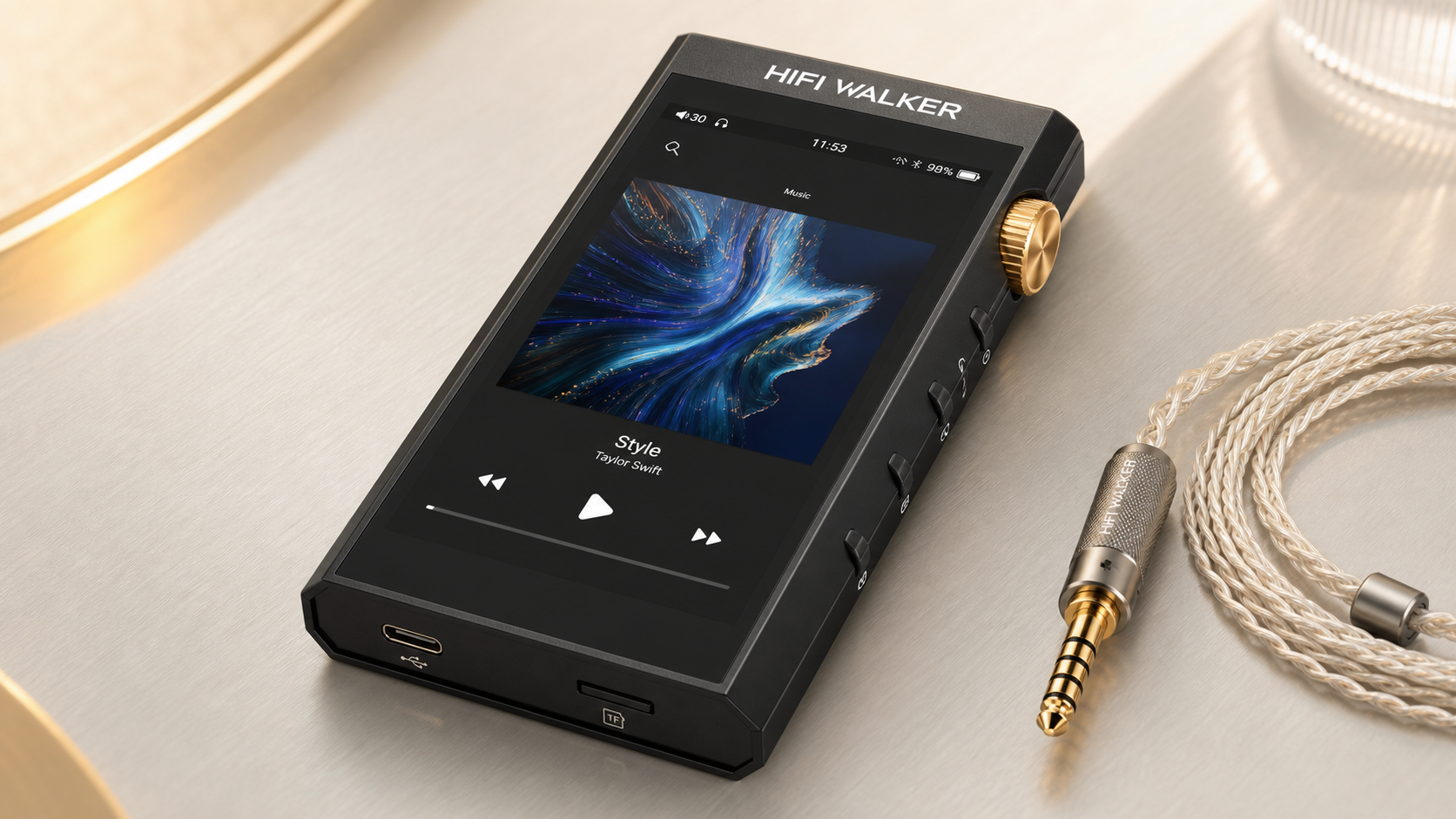
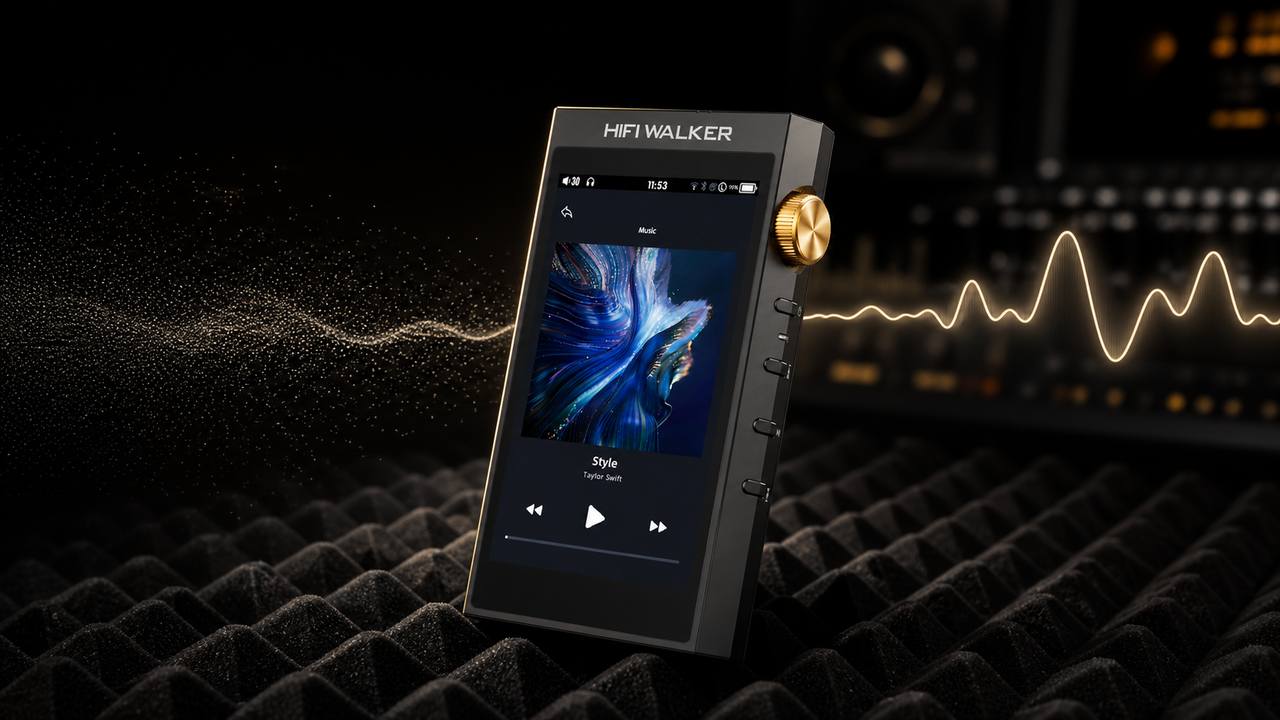
If you've been hunting for a DSD decoding DAP that doubles as a serious USB DAC, you already know the market is flooded with devices that claim hi-res capability but quietly convert DSD to PCM before it ever reaches the output stage. The HIFI WALKER H20 Ultra Hi-Res Audio Player takes a categorically different approach — native DSD256 decoding via an FPGA pipeline, anchored by the ESS ESS9038Q2M, one of the most respected DAC silicon choices in the audiophile space.
This article is written for the listener who already knows what a Sabre DAC sounds like, understands why FPGA matters for bit-perfect DSD, and wants hard data before dropping serious money on a flagship DAP. No hand-holding — just architecture, specs, and honest listening impressions at the desktop.
Generic Hi-Res Claims
- DSD-to-PCM software conversion before DAC stage
- Single-ended output only, limited headroom
- Integrated SoC DAC with shared power rail noise
- No USB DAC output mode for desktop rigs
- Compressed dynamic range from poor analog stage
H20 Ultra Actual Architecture
- Native DSD256 via FPGA — bit-perfect, no conversion
- 4.4mm balanced + 3.5mm SE; up to 380mW@32Ω
- Dedicated ESS9038Q2M with isolated clean power
- USB DAC I/O mode for flexible desktop or headphone rig integration
- RT6862/RT6863 amplifier stages for clean wired output

- ►1. Why DAC Chip Architecture Matters for Native DSD Decoding
- ►2. Inside the ESS9038Q2M: Why ESS Sabre Still Leads for DSD
- ►3. FPGA-Based Native DSD256: What It Actually Means for Playback
- ►4. USB DAC Mode: Integrating the H20 Ultra into Your Desktop Rig
- ►5. Building a 256GB Local Library: Storage Strategy for Audiophile Collections
- ►6. Home Listening Performance: Balanced Output, Headphone Matching, and LDAC Wireless
- ►7. H20 Ultra vs H20 Pro: Choosing the Right Flagship DAP for Your Home Setup
Inside the ESS9038Q2M: Why ESS Sabre Still Leads for DSD
The ESS ESS9038Q2M is not a budget DAC chip — it's the same silicon family found in multi-thousand-dollar desktop converters. The Q2M variant packs eight DAC channels (used in stereo mode for maximum dynamic range), a 32-bit hyperstream architecture, and native DSD decoding up to DSD256. On the H20 Ultra DAC architecture, ESS technology is paired with an FPGA stage that handles DSD decimation filters independently, keeping the signal path bit-perfect all the way to the analog output.
The dual RT6862/6863 amplifier architecture is equally important. Splitting the balanced and single-ended amp stages means each output gets its own dedicated gain path — a design choice you see in reference-grade desktop separates, not commodity DAPs. PCM decoding reaches 768kHz/32-bit, covering every hi-res format currently in commercial release.
One number that stands out: 380mW into 32Ω from the 4.4mm balanced output. That gives compatible headphones and IEMs more headroom than typical entry players, while very demanding headphones still need to be judged by sensitivity, impedance, and preferred listening level.
FPGA-Based Native DSD256: What It Actually Means for Playback
The term 「native DSD」 gets thrown around loosely. Let's be precise: native DSD means the DSD bitstream is passed directly to the DAC chip in its original 1-bit format — no PCM conversion, no noise-shaping reinterpretation. The FPGA on the HIFI WALKER H20 Ultra Hi-Res Audio Player acts as a real-time digital filter and clock manager for the DSD stream, ensuring the ESS9038Q2M receives a clean, jitter-minimized signal.
Source File Selection
Load your DSD64, DSD128, or DSD256 .dsf/.dff files from the included 128GB card or a T-card up to 512GB.
FPGA Clock Synchronization
The onboard FPGA locks a low-jitter clock to the DSD sample rate, bypassing any rate-conversion that would corrupt the 1-bit stream's timing integrity.
Bit-Perfect Delivery to ESS9038Q2M
The raw DSD stream is handed to the ESS DAC in native mode — no DoP wrapping, no PCM frame conversion. The DAC's hyperstream engine handles the sigma-delta modulation natively.
Dual Amp Stage Output
Decoded analog audio routes to either the 4.4mm balanced output or the 3.5mm single-ended jack, each powered by its dedicated RT6862 or RT6863 amp IC.

The practical result: DSD256 recordings — think well-mastered chamber music, acoustic jazz, or studio-originated DSD content — play with the kind of tonal density and transient fidelity that PCM upsampling simply cannot replicate. The difference is most audible in decay tails, spatial depth, and the absence of high-frequency harshness that often plagues poorly implemented DSD-to-PCM conversion.
USB DAC Mode: Integrating the H20 Ultra into Your Desktop Rig
One of the most compelling — and underreported — features of the H20 Ultra Hi-Res Audio Player is its USB DAC I/O mode. Connect it to a desktop source via USB, and the H20 Ultra presents itself as a USB audio device, routing the source's digital output through the ESS9038Q2M and out to your headphones or amplifier. This turns a flagship portable DAP into a capable desktop DAC without purchasing separate hardware.
H20 Ultra as Standalone DAP
- Play from the included 128GB card or a T-card up to 512GB
- Native DSD256 + PCM 768kHz/32-bit from local files
- >10h listed playback battery — all-day listening sessions
- Rotary volume knob for precise volume control
- 4" touchscreen for library navigation
H20 Ultra as USB DAC
- USB DAC I/O: connect to desktop source, output via 4.4mm or 3.5mm
- Same ESS9038Q2M + dual amp stage — full flagship performance at the desk
- 4.4mm balanced output up to 380mW@32Ω
- Bluetooth 5.1 LDAC and aptX-HD TX/RX for compatible wireless setups
- Single unit replaces a separate portable DAC/amp for home use
For the home listener who already owns a quality desktop source — a ripping station, a music server, or a NAS — the USB DAC mode is a compelling value multiplier. You get reference-grade conversion from the same chip, the same amp stage, and the same balanced output topology as the standalone portable mode. The full HIFI WALKER DAP lineup covers different tiers, but the H20 Ultra is the only one offering this depth of USB DAC integration at its performance level.

↑ Back to Top
Back to Top ↑Building a 256GB Local Library: Storage Strategy for Audiophile Collections
A DAP is only as good as the library it carries. The HIFI WALKER H20 Ultra comes in a current 128GB-card configuration and supports a T-card up to 512GB for a large local, lossless library. For context: a DSD256 album averages 4–6GB; a 24-bit/96kHz FLAC album runs 1–2GB. That's hundreds of reference-quality records available offline, no network required.
Format Your microSD as exFAT
Use a high-endurance U3/A2-rated card for reliable read speeds with large DSD files. Format as exFAT for cards above 32GB.
Organize by Format Tier
Keep favorite DSD256 and DSD128 masters on the included 128GB card; allocate a larger T-card for FLAC 24/192 and WAV libraries where file counts are higher.
Tag Your Files Properly
Embed ReplayGain tags in FLAC files to normalize loudness across albums. The H20 Ultra reads standard ID3 and Vorbis tags for accurate metadata display.
Build a Playlist Architecture
Use M3U playlists organized by recording session, label, or mastering engineer — a listening approach that highlights the DAP audio differences between masters.
HIFI WALKER lists more than 10 hours of playback in screen-saver standby playback mode, with charging around 3.5 hours. For the home-focused audiophile who listens in multi-hour sessions, that is a more useful expectation than inflated all-day battery language.
Home Listening Performance: Balanced Output, Headphone Matching, and LDAC Wireless
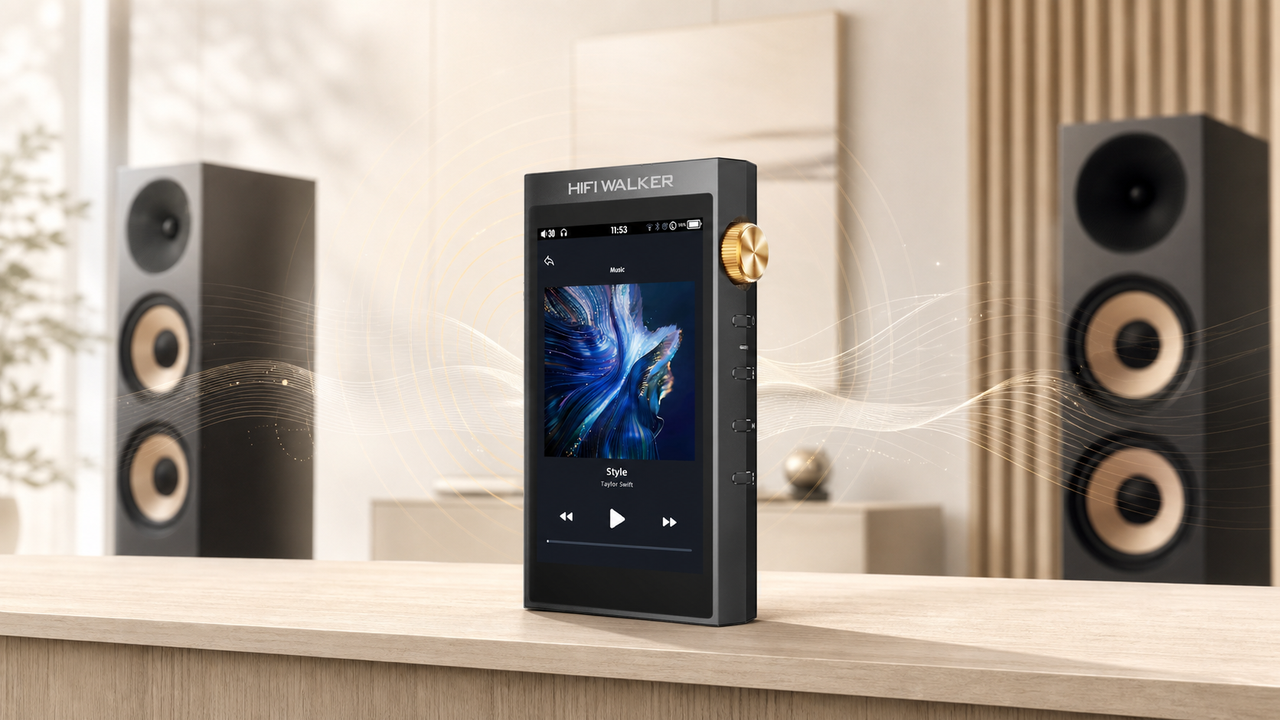
At the listening desk, the HIFI WALKER H20 Ultra Hi-Res Audio Player presents a genuinely different experience from budget DAPs. The 4.4mm balanced output — driven by the dual RT6862/6863 stage — delivers up to 380mW into 32Ω. That is meaningful headroom for many compatible headphones and IEMs, while final loudness and control still depend on headphone sensitivity, impedance, and listening volume.
Bluetooth 5.1 with LDAC and aptX-HD support adds useful wireless flexibility: TX mode can send to compatible wireless headphones, and RX mode can receive from a Bluetooth source in supported setups.

The physical control layer is worth noting for home sessions: the body includes a rotary volume knob that provides tactile, repeatable volume adjustment. The 4-inch touchscreen handles navigation cleanly, while the physical controls make small listening adjustments easier.

H20 Ultra vs H20 Pro: Choosing the Right Flagship DAP for Your Home Setup
The HIFI WALKER H20 Pro Hi-Res Audio Player sits at $192 versus the H20 Ultra's $239.99. Both are serious DAPs — the question is what the premium buys. For the home listener focused on DSD decoding DAP performance and USB DAC integration, the H20 Ultra's FPGA-native DSD256, higher output power, and dual amp architecture represent a meaningful step up, not just a spec-sheet marketing bump.
If your collection is primarily FLAC 24/96 and DSD64, the H20 Pro delivers excellent performance at a lower price. If you're running DSD128/256 masters, demanding full-size headphones from the balanced output, or building a hybrid desktop rig with USB DAC duties, the H20 Ultra's architecture earns its premium. See the full range on the HIFI WALKER DAP collection page for a side-by-side overview.
Both purchases are backed by free shipping, a 30-day return window, and a 1-year warranty — so the risk of getting the wrong tier is genuinely low. Order the H20 Ultra, spend a week with it at your listening desk, and evaluate whether the DSD256 support, USB DAC mode, and 380mW balanced output justify the delta for your specific headphone chain.
Also worth exploring: in-depth DAP reviews and comparisons on the HIFI WALKER editorial blog, where we break down pairing recommendations across different headphone impedance profiles and listening genres.
Frequently Asked Questions
Q1: Does the H20 Ultra support native DSD256 or only DoP?
The HIFI WALKER H20 Ultra Hi-Res Audio Player supports native DSD256 via its onboard FPGA stage — not DoP (DSD over PCM) wrapping. The FPGA manages clock synchronization and delivers the raw 1-bit DSD stream directly to the ESS9038Q2M DAC chip, preserving the original signal without any PCM conversion in the path.
Q2: Can the H20 Ultra be used as a USB DAC connected to a desktop source?
Yes. The H20 Ultra features USB DAC I/O mode, which allows it to receive digital audio from a connected desktop source over USB and output through its 4.4mm balanced or 3.5mm single-ended jacks. The full ESS9038Q2M and dual RT6862/6863 amp stage remain active in this mode, so desktop performance matches standalone portable performance.
Q3: What is the maximum microSD storage supported by the H20 Ultra?
The H20 Ultra supports a T-card up to 512GB, and the current selling configuration includes a 128GB card. A high-endurance card can be helpful for large local DSD or FLAC libraries.
Q4: How much output power does the H20 Ultra deliver from its balanced output?
The balanced 4.4mm output on the H20 Ultra delivers up to 380mW at 32Ω. That gives many compatible wired headphones and IEMs useful headroom, while very demanding headphones still need to be matched by sensitivity, impedance, and listening level.
Q5: What Bluetooth codecs does the H20 Ultra support, and does it work in receive mode?
The H20 Ultra supports Bluetooth 5.1 with LDAC and aptX-HD codecs. It supports TX and RX wireless use with compatible devices, so it can send to supported headphones or receive from a Bluetooth source in supported setups.