


Last updated: May 7, 2026
Expert Insights: Spotify Genre Test Key Takeaways
- 90s generation remains the most common classification (35% of users) — driven by that decade's genre diversity, not users' birth years. The algorithm measures preference, not age.
- Genre Test accuracy requires at least 6 months of listening history. New accounts and users who heavily rely on algorithmically-generated playlists receive less precise results.
- Electronic music listeners benefit most from hardware upgrades post-Genre Test. Complex layering, sub-bass architecture, and wide dynamic range in EDM are completely lost on smartphone audio.
- The Spotify Genre Test company is Spotify itself — built on its proprietary Echo Nest-derived audio analysis framework, not a third-party quiz tool.
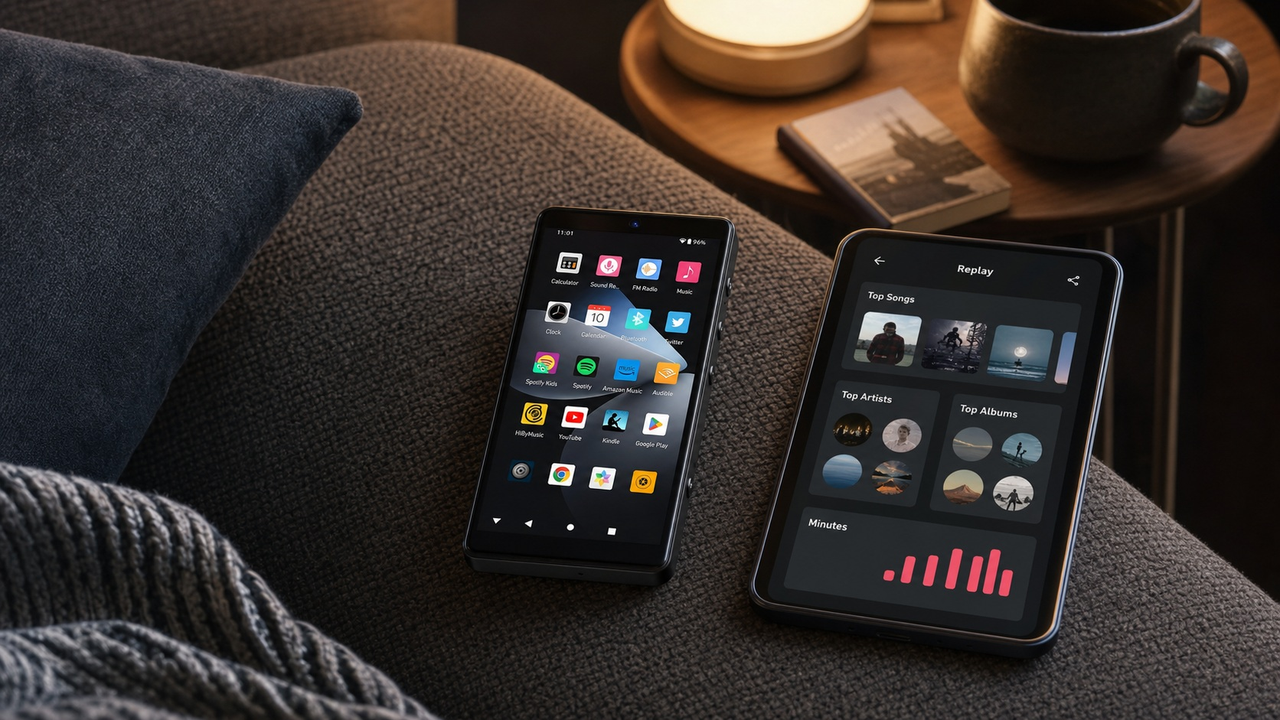
- Android DAPs like the G7 Pro uniquely solve the Spotify audiophile paradox: they run the Spotify app natively while routing audio through dedicated DAC hardware, eliminating the smartphone DAC bottleneck.
What Is the Spotify Genre Test? Your Music DNA Decoded
The Spotify Genre Test — also called the "Your Music Generation" feature — is Spotify's AI-powered tool that analyzes your listening history to reveal which musical era defines your taste. It scans 12 months of streaming data across 30+ million tracks, then places you in a generation: the 70s, 80s, 90s, 2000s, or beyond. In 2026, it's become Spotify's most-shared viral feature.
So what is the Spotify Genre Test, exactly? Unlike personality quizzes with generic questions, this feature uses the same machine-learning engine that powers Spotify Wrapped — examining real data on what you play, skip, repeat, and save. The result is a surprisingly accurate portrait of your musical DNA, complete with percentage breakdowns and era-specific playlists.

Spotify's Genre Test reveals your musical generation based on real listening data
Traditional Music Quizzes
- Generic personality questions
- Manual song selection required
- Basic decade labels only
- Static, one-time results
- No connection to actual listening
Spotify Genre Test
- AI analysis of real listening data
- 12 months of streaming history
- Detailed subgenre breakdowns
- Dynamic results that update over time
- Personalized era playlists generated
Key insight: Accuracy depends heavily on your listening history. New Spotify accounts get generic results, but after 6+ months of diverse listening, the Genre Test becomes remarkably precise — often surprising users with how well it captures tastes they'd never consciously articulated.
- ►1. What Is the Spotify Genre Test? Your Music DNA Decoded
- ►2. How to Take the Spotify Genre Test in 2026: Step-by-Step
- ►3. Decoding Your Spotify Genre Test Results: What Each Classification Means
- ►4. Most Popular Music Generations on Spotify in 2026: The Data
- ►5. Spotify Genre Test Company: The Technology Behind the Algorithm
- ►6. Spotify Genre Test Electronic Songs: How EDM Classifications Work
- ►7. Sharing Your Spotify Genre Test Results on Social Media
- ►8. Upgrade How You Hear Your Generation: Best Android DAPs for Spotify in 2026
How to Take the Spotify Genre Test in 2026: Step-by-Step
Taking the Spotify Genre Test takes under two minutes, but what you discover can reshape your entire music discovery experience. Here's the exact process for finding and using the feature in 2026 — whether you're on iOS, Android, or desktop.
Open the "Made for You" Section
Launch the Spotify app and navigate to the Home tab. Scroll down to the "Made for You" section. Look for a card labeled "Your Music Generation" or "Genre Test" — it appears alongside Spotify Wrapped, Daily Mixes, and Discover Weekly.
Let the Algorithm Analyze Your Data
No manual input needed. Spotify automatically processes your last 12 months of listening: every genre, artist, skip, repeat, and playlist addition. The analysis runs in the background and completes within seconds.
Review Your Music Generation Results
Your primary generation appears with a percentage score (typically 40–60% of your listening). You'll also see 2–3 secondary influences, a full genre breakdown, and an auto-generated playlist from your assigned era.
Share or Explore Further
Tap the share button to export a branded graphic for Instagram, TikTok, or Twitter. You can also explore the era-specific playlist to find overlooked classics or challenge friends to compare their musical generations.
Pro tip for better results: If your Genre Test results feel generic or inaccurate, it likely means your listening history is too narrow or too recent. Deliberately explore artists from different decades for 2–3 months, and your results will sharpen considerably. New accounts especially should give it time before expecting meaningful output.
Decoding Your Spotify Genre Test Results: What Each Classification Means
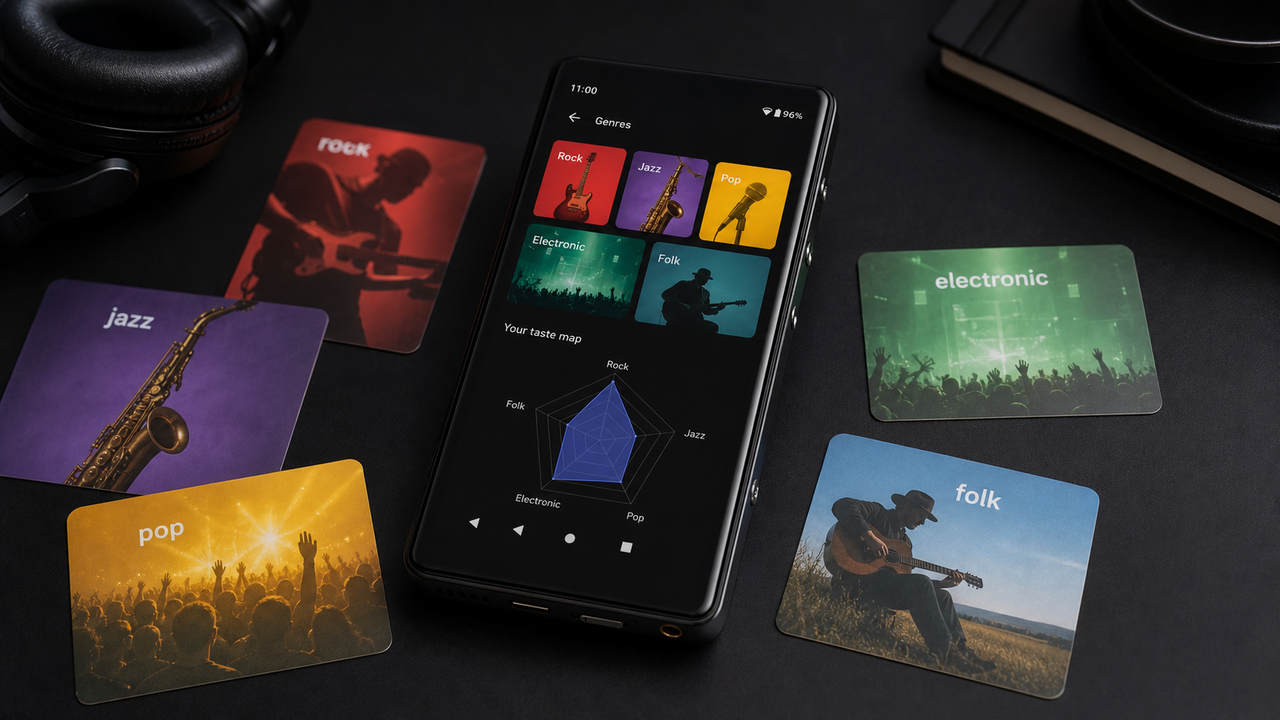
Your Spotify Genre Test results go far deeper than a single decade label. The platform layers primary generation, secondary influences, specific subgenre splits, and cultural context into one unified profile. Understanding what each component means helps you act on the results — from discovering new artists to upgrading your listening setup.

Spotify Genre Test results show your primary musical generation plus secondary influences
A 90s classification, for example, doesn't just mean you like Nirvana. It means your listening patterns — across energy levels, acoustic qualities, and tempo ranges — most closely match the sonic fingerprint of that decade. Users frequently land in the 90s even if they were born in the 2000s, because the algorithm measures preference, not age. This makes the Spotify Genre Test genuinely useful for discovering overlooked music from your era.
Most Popular Music Generations on Spotify in 2026: The Data
Spotify's 2026 aggregated data reveals a clear hierarchy of musical generations among users. The 90s generation leads at 35% of users — driven by that decade's unmatched genre diversity, from grunge and alt-rock to trip-hop and early hip-hop. The result is a broad enough sonic fingerprint to capture millions of listeners who never even lived through it.
Top Music Generations (2026)
- 90s Alternative & Grunge — 35% of users
- 2000s Electronic & Pop — 28% of users
- 80s Synthwave & New Wave — 22% of users
- 70s Rock & 2010s Fusion — 15% combined
Why These Eras Dominate
- 90s had unparalleled genre diversity and cultural impact
- 2000s electronic surge matches current streaming quality
- Synthwave revival drove massive 80s reclassification
- Cross-generational appeal beats single-decade purity
The 2000s electronic surge at 28% is particularly notable for audiophiles. EDM, progressive house, and early dubstep from this era were engineered with complex layering and deep sub-bass that standard smartphone speakers completely fail to reproduce. This is where a dedicated DAP makes a noticeable difference — and why so many electronic music fans eventually upgrade their listening hardware after discovering their Genre Test results.

Spotify Genre Test Company: The Technology Behind the Algorithm
The Spotify Genre Test company behind the algorithm is Spotify itself — specifically its Audio Intelligence and Machine Learning teams, based in Stockholm and New York. This isn't a third-party quiz widget. It's built on Spotify's proprietary Echo Nest-derived analysis framework, which assigns every track in its 100M+ library a numerical score across 13 distinct audio dimensions.
Audio Feature Analysis (13 Dimensions)
The algorithm examines danceability, energy, loudness, speechiness, acousticness, instrumentalness, liveness, valence, tempo, key, mode, time signature, and duration. Each track gets precise numerical scores, creating a multi-dimensional sonic fingerprint that's compared against decade-specific profiles.
Cultural Context Mapping
Spotify overlays historical data about when songs peaked in popularity, which cultural movements they represented, and how they influenced subsequent music. A track can be modern but carry strong 80s DNA — and the algorithm accounts for this.
Behavioral Listening Pattern Recognition
The system tracks not just what you play, but how you play it. Skip rates, repeat plays, playlist placement, shuffle vs. album listening, time of day, and session length all feed into your generational assignment. This behavioral layer is what separates Genre Test from simpler music personality tools.
This multi-dimensional approach is why the Spotify Genre Test feels startlingly accurate compared to anything else available. It doesn't ask what you think you like — it observes what you actually do, then cross-references that behavior against the richest music database ever assembled. The result is a classification system that catches nuances even avid music fans find difficult to articulate themselves.
↑ Back to Top
Back to Top ↑Spotify Genre Test Electronic Songs: How EDM Classifications Work
Electronic music is the most complex category for the Spotify Genre Test electronic songs analysis. Unlike rock or pop, where decade placement is relatively stable, electronic music evolved through radically different forms in each era — from 80s Detroit Techno to 90s Chicago House to 2000s Progressive House to today's hybrid EDM. The algorithm distinguishes between these with impressive granularity.
If your Spotify Genre Test result shows a 2000s Electronic or 90s Generation classification built on dance music, you're in a category where audio equipment matters enormously. Electronic tracks are produced with sub-bass frequencies, stereo micro-details, and dynamic range that compressed smartphone audio simply cannot reproduce. A dedicated DAP with a quality DAC chip transforms how these genres actually sound.

Sharing Your Spotify Genre Test Results on Social Media
The Spotify Genre Test became a genuine social media phenomenon in 2026 because Spotify made sharing frictionless and visually compelling. The platform generates branded result graphics optimized for Instagram Stories, TikTok overlays, and Twitter cards — each showing your primary generation, key artists, and top genre percentages in a single shareable image.
What You Can Share
- Branded generation graphics (IG/TikTok ready)
- Auto-generated era playlists (shareable links)
- Friend challenge invitations
- Genre breakdown data cards
- Year-over-year comparison posts
Community Features
- Follow friends' era playlists
- Collaborative genre-specific playlists
- Music discovery through shared results
- Group challenges by generation
- Comment threads on shared results
The viral mechanics work because music identity is deeply personal and surprisingly divisive. A 2000s Electronic result sparks different reactions than a 90s Alternative classification — and the debates those comparisons generate drive enormous organic engagement. Spotify deliberately designed the sharing interface to make result comparisons a natural next step, turning individual data into social currency.
Upgrade How You Hear Your Generation: Best Android DAPs for Spotify in 2026
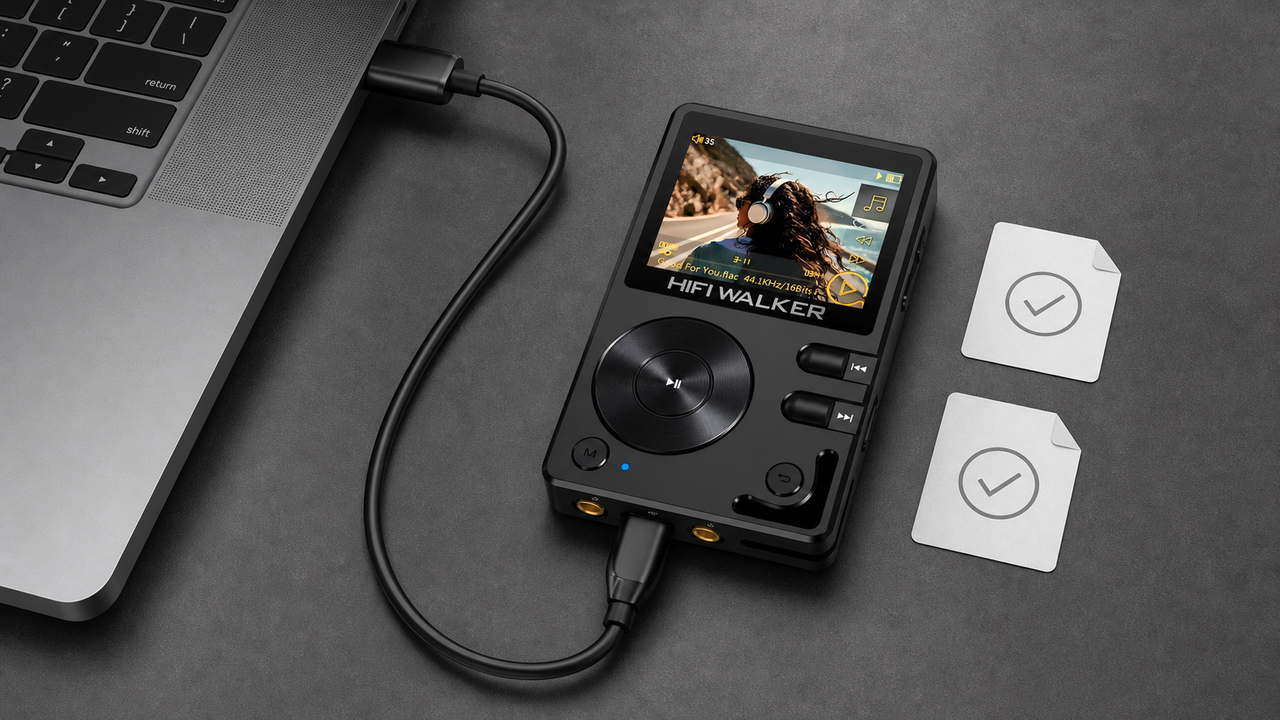
Knowing your musical generation is only half the equation. The other half is hearing it properly. Whether your Spotify Genre Test reveals 90s grunge, 2000s electronic, or 80s synthwave, a dedicated Android audio player (DAP) unlocks details that smartphone audio permanently buries — from the subtle reverb tail on a 90s guitar track to the sub-bass architecture of a progressive house build.
For most Spotify Genre Test users upgrading their first audio setup, the sweet spot is an Android DAP that runs Spotify natively. The G7 Pro ($90.00) and G7 ($74.25) both offer this — dedicated audio hardware with full Android app support, so you keep Spotify's algorithm while dramatically upgrading the sound. For listeners whose Genre Test reveals complex electronic or classical preferences, the H20 Pro ($180.00) adds balanced output and a premium DAC chip for studio-level reproduction.
Frequently Asked Questions
Q1: What is the Spotify Genre Test and how does it work?
The Spotify Genre Test (also called 'Your Music Generation') is an AI-powered feature that analyzes your 12-month Spotify listening history to assign you a musical era — typically the 70s, 80s, 90s, or 2000s. It examines 13 audio dimensions including energy, danceability, acousticness, and tempo, then cross-references your patterns with decade-specific sonic profiles. Results include a primary generation, 2–3 secondary influences, genre breakdowns, and a personalized era playlist.
Q2: What company makes the Spotify Genre Test?
The Spotify Genre Test is built and operated by Spotify itself — specifically its Audio Intelligence and Machine Learning teams. It's powered by Spotify's proprietary track analysis system (derived from Echo Nest, acquired in 2014), which scores every track across 13 acoustic and behavioral dimensions. There is no third-party company involved; it's a first-party Spotify feature.
Q3: Why does the Spotify Genre Test show 90s results for so many users?
The 90s generation is the most common result (approximately 35% of users in 2026) because that decade had unparalleled genre diversity — grunge, alternative rock, trip-hop, early hip-hop, rave culture, and R&B all coexisted simultaneously. This creates a broad sonic fingerprint that captures listeners of all ages. The test measures listening preferences, not birth year, so younger users who gravitate toward 90s sounds correctly receive 90s classifications.
Q4: How does the Spotify Genre Test classify electronic songs?
Electronic music receives the most granular analysis in the Genre Test. The algorithm distinguishes between Chicago House (90s), Detroit Techno (80s), Progressive House (2000s), and modern EDM fusion by examining BPM ranges, production techniques, harmonic progression patterns, and synthesis methods. A heavy electronic listener will typically receive a 2000s or 90s primary generation with detailed subgenre breakdowns showing their specific electronic preferences.
Q5: Can I improve my Spotify Genre Test accuracy?
Yes. The test requires at least 6 months of diverse listening history for accurate results. To improve accuracy: listen to complete albums rather than random singles, use Spotify's 'Liked Songs' feature consistently, avoid letting the platform idle on background playlists that don't reflect your preferences, and explore music from multiple decades. Results update automatically as your listening history evolves — major shifts typically take 2–3 months to appear.
Q6: What Android DAP works best for listening to Spotify after discovering your Genre Test results?
For Spotify users who want to upgrade their audio after receiving Genre Test results, an Android DAP is the ideal solution — it runs Spotify natively while providing audiophile-grade DAC hardware. The HIFI WALKER G7 Pro ($90.00) and G7 ($74.25) are excellent entry points, while the H20 Pro ($180.00) adds balanced output for serious listeners. All run Android OS with full Spotify app support.