

Expert Insights
- The single biggest upgrade most listeners miss: output impedance. A DAP with < 1Ω output impedance preserves the frequency response that multi-BA IEM designers intended — phones at 2–10Ω shift that response audibly.
- Don't chase SNR numbers in isolation. A DAP measuring -118 dB SNR through its 3.5mm output may measure -122 dB through its balanced 4.4mm port — the output stage matters as much as the DAC chip itself.
- For first-time DAP buyers on a budget, prioritize storage expandability (microSD support) over every other feature. Your music library will grow; having room to grow with it is more valuable than a marginally better DAC chip you won't hear the difference from at this stage.
DAP Meaning: The Short Answer
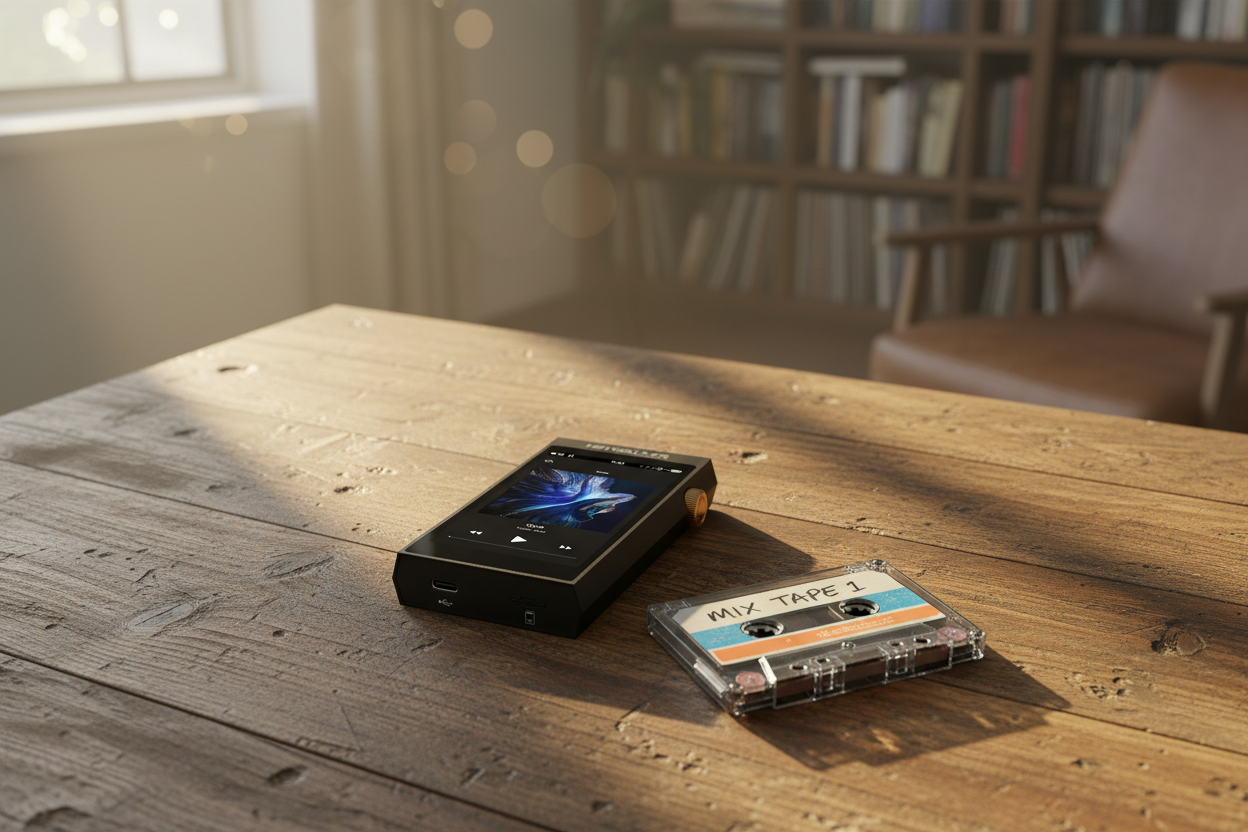
DAP stands for Digital Audio Player — a dedicated portable device engineered specifically to play back digital music files at the highest possible fidelity. If you've stumbled across the term dap meaning during your research into better-sounding audio gear, you're in the right place. This article breaks down what a DAP actually is, how it differs from your smartphone, and why serious listeners consider one essential.
Unlike the music app on your phone, a DAP is purpose-built around audio. Every component — the DAC chip, the amplifier stage, the output impedance — is chosen to serve one goal: reproducing sound as faithfully as the original recording. That singular focus is what separates a true DAP from a do-everything device.

A Brief History of the DAP
The digital audio player concept dates back to 1997, when the first commercial MP3 players appeared in South Korea. Early devices stored a handful of compressed songs on onboard flash memory. By the mid-2000s, hard-drive-based players like Apple's iPod brought entire music libraries into a shirt pocket.
MP3 Era (1997–2005)
First-generation DAPs focused on compressed formats — MP3, AAC, WMA. Storage was limited; audio quality was secondary to convenience.
iPod Dominance (2001–2014)
Apple's hard-drive players mainstreamed portable digital music, but still prioritized convenience over audiophile-grade output.
Hi-Res Revolution (2010–present)
Dedicated DAP makers embraced lossless codecs — FLAC, ALAC, DSD — alongside premium DAC chips and balanced amplifier stages, creating a new category: the audiophile DAP.
Android DAPs (2015–present)
Modern DAPs run Android OS, enabling streaming apps like Tidal and Qobuz alongside local hi-res playback, merging ecosystem flexibility with audiophile hardware.
Today's DAP market is vibrant and segmented — from sub-$100 entry-level players to $3,000+ flagship devices. Brands like HIFI WALKER have made reference-quality sound accessible at mid-range prices, opening the audiophile world to a much wider audience.
DAP vs. Smartphone: Why Dedicated Hardware Matters
The most common question newcomers ask is: "My phone plays music — why do I need a DAP?" It's a fair question. The answer lies in hardware priorities. A smartphone is designed to run apps, handle calls, browse the web, and conserve battery across all those tasks. Audio is one item on a long checklist.
Smartphone Audio Limitations
- Integrated SoC DAC — optimized for power efficiency, not sonic accuracy
- High output impedance causes frequency response shifts with sensitive IEMs
- Background processes introduce electrical noise into the audio circuit
- Limited to 24-bit/48kHz output on most flagship phones
- No balanced (3.5mm/4.4mm) output option
- Battery shared with screen, cellular radio, and apps
Dedicated DAP Advantages
- Discrete, high-performance DAC chip (ESS Sabre, AKM, etc.) with low noise floor
- Low output impedance — flat frequency response even with 16Ω IEMs
- Isolated audio circuit — no RF or CPU noise bleeding in
- Native DSD, MQA, and FLAC up to 32-bit/384kHz support
- Balanced 4.4mm Pentaconn output for wider dynamic range
- Dedicated battery optimized for 10–20+ hours of audio playback

The measurable gap is real. A flagship smartphone typically measures around -100 dBFS THD+N; a quality audiophile DAP routinely reaches -115 dBFS or better. In practice, that translates to a blacker background, more precise stereo imaging, and textures in instruments that simply vanish on phone audio.
Key Components Inside a Modern DAP
Understanding a DAP's internal architecture helps you read spec sheets intelligently and choose the right device for your needs. Here are the building blocks that define a DAP's sonic character.

Audio Formats a DAP Supports
One of a DAP's defining features is broad codec support. Where a smartphone typically maxes out at AAC or Bluetooth SBC/AAC, a quality DAP handles the full spectrum of lossless and hi-res formats — often natively, without resampling.
Lossless & Hi-Res Formats
- FLAC — Free Lossless Audio Codec, up to 32-bit/384kHz
- DSD64 / DSD128 / DSD256 — Direct Stream Digital, native or DoP
- ALAC — Apple Lossless, natively decoded
- WAV / AIFF — Uncompressed PCM, zero overhead
- MQA — Master Quality Authenticated (on select models)
Compressed Formats (Also Supported)
- MP3 — CBR and VBR up to 320kbps
- AAC — iTunes and streaming standard
- OGG Vorbis — open-source compressed format
- WMA — Windows Media Audio
- APE — Monkey's Audio lossless
For most listeners, FLAC at 24-bit/96kHz represents a sweet spot: files are large enough to capture studio master detail, yet manageable on a 512GB microSD card. DSD enthusiasts will want a player explicitly rated for native DSD playback — not just DoP (DSD over PCM), which adds a conversion step.
↑ Back to Top
Back to Top ↑Who Should Buy a DAP?
A DAP isn't for everyone — and that's okay. Understanding whether you actually need one saves money and sets realistic expectations. Here's a quick breakdown of listener profiles.
The Casual Streamer
If Spotify on your phone sounds fine and you mainly use wireless earbuds, a DAP won't transform your experience. A Bluetooth DAC dongle is a better, cheaper upgrade.
The Growing Audiophile
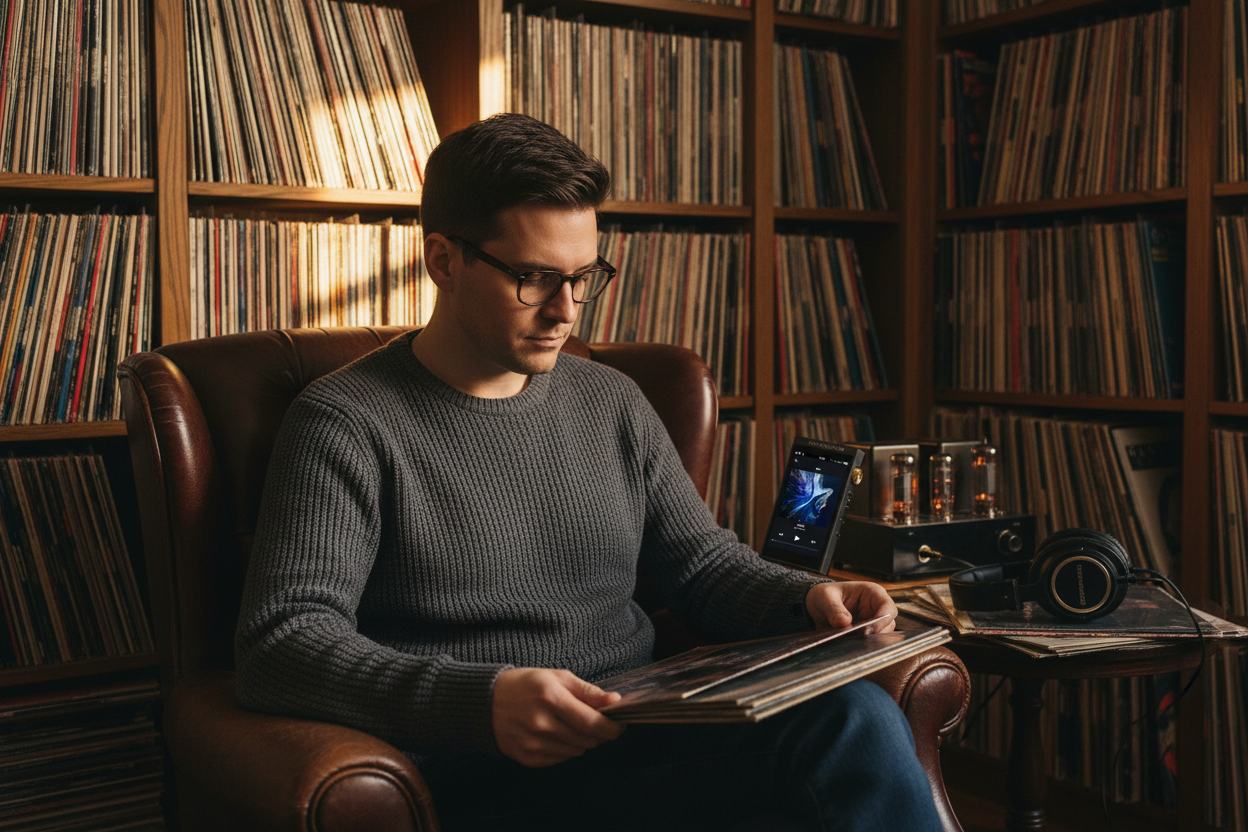
If you've started noticing compression artifacts, bought your first pair of wired IEMs or over-ears, and are curious about FLAC files — this is exactly the moment a DAP starts making sense.
The Hi-Res Collector
If you purchase 24-bit downloads from Qobuz, Bandcamp, or HDtracks and want to hear every bit of that studio master on the go, a DAP is the correct tool.
The Professional On-the-Go
Musicians, sound engineers, and producers who need reliable, accurate monitoring during travel benefit enormously from a DAP's low noise floor and true frequency response.
If you fall into categories 2–4, exploring HIFI WALKER's full DAP lineup is a logical next step. The range covers entry-level through enthusiast-tier, with transparent pricing and genuine hi-res credentials.
HIFI WALKER DAPs Worth Knowing About
HIFI WALKER has built a reputation for delivering measurable audiophile performance at accessible price points. Two models stand out as ideal entry points depending on your budget and how deeply you want to go into hi-res audio.

For listeners ready to go further, the flagship of HIFI WALKER's portable lineup raises the bar considerably — dual DAC architecture, balanced 4.4mm output, Android-based OS for Tidal and Qobuz access, and a noise floor that competes with players twice the price.

Want to compare these against every other model in the range? Read our detailed breakdown on the HIFI WALKER DAP Reviews & Comparisons blog before you decide.
How to Get Started With a DAP
Buying your first DAP is only step one. Here's a practical checklist to get your setup running at full potential from day one.
Build Your Hi-Res Library
Purchase FLAC downloads from Qobuz, HDtracks, or Bandcamp. Alternatively, rip your CD collection using Exact Audio Copy (EAC) or dBpoweramp to lossless FLAC files.
Choose the Right MicroSD Card
Use a Class 10 / U3 / A2-rated microSD card from Samsung or SanDisk. A 512GB card holds roughly 1,500 albums at 24-bit/96kHz FLAC — enough for most collections.
Match Your Headphones to the Output
Single-ended 3.5mm works for most IEMs. If your player has a 4.4mm balanced output and your headphones support it, balanced wiring provides wider channel separation and lower crosstalk.
Explore Gain Settings
Most DAPs offer low and high gain modes. Use low gain with sensitive IEMs (< 32Ω) to minimize hiss; switch to high gain for full-size headphones requiring more drive.
Protect Your Investment
A quality case prevents scratches and screen damage on the go. HIFI WALKER's own Protective PU Leather Case for H20Ultra Hi-Res Audio Player is a natural pairing with the H20 Ultra, offering precise cutouts and slim profile protection.
Frequently Asked Questions
Q1: What does DAP stand for in audio?
DAP stands for Digital Audio Player — a portable electronic device dedicated to playing back digital music files. Unlike a smartphone, a DAP's hardware is optimized entirely for audio fidelity, featuring a high-performance DAC chip, a low-noise amplifier stage, and broad support for lossless formats like FLAC and DSD.
Q2: Is a DAP better than a smartphone for music?
For audio quality, yes — measurably so. A dedicated DAP uses a higher-grade DAC chip with a lower noise floor (typically -110 to -120 dBFS vs. -95 to -100 dBFS on most smartphones), lower output impedance for accurate IEM matching, and an isolated audio circuit free from RF interference. If you use quality wired headphones or IEMs and listen to lossless files, a DAP delivers a clearly superior experience.
Q3: Do I need a DAP if I use Spotify or Apple Music?
Not necessarily. Streaming services deliver compressed audio (Spotify: up to 320kbps OGG; Apple Music: up to 256kbps AAC or ALAC via Apple Music Lossless). If you stream exclusively and are satisfied with the sound, a Bluetooth DAC dongle is a more cost-effective upgrade. However, if you use Tidal HiFi, Qobuz Studio, or local FLAC files, a DAP unlocks the full potential of those high-resolution sources.
Q4: What is the difference between a DAP and an MP3 player?
An MP3 player is a type of DAP — specifically an older or budget-oriented one focused on compressed file playback. Modern DAPs go far beyond MP3, supporting 32-bit/384kHz FLAC, DSD256, MQA, and often running Android for streaming. The term 'DAP' implies audiophile-grade hardware; 'MP3 player' is more general and historically linked to compressed audio.
Q5: What audio formats should I look for in a DAP?
At minimum, look for native FLAC support up to 24-bit/96kHz and DSD64 playback. Serious hi-res listeners should seek DSD128 or DSD256 native decoding, 32-bit/384kHz PCM support, and MQA rendering if you use Tidal Masters. Also confirm the player handles your existing collection's formats — WAV, ALAC, and APE are common edge cases worth checking.