

Last updated: June 3, 2026
Quick Answer: DAP vs Phone Audio in 2026
- DAP vs phone is the main search intent behind this page. A dedicated digital audio player is the better fit when you use local FLAC, WAV, DSD, or other lossless files and want a cleaner wired headphone output.
- Phone audio is still fine for casual streaming, calls, and background listening. The upgrade becomes more meaningful when your headphones, files, and listening time are good enough to reveal the source.
- Phone + USB DAC is the middle path. If you want to keep your phone as the player but improve wired output, the HIFI WALKER D20 USB-C DAC/Amp targets that exact use case.
- H20Ultra is the strongest HIFI WALKER DAP path here: ESS9038Q2M DAC, 4.4mm balanced output, native DSD256, PCM up to 768kHz/32-bit, microSD up to 512GB, and 3000mAh battery with about 12 hours of playback according to the specification table.
Is Your Phone Holding Your Music Back?
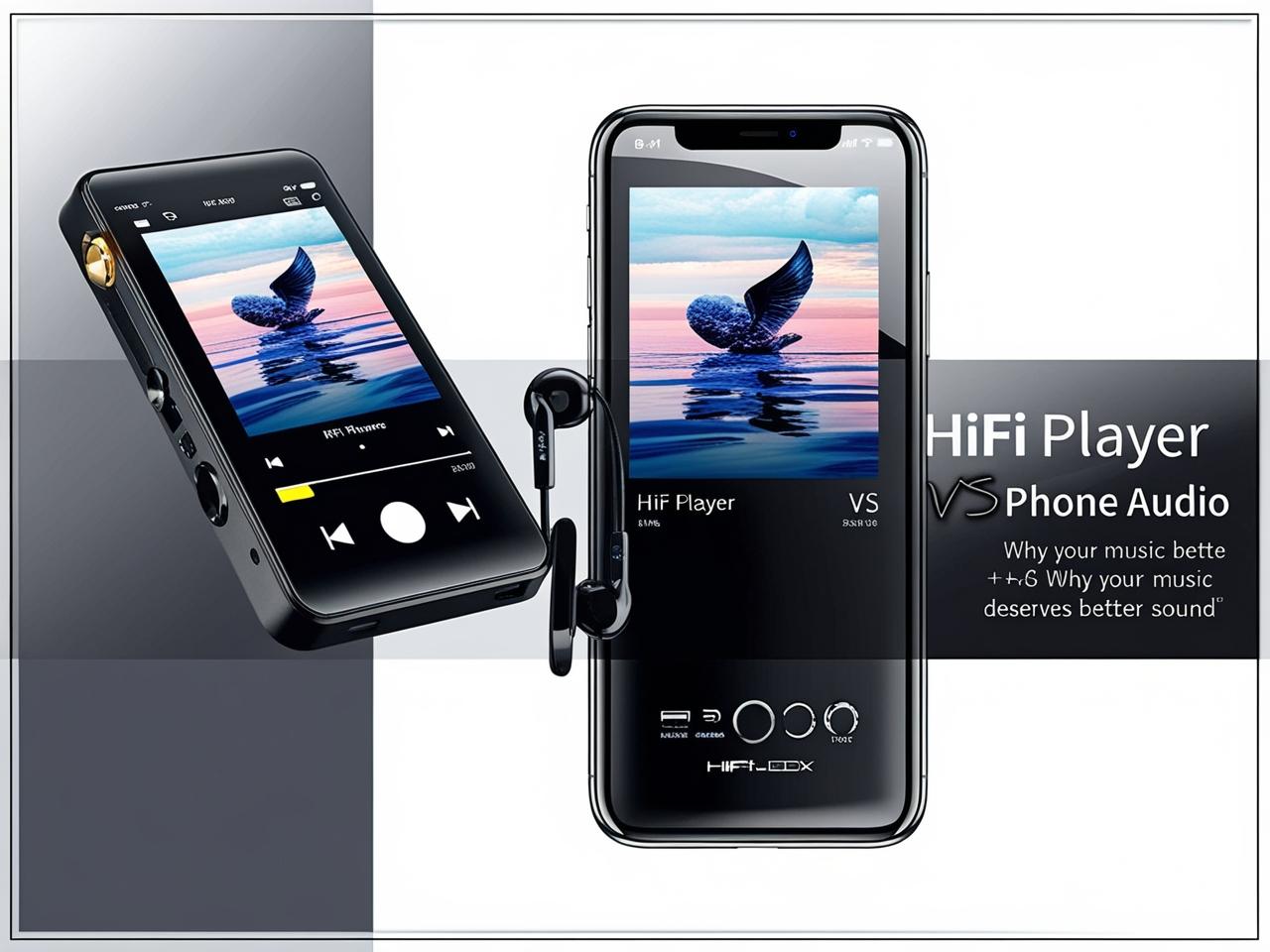
If you searched for DAP vs phone, mp3 player vs phone, or digital audio player vs smartphone, the honest answer is this: a phone is convenient, but a dedicated hifi player is built around the audio signal first.
A smartphone can play music, but it also has to manage calls, notifications, apps, wireless radios, cameras, and battery-saving behavior. A Digital Audio Player (DAP) focuses on local music playback, dedicated DAC/amp hardware, expandable storage, physical controls, and cleaner wired headphone output.
Best short answer
Choose a DAP if you own lossless files, use wired headphones or IEMs, want microSD music storage, or want distraction-free listening. Choose a phone plus USB DAC if you mainly stream from your phone but want stronger wired headphone output. Keep using your phone alone if music is mostly casual background listening.
This guide compares the real sound-quality differences, then shows when a dedicated HIFI WALKER player makes sense and when a compact DAC/Amp is the smarter upgrade.

Your smartphone was built to do everything — but doing everything means audio rarely gets the attention it deserves.
What You're Missing on Phone Audio
- Basic integrated DAC shared with other hardware
- Limited native support for FLAC, DSD, WAV hi-res formats
- Storage consumed by photos, videos, and other files
- Constant notification interruptions during playback
- Electronic noise interference from multi-function chips
What a Dedicated Hifi Player Delivers
- Audiophile-grade dedicated DAC + headphone amplifier
- Native DSD256, FLAC, WAV, APE lossless playback
- Expandable microSD storage dedicated entirely to music
- Distraction-free, focused listening experience
- Shielded audio circuits for ultra-low noise floor
- ►1. Is Your Phone Holding Your Music Back?
- ►2. What Is a Hifi Player (DAP)? Built from the Ground Up for Music
- ►3. Head-to-Head: Hifi Player vs Phone Audio — The Key Differences
- ►4. Phone + USB DAC vs Dedicated DAP
- ►5. Is a Hifi Player Worth It? Ask Yourself These Questions
- ►6. The HIFI WALKER H20Ultra: The Benchmark for Portable Hi-Res Audio in 2026
- ►7. Explore the Full HIFI WALKER DAP Lineup: Find Your Perfect Match
- ►8. Hifi Player vs Phone Audio: The Verdict for 2026
What Is a Hifi Player (DAP)? Built from the Ground Up for Music
A Digital Audio Player (DAP) — also called a hifi player or hifi mp3 player — is a device engineered with one singular purpose: reproducing digital audio files at the highest possible fidelity. Unlike a smartphone that divides resources among dozens of tasks, every component inside a DAP exists to serve the music signal. For a deeper technical overview, read our full DAP explainer here.
The key is the internal signal chain: a premium DAC chip converts digital files into an analog waveform, a dedicated headphone amplifier boosts that signal cleanly, and shielded circuitry keeps electrical noise away from the audio path. The result is a dramatically cleaner, more detailed sound than any multi-purpose device can achieve at the same price point.

A DAP's entire hardware stack — DAC, amplifier, storage, and battery — is optimized exclusively for audio performance.
Digital Source Files
FLAC, WAV, DSD256, APE, or MP3 files stored on internal memory or microSD card — no compression, no quality loss.
High-Performance DAC
A dedicated chip such as ESS9038Q2M, ES9018K2M, ESS9219Q, or dual ES9219PC converts the digital data into an analog audio waveform before the amplifier drives your headphones.
Dedicated Headphone Amplifier
A purpose-built amp — including balanced 4.4mm output on flagship models — drives headphones with ample, clean power, revealing detail a phone amp simply cannot.
Your Headphones
Whether wired via 3.5mm or 4.4mm balanced, or wireless via LDAC/aptX HD Bluetooth, your headphones receive the cleanest possible signal.
Head-to-Head: Hifi Player vs Phone Audio — The Key Differences
The DAP vs phone sound quality gap comes down to hardware prioritization. Phones use integrated, cost-optimized audio chips that share bandwidth with cellular, GPS, and display processors. A hifi player dedicates its entire internal architecture to the audio signal. Here's how that translates to real listening differences in 2026:

For local hi-res files and wired headphones, dedicated DAP hardware is built for a cleaner audio path; casual streaming on a phone can still be enough.
The offline music playback advantage is particularly significant for audiophiles with large FLAC libraries. Phones constantly compete for storage. A dedicated hifi mp3 player like the HIFI WALKER H20Ultra supports microSD cards up to 512GB — that's tens of thousands of lossless tracks always with you, with zero compromise.
Phone + USB DAC vs Dedicated DAP: Which Upgrade Fits You?
GSC data shows this page already appears for dac vs smartphone and dap vs phone with dac. Those users are not always ready to buy a standalone player; many are asking whether a phone with an external DAC is enough.
If you want the phone to stay at the center of your setup, read our DAC guide or compare DAP vs portable DAC. If you want a separate player for local files, keep reading.
Is a Hifi Player Worth It? Ask Yourself These Questions
Is a hifi player worth it for your situation? The answer depends on how you listen. Casual background listeners may not notice a difference — but if music is something you genuinely engage with, a dedicated DAP is a transformative upgrade. Run through this checklist honestly:
You'll Clearly Benefit From a DAP If...
- You own a library of CD-quality or hi-res FLAC/WAV files
- You use quality wired headphones (IEMs, over-ear, planar)
- You want to hear instruments separated with real depth and air
- You commute or travel and want uninterrupted playback
- You listen for 2+ hours at a stretch and hate recharging mid-session
- You want balanced output (4.4mm) to fully drive premium headphones
Signs Your Current Setup Is Holding You Back
- Your music sounds congested or flat even with expensive headphones
- Hi-res FLAC files don't seem noticeably better than MP3 on your phone
- Battery dies during long commutes before your playlist ends
- Notifications kill your listening flow multiple times per session
- Phone storage is constantly full, forcing you to delete music
- Wireless headphones sound noticeably better connected to other devices
If you tick three or more boxes on the left, a dedicated DAP is worth serious consideration. The hifi player vs phone audio difference is easiest to hear when you use familiar lossless files, quality wired headphones, and enough listening time to notice separation, dynamics, and noise floor.
↑ Back to Top
Back to Top ↑The HIFI WALKER H20Ultra: The Benchmark for Portable Hi-Res Audio in 2026
If you're making the move from phone audio to a dedicated hifi player, the HIFI WALKER H20Ultra represents the clearest statement of what a modern DAP can achieve. It's engineered for listeners who refuse to compromise — and it shows in every specification and design decision.
The H20Ultra's 4.4mm balanced output is worth singling out because the specification table lists balanced output at 4Vrms, compared with 2Vrms from the single-ended path. With compatible balanced headphones or IEMs, that gives the player more headroom than a basic phone output or simple adapter. If you want the technical background, see our DAC guide.
ESS9038Q2M DAC + Dedicated Amp Architecture
H20Ultra uses the flagship ESS9038Q2M DAC with dedicated RT6862/RT6863 amp architecture according to the current product page. It is built to keep decoding, amplification, and headphone output focused on music playback.
Native DSD256 + Full Lossless Support
FLAC, WAV, APE, DSD64 through DSD256 — every format plays natively without conversion or quality degradation. Your hi-res files finally sound like hi-res files.
LDAC & aptX HD Bluetooth
LDAC transmits up to 990kbps wirelessly — roughly three times the data of standard Bluetooth — meaning your wireless headphones receive genuine hi-res audio, not a compressed shadow of it.
4.4mm Balanced Output
The 4.4mm balanced output is rated at 4Vrms and supports 8-300 ohm headphones, giving compatible wired headphones more headroom than a typical phone output.
microSD Expandable Storage
Carry a large local library. H20Ultra includes 128GB storage and supports microSD expansion up to 512GB according to the current specification table.
Explore the Full HIFI WALKER DAP Lineup: Find Your Perfect Match
Not every listener needs a flagship player. HIFI WALKER's 2026 lineup covers every level of the audiophile journey — from first-time DAP buyers to seasoned hi-res enthusiasts. Here's how to find the right entry point for your ears and budget:
For listeners entering the world of dedicated hifi players, the HIFI WALKER H2 ($119.20) offers an excellent introduction with aptX HD Bluetooth and full DSD/FLAC support in a rugged zinc alloy chassis. Those ready to commit to serious hi-res listening should compare the H20Ultra for flagship specs and the H20 Pro for a lower-priced 4.4mm balanced DAP path.
Browse the complete HIFI WALKER hi-res player collection to compare full specifications side by side. Use the collection page to compare full specification tables, then read how to put music on an MP3 player if you are moving a local library from your computer.

Hifi Player vs Phone Audio: The Verdict for 2026
The verdict in the hifi player vs phone audio debate is practical, not absolute. Smartphones are excellent everyday devices, but a dedicated hifi mp3 player (DAP) is the better tool when your priority is local music, wired headphone output, microSD storage, and focused listening.
In 2026, HIFI WALKER gives you two upgrade routes: a standalone DAP such as H20Ultra or H20 Pro, or a phone-centered USB DAC/Amp route with D20.
The Phone Audio Reality
- Generic integrated DAC shared with all device functions
- Lossless files often downsampled or poorly decoded
- Battery life compromised by background processes
- No balanced output option for premium headphones
- LDAC support inconsistent across devices and OS versions
The HIFI WALKER H20Ultra Advantage
- ESS9038Q2M DAC with dedicated amp architecture
- Native DSD256, FLAC, WAV — zero quality compromise
- 3000mAh battery rated at about 12 hours in the specification table
- 4.4mm balanced output for maximum headphone performance
- Full LDAC + aptX HD for genuine hi-res wireless audio
Choose the path that fits how you listen: browse HIFI WALKER hi-res players for a standalone DAP, or start with D20 USB-C DAC/Amp if your phone will remain the source.
Frequently Asked Questions
Q1: Does a DAP sound better than a phone?
A dedicated DAP can sound better than a phone when you use quality wired headphones and local lossless or hi-res files. The advantage comes from dedicated DAC/amp hardware, cleaner output design, microSD music storage, and fewer phone-related interruptions. For casual streaming or Bluetooth listening, a phone may still be enough.
Q2: DAP vs phone with DAC: which should I choose?
Choose phone plus USB DAC if you want to keep your phone as the source and upgrade wired headphone output. Choose a dedicated DAP if you want a separate local music library, physical controls, expandable storage, and a device that is not competing with calls, apps, and notifications.
Q3: Which HIFI WALKER player is best for replacing phone audio?
H20Ultra is the strongest HIFI WALKER option for replacing phone audio because its specification table lists an ESS9038Q2M DAC, 4.4mm balanced output, native DSD256, PCM up to 768kHz/32-bit, microSD up to 512GB, and a 3000mAh battery rated at about 12 hours. H20 Pro is a strong value option with dual ESS ES9219PC DACs and 4.4mm balanced output.
Q4: Is D20 better than a basic phone adapter?
D20 is a real USB-C DAC/Amp rather than a basic headphone adapter. Its product specification lists an ES9038Q2M DAC, 3.5mm single-ended and 4.4mm balanced outputs, PCM up to 32-bit/768kHz, DSD512, and up to 380mW+380mW at 32 ohms through the balanced output.
Q5: What audio formats do HIFI WALKER DAPs support?
Support varies by model, so use the product specification table as the final source. H20Ultra and H20 Pro list native DSD256 and PCM up to 768kHz/32-bit. H2 Touch lists native DSD64/DSD128 and PCM up to 384kHz/32-bit. Common lossless formats include FLAC, WAV, APE, AIFF, and DFF/DSF where supported.
Q6: Do I need expensive headphones to benefit from a hifi player?
You do not need ultra-expensive headphones, but you do need headphones or IEMs good enough to reveal the source. A DAP upgrade is most useful with wired IEMs, over-ear headphones, or balanced 4.4mm headphones that benefit from cleaner output and stronger drive.
Q7: How much expandable storage do HIFI WALKER players support?
The current H Series specification table lists microSD expansion up to 512GB across H2, H2 Touch, H20 Pro, and H20 Ultra. That makes a dedicated DAP practical for large local FLAC, WAV, and DSD music libraries.
Q8: What is LDAC and why does it matter for wireless listening?
LDAC is a high-resolution Bluetooth codec. HIFI WALKER models such as H20Ultra, H20 Pro, H2 Touch, and H2 list LDAC support in their specification tables. It can provide higher wireless bandwidth than standard SBC, though real performance still depends on your headphones, connection quality, and source files.