


Expert Insights
- The transition from mechanical CD players to solid-state music disc players represents the most significant advancement in portable audio since the original Walkman
- Hi-res DAPs offer measurably superior audio specifications while solving practical limitations that made CD players impractical for modern mobile lifestyles
- Investment in a quality music disc player provides future-proof format support and consistent performance that traditional CD players cannot match
The Evolution of Music Disc Players: From CD to Hi-Res
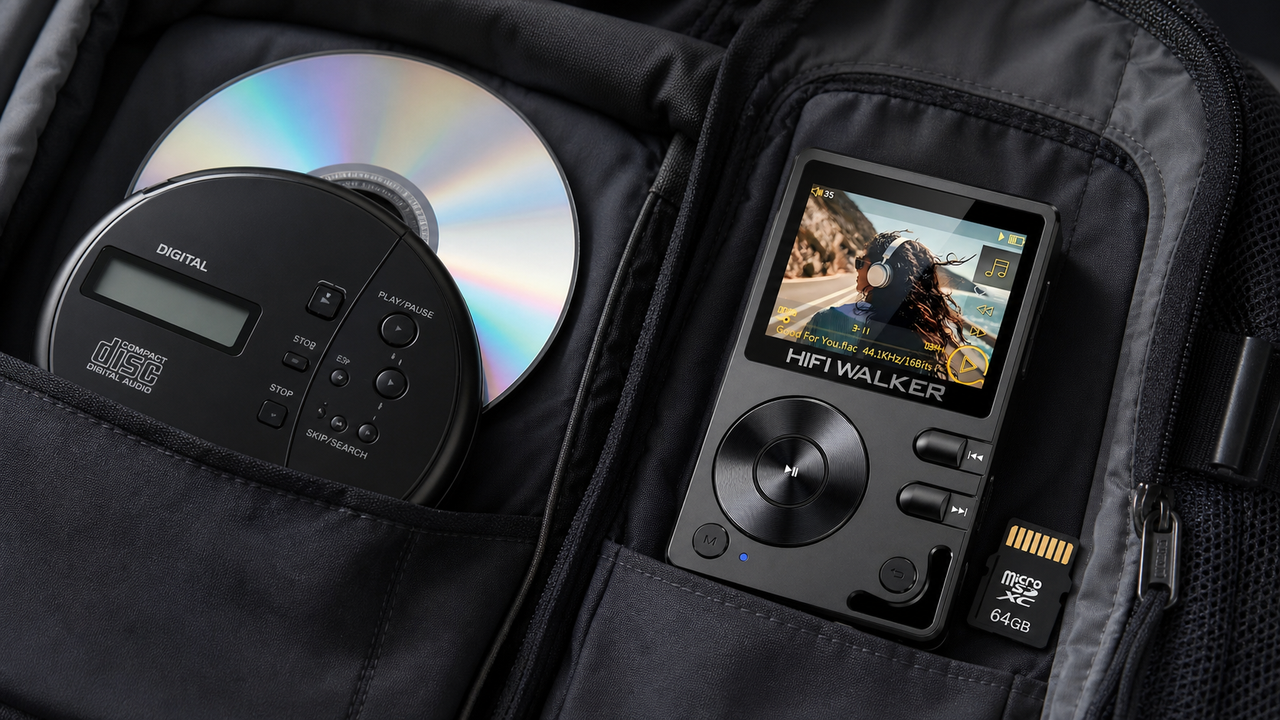
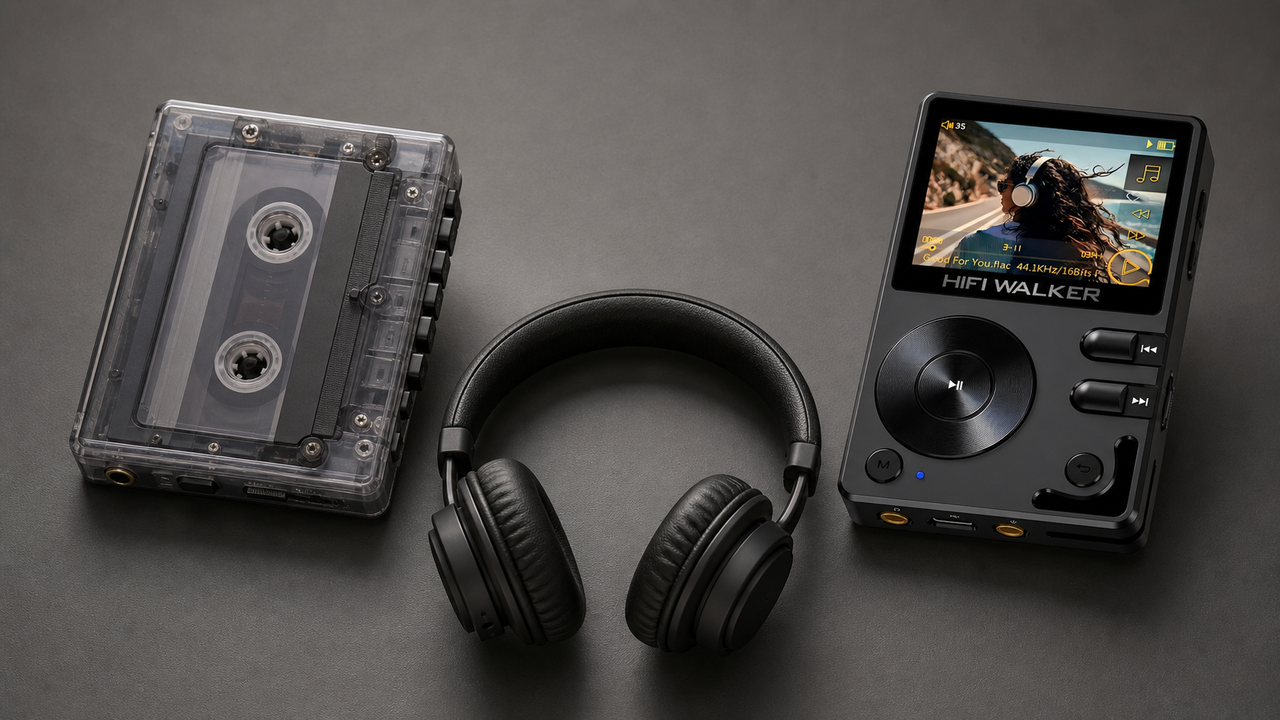
The quest for perfect portable music reproduction has evolved dramatically over the past decades. When searching for the ideal music disc player, today's audiophiles face a fascinating choice between traditional CD players and modern hi-res digital audio players. While CD players dominated the music scene for over three decades, the emergence of high-resolution audio has revolutionized how we experience music on the go.
Traditional CD Era
- 16-bit/44.1kHz standard
- Physical disc dependency
- Limited to Red Book standard
- Bulky portable designs
Hi-Res Digital Era
- 24-bit/192kHz+ capability
- Multiple format support
- Compact form factors
- Wireless connectivity options

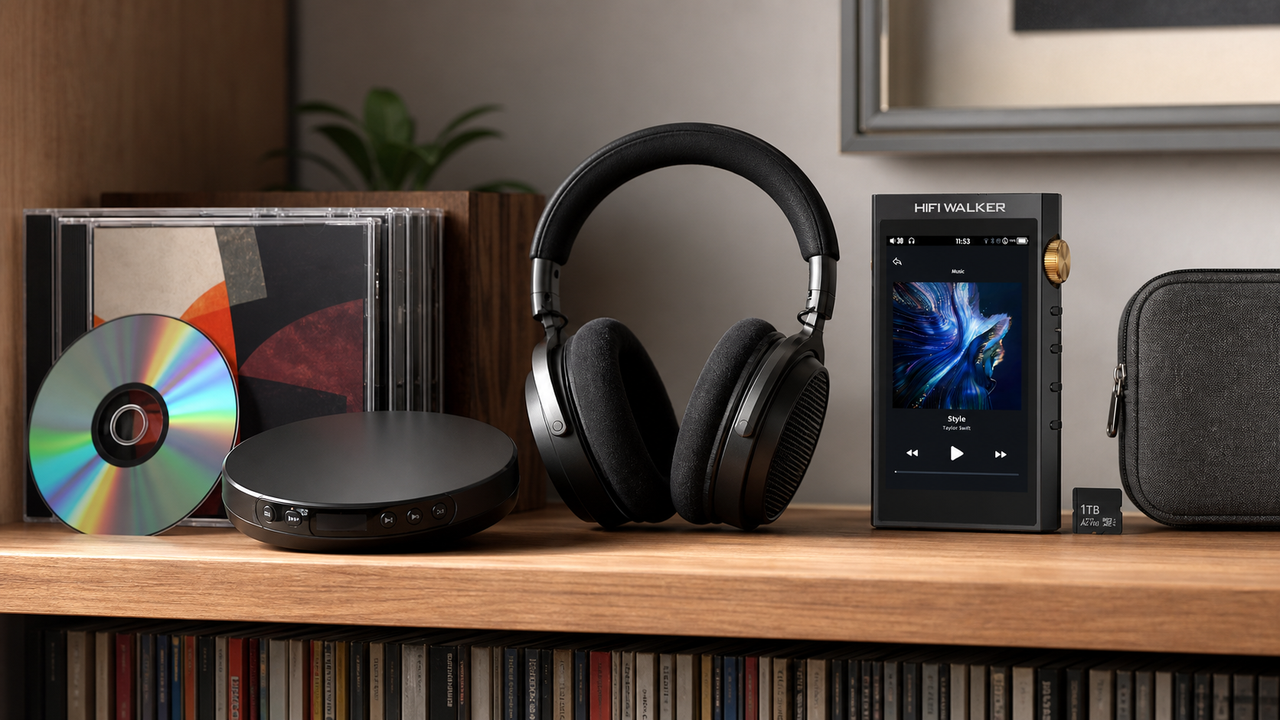
Modern hi-res music disc players like those from HIFI WALKER's collection represent the pinnacle of portable audio engineering, offering reference-quality sound that surpasses even the best CD players while maintaining the convenience of digital storage and playback.
- ►1. The Evolution of Music Disc Players: From CD to Hi-Res
- ►2. Audio Quality Comparison: Bits, Sampling Rates, and Real-World Performance
- ►3. Top Hi-Res Music Disc Players for 2026
- ►4. Digital Audio Player vs CD Player: Practical Advantages
- ►5. Format Support and Compatibility Guide
- ►6. Battery Life and Power Efficiency Analysis
- ►7. Build Quality and Durability Comparison
- ►8. Making the Right Choice: CD Player vs Hi-Res DAP Decision Matrix
Audio Quality Comparison: Bits, Sampling Rates, and Real-World Performance
The fundamental difference between traditional CD players and modern hi-res music disc players lies in their audio reproduction capabilities. CD players are locked to the Red Book standard of 16-bit/44.1kHz, while contemporary digital audio players support formats up to 32-bit/768kHz and beyond.

The superior specifications of hi-res music disc players translate into tangible improvements: wider soundstage, better instrument separation, more natural decay, and enhanced micro-details that bring recordings closer to the original studio master.
Top Hi-Res Music Disc Players for 2026
After extensive testing and comparison, several music disc players stand out for their exceptional performance, build quality, and value proposition. These devices represent the current state-of-the-art in portable audio reproduction.

Flagship Tier Selection
Choose players with dual DAC implementations and balanced outputs for maximum performance
Mid-Range Optimization
Focus on single high-quality DAC chips with excellent amplification stages
Budget Conscious Choice
Prioritize reliable DAC chips with clean power delivery over premium features

Each tier of music disc player offers distinct advantages, from the reference-level performance of flagship models to the exceptional value of well-engineered budget options that still surpass traditional CD players in audio quality.
Digital Audio Player vs CD Player: Practical Advantages
Beyond pure audio quality, modern music disc players offer practical advantages that make them superior to traditional CD players for contemporary music lovers. The convenience factor alone makes a compelling case for the digital transition.
CD Player Limitations
- Requires physical disc carrying
- Skip-prone during movement
- Limited to 74-80 minutes
- No shuffle/repeat flexibility
- Battery drain from laser mechanics
Hi-Res DAP Benefits
- Thousands of albums in pocket
- Solid-state reliability
- Unlimited playtime capacity
- Advanced playlist management
- Efficient power consumption

The storage capacity alone transforms the listening experience - where CD players require carrying multiple discs, a quality music disc player can store entire music libraries in lossless formats, making it practical for long trips, commutes, and daily use.
Format Support and Compatibility Guide
Understanding format compatibility is crucial when choosing a music disc player. Modern hi-res players support dozens of audio formats, while CD players are limited to the CD-DA standard with occasional MP3 CD support.

The extensive format support of modern music disc players ensures compatibility with any audio source, from CD rips to studio masters, making them future-proof investments that adapt to evolving audio standards.
↑ Back to Top
Back to Top ↑Battery Life and Power Efficiency Analysis
Power efficiency represents a significant advantage for digital music disc players over traditional CD players. The elimination of mechanical components and laser assemblies dramatically reduces power consumption while improving reliability.
Mechanical vs Solid State
CD players consume power for laser operation, disc spinning, and servo mechanisms, while DAPs use efficient flash storage
Optimized Processing
Modern DAP chips are designed for audio-specific tasks, eliminating unnecessary smartphone functions that drain battery
Advanced Power Management
Hi-res players feature sophisticated power management, including sleep modes and efficient amplification stages

Quality music disc players achieve 15-20+ hours of continuous playback, compared to 4-8 hours typical for CD players, making them practical for long listening sessions without frequent charging interruptions.
Build Quality and Durability Comparison
The reliability advantage of solid-state music disc players over mechanical CD players becomes apparent with daily use. Eliminating moving parts significantly improves long-term durability and reduces maintenance requirements.
CD Player Vulnerabilities
- Laser assembly degradation
- Mechanical transport wear
- Skip sensitivity to movement
- Dust accumulation issues
- Temperature sensitivity
DAP Durability Advantages
- Solid-state reliability
- Shock resistant operation
- Consistent performance over time
- Sealed construction
- Wide operating temperature

The robust construction of quality music disc players ensures consistent performance across various environments, from commuter trains to outdoor activities, where traditional CD players would struggle or fail entirely.
Making the Right Choice: CD Player vs Hi-Res DAP Decision Matrix
Choosing between traditional CD players and modern music disc players depends on your specific listening habits, music collection, and quality expectations. This decision matrix helps clarify the best option for different user profiles.

For most contemporary users, a quality music disc player offers superior value through better audio quality, enhanced convenience, improved reliability, and future-proof format support that traditional CD players cannot match. Visit our detailed reviews section for specific model comparisons.
Frequently Asked Questions
Q1: Do hi-res music disc players sound better than CD players?
Yes, quality hi-res music disc players typically sound better than CD players due to superior DAC chips, better amplification, support for higher resolution formats, and elimination of mechanical noise from disc spinning mechanisms.
Q2: Can I play my CD collection on a digital audio player?
While DAPs don't play physical CDs, you can rip your CD collection to lossless FLAC files and transfer them to your music disc player, often achieving better sound quality than the original CD playback.
Q3: How long do batteries last in music disc players compared to CD players?
Hi-res music disc players typically offer 15-20+ hours of playback compared to 4-8 hours for CD players, thanks to efficient solid-state design and optimized power management without mechanical components.
Q4: Are music disc players more reliable than CD players?
Yes, music disc players are significantly more reliable because they use solid-state storage without moving parts, eliminating common CD player failures like laser wear, transport mechanisms breaking, and skip issues from vibration.
Q5: What audio formats should I look for in a music disc player?
Look for players supporting lossless formats like FLAC, ALAC, and WAV, plus hi-res formats like DSD and high-sample-rate PCM. Avoid players limited to only compressed formats like MP3.