

Expert Insights
- Music fidelity is ultimately about preserving the artist's original intent and emotional expression in the recording
- The weakest link in your audio chain determines overall fidelity – invest wisely across all components
- Subjective listening tests often reveal fidelity differences that measurements alone cannot capture
What is Music Fidelity and Why It Matters
Music fidelity refers to how accurately an audio system reproduces the original recording. In simple terms, high music fidelity means the sound you hear closely matches what the artist intended in the studio. This concept encompasses everything from the recording quality to your playback equipment's ability to preserve musical details.
Low Fidelity Characteristics
- Compressed dynamic range
- Lost musical details
- Harsh or muddy sound
- Limited frequency response
High Fidelity Benefits
- Full dynamic range preserved
- Crystal clear instrument separation
- Natural, lifelike sound
- Extended frequency response

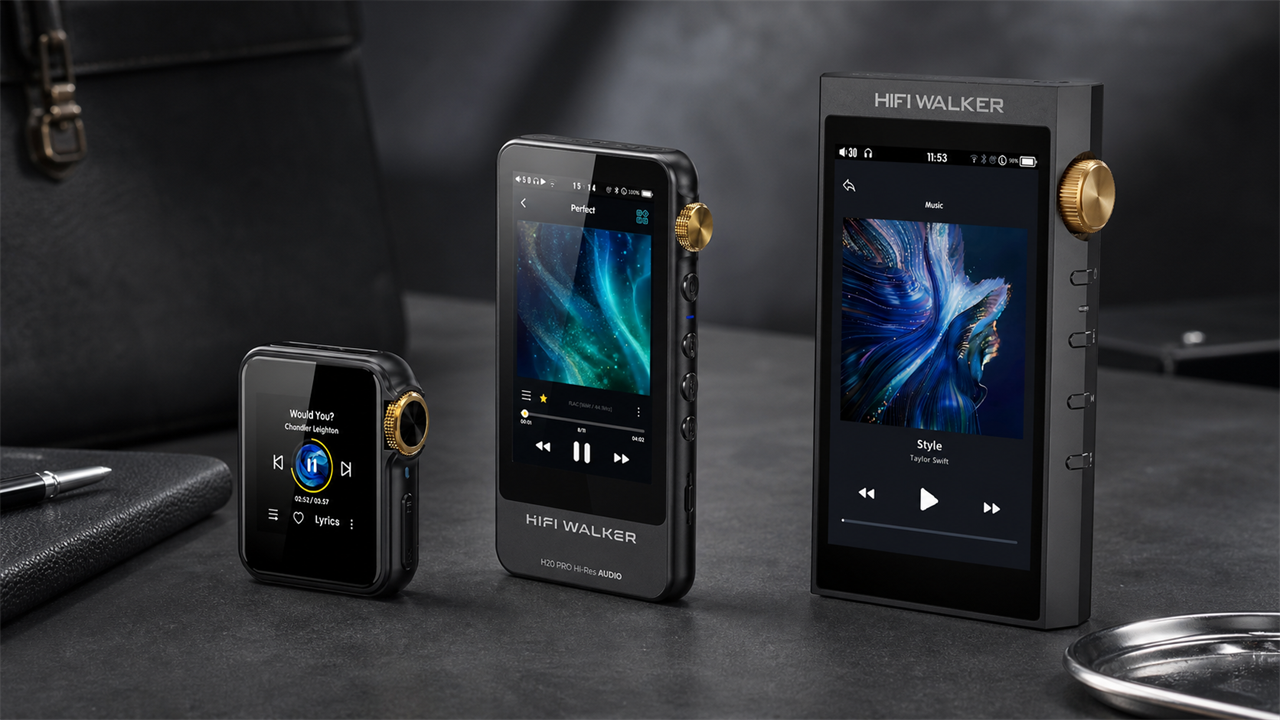
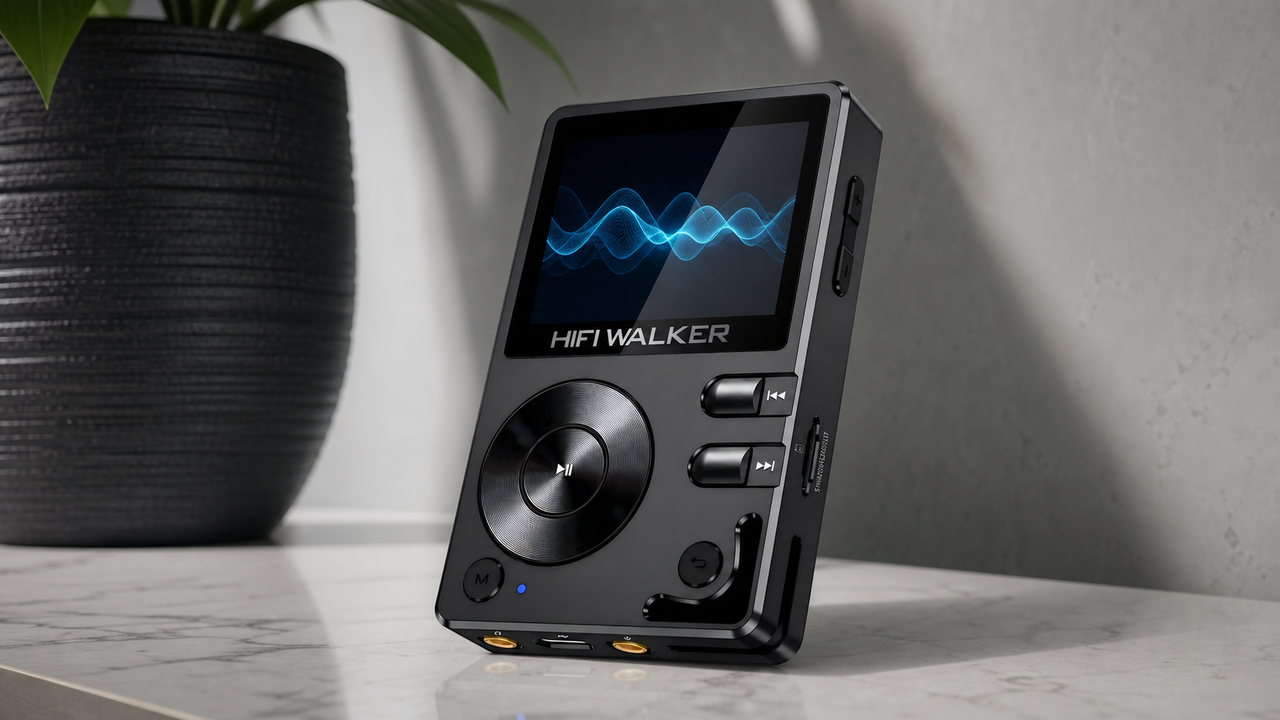
The pursuit of music fidelity has driven decades of audio innovation. From vinyl records to modern hi-res digital formats, each advancement aimed to capture and reproduce music with greater accuracy. Today's dedicated hi-res audio players represent the pinnacle of portable fidelity.
- ►1. What is Music Fidelity and Why It Matters
- ►2. Digital Audio Fundamentals: Sample Rates and Bit Depth
- ►3. The Role of DACs in Music Fidelity
- ►4. Frequency Response and Dynamic Range
- ►5. Audio Codecs and Compression Effects
- ►6. Hardware Components That Affect Music Fidelity
- ►7. Measuring and Evaluating Music Fidelity
- ►8. Optimizing Your Setup for Maximum Fidelity
Digital Audio Fundamentals: Sample Rates and Bit Depth
Digital music fidelity depends on two critical parameters: sample rate and bit depth. Sample rate determines how many times per second the analog audio signal is measured, while bit depth defines the precision of each measurement. Understanding these concepts is essential for evaluating audio quality.
Sample Rate Impact
Higher sample rates (96kHz vs 44.1kHz) capture more high-frequency information, resulting in smoother, more natural sound reproduction.
Bit Depth Precision
Greater bit depth (24-bit vs 16-bit) provides wider dynamic range and lower noise floor, preserving subtle musical details.
Combined Effect
Hi-res formats like 24-bit/192kHz offer superior music fidelity compared to standard CD quality (16-bit/44.1kHz).
Modern audiophile players support multiple hi-res formats to maximize music fidelity. The key is choosing equipment capable of fully utilizing these high-quality sources without introducing distortion or noise.
The Role of DACs in Music Fidelity
Digital-to-Analog Converters (DACs) are the heart of music fidelity in digital audio systems. These chips transform digital audio files into analog signals that can drive headphones or speakers. The quality of your DAC directly impacts how faithfully your music is reproduced.

Entry-Level DACs
- Basic delta-sigma architecture
- Limited dynamic range
- Higher distortion levels
- Adequate for casual listening
Premium DACs
- Advanced multi-bit designs
- Exceptional dynamic range
- Ultra-low distortion
- Reference-quality reproduction

The H20Ultra Hi-Res Audio Player exemplifies how premium DAC implementation can elevate music fidelity. Its dual-DAC architecture ensures balanced audio reproduction with minimal distortion across the entire frequency spectrum.
Frequency Response and Dynamic Range
Music fidelity heavily depends on frequency response – how evenly an audio system reproduces different frequencies. Ideally, all frequencies from 20Hz to 20kHz should be reproduced at equal levels. Dynamic range, the difference between the quietest and loudest sounds, is equally crucial for realistic reproduction.

Bass Response (20-250Hz)
Accurate bass reproduction requires extended low-frequency response without bloating or muddiness that masks musical detail.
Midrange Clarity (250Hz-4kHz)
The midrange contains most musical information. Any coloration here directly impacts music fidelity and naturalness.
Treble Extension (4-20kHz)
Extended high-frequency response preserves air, sparkle, and spatial information crucial for realistic sound reproduction.
Premium audio players maintain flat frequency response across the audible spectrum while preserving the full dynamic range of your music. This technical precision translates to more engaging and emotionally involving listening experiences.
Audio Codecs and Compression Effects
Music fidelity is significantly impacted by audio codecs and compression algorithms. Lossy formats like MP3 discard audio information to reduce file sizes, while lossless formats preserve every bit of the original recording. Understanding these differences is crucial for audiophiles seeking maximum fidelity.
Lossy Compression Issues
- Pre-echo artifacts
- Frequency roll-off
- Lost stereo imaging
- Reduced dynamic range
Lossless Advantages
- Bit-perfect reproduction
- Full frequency spectrum
- Original stereo width
- Complete dynamic range

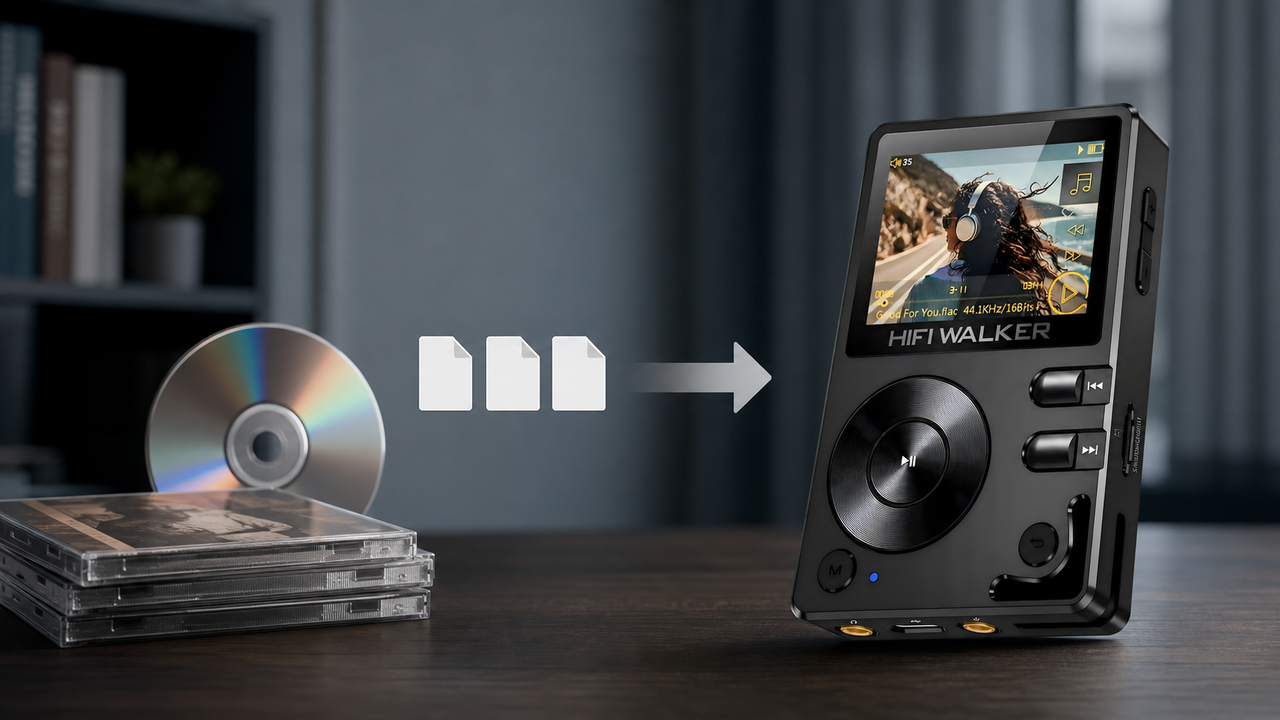
Modern dedicated audio players support multiple lossless formats, ensuring your music collection maintains its original fidelity. The investment in lossless audio files pays dividends in long-term listening satisfaction.
↑ Back to Top
Back to Top ↑Hardware Components That Affect Music Fidelity
Beyond the DAC, several hardware components contribute to overall music fidelity. The amplification stage, power supply quality, and output impedance all play crucial roles in maintaining signal integrity from digital source to your ears.
Clean Power Supply
Low-noise power regulation prevents electrical interference from contaminating the audio signal path.
Quality Amplification
Linear amplifier circuits preserve musical dynamics without introducing distortion or coloration.
Proper Impedance Matching
Correct output impedance ensures optimal power transfer and frequency response with your headphones.
Shielded Construction
RF shielding and proper grounding eliminate electromagnetic interference that degrades music fidelity.

The H20 Pro Hi-Res Audio Player demonstrates how careful component selection creates synergy. Each element – from the linear power supply to the low-impedance output stage – works together to preserve music fidelity throughout the signal chain.

Measuring and Evaluating Music Fidelity
Music fidelity can be measured both objectively through technical specifications and subjectively through critical listening. Understanding both approaches helps audiophiles make informed equipment choices and optimize their listening setups.
Objective Measurements
- THD+N (Total Harmonic Distortion)
- Signal-to-Noise Ratio (SNR)
- Frequency Response Linearity
- Crosstalk Between Channels
Subjective Evaluation
- Soundstage Width and Depth
- Instrument Separation
- Dynamic Impact
- Tonal Balance and Naturalness
Reference Recordings
Use well-recorded, familiar music to establish baseline expectations for how your system should sound.
A/B Comparison
Compare different sources, players, or settings using identical recordings and switching quickly between them.
Extended Listening
Live with equipment over time to detect subtle differences in music fidelity that aren't immediately apparent.
The best approach combines objective measurements with subjective listening tests. Technical specifications provide a foundation, but your ears make the final judgment on music fidelity quality.

Optimizing Your Setup for Maximum Fidelity
Achieving optimal music fidelity requires attention to every link in the audio chain. From source material selection to headphone matching, each decision impacts the final sound quality you experience.
Source Quality
Invest in high-quality recordings in lossless formats. The best equipment cannot improve poor source material.
Player Selection
Choose a dedicated audio player with premium DAC implementation and clean amplification stages.
Headphone Matching
Select headphones that complement your player's output characteristics and personal sound preferences.
Environmental Factors
Listen in quiet environments where subtle musical details aren't masked by background noise.
Common Fidelity Killers
- Low-bitrate streaming
- Poorly matched impedances
- Electrical interference
- Worn or damaged cables
Fidelity Enhancers
- Lossless audio files
- Proper gain staging
- Quality interconnects
- Dedicated listening space
Remember that music fidelity is about emotional connection to your music. While technical perfection matters, the ultimate goal is enhancing your enjoyment and appreciation of the musical performances you love most.

Frequently Asked Questions
Q1: What is the difference between music fidelity and audio quality?
Music fidelity specifically refers to how accurately audio equipment reproduces the original recording, while audio quality is a broader term encompassing overall sound performance including clarity, detail, and listening enjoyment.
Q2: Do I need expensive equipment to achieve good music fidelity?
While premium equipment can provide better music fidelity, significant improvements are possible at various price points. The key is choosing well-designed components that work synergistically together.
Q3: How much difference does the audio format make for music fidelity?
Audio format makes a substantial difference. Lossless formats like FLAC preserve all original information, while lossy formats like MP3 discard audio data, directly impacting music fidelity.
Q4: Can smartphones achieve high music fidelity?
Smartphones have limitations due to shared processing power, compressed audio pipelines, and basic DAC implementations. Dedicated hi-res audio players typically provide superior music fidelity.
Q5: What should I prioritize when building a high-fidelity music system?
Start with high-quality source material in lossless formats, then invest in a quality DAC/player, followed by well-matched headphones or speakers. Each component should complement the others for optimal music fidelity.