

Expert Insights
- The single biggest misconception in the CD-vs-streaming debate is treating it as a format question when it's actually a hardware question. A mediocre DAC ruins any source material, whether disc or stream.
- Subscription fatigue is real and measurable—streaming services raised prices an average of 20–30% between 2022 and 2024. Owning your music library on a dedicated player is increasingly the financially rational choice.
- For in-ear monitor users specifically, the output impedance of a CD radio (often 32–100 ohms) dramatically alters the frequency response of low-impedance IEMs. A dedicated DAP with sub-1-ohm output impedance is not a luxury—it's a technical necessity for accurate playback.
The Great Audio Debate: CD Radio or Streaming Device?
If you've been browsing radios with CD player lately, you're not alone. A surprising number of music lovers in 2025 are reconsidering physical media—drawn back by a frustration with algorithm-driven playlists, subscription fatigue, and the nagging suspicion that their favorite tracks sound better off a disc. But is that instinct correct, or is streaming the smarter long-term play?
This article cuts through the noise. We'll compare both formats across sound quality, convenience, cost, and long-term value—then show you some genuinely compelling alternatives from HIFI WALKER that might change how you think about portable hi-res audio entirely. Whether you're a casual listener or a dedicated audiophile, there's a clear winner for your situation.

- ►1. The Great Audio Debate: CD Radio or Streaming Device?
- ►2. What You Actually Get with a CD Player Radio
- ►3. Streaming Audio in 2025: How Good Has It Actually Gotten?
- ►4. Sound Quality Showdown: CD vs Streaming vs Hi-Res DAP
- ►5. Top HIFI WALKER Players Worth Considering Instead
- ►6. Convenience and Lifestyle: Where Each Format Really Lives
- ►7. Cost Breakdown: What You Actually Spend Over Three Years
- ►8. Our Verdict: Which Should You Actually Buy?
What You Actually Get with a CD Player Radio
Traditional radios with CD player are all-in-one units—typically a boombox or shelf stereo—that combine AM/FM tuner, a disc drive, and sometimes Bluetooth or auxiliary inputs. They peaked in the late 1990s but have seen a steady revival as listeners tire of subscription-based music services.
What CD Radios Do Well
- No internet connection needed — works offline always
- Plays your owned physical collection without DRM
- Familiar, tactile experience many listeners love
- One-time purchase, no monthly fees
- AM/FM radio built in for live broadcasts
Where CD Radios Fall Short
- Bulky form factor — not portable or pocket-friendly
- CD mechanisms are prone to skipping and wear over time
- Audio DAC quality is often mediocre in budget units
- No support for hi-res formats like FLAC or DSD
- Limited track management and no search functionality
The honest verdict? Most consumer-grade radios with CD player top out at 16-bit/44.1kHz Red Book CD quality—which is decent, but the DAC circuitry in many shelf units adds coloration and noise that undermines even that standard. You're paying for convenience of format, not for pristine audio engineering.
Streaming Audio in 2026: How Good Has It Actually Gotten?
Streaming has taken enormous strides. Apple Music Lossless, Tidal HiFi Plus, and Amazon Music HD all now offer lossless FLAC and even hi-res 24-bit/192kHz streams. On paper, that's better than a standard CD. But there's a catch most review sites skip: the playback chain matters enormously.
Streaming hi-res audio through a smartphone means the audio is decoded by your phone's integrated SoC DAC—a component optimized for battery efficiency, not sonic accuracy. You're getting technically high-resolution data fed through a low-quality converter. That gap between potential and reality is exactly where dedicated audio players earn their keep.
*Lossless streaming quality depends on your service tier, Wi-Fi/LTE stability, and whether the app bypasses Android/iOS audio mixing — which most don't by default.
Sound Quality Showdown: CD vs Streaming vs Hi-Res DAP
In controlled listening tests, a well-implemented hi-res digital audio player consistently outperforms both a typical CD radio unit and smartphone streaming. The reason is simple: a dedicated DAP like those in the HIFI WALKER lineup is engineered around a single purpose—converting digital audio to analog with maximum fidelity and minimum noise.

Key metrics where dedicated players pull ahead:
Signal-to-Noise Ratio (SNR)
Quality DAPs achieve 115–125dB SNR. Most CD radios land around 80–90dB. Higher SNR means cleaner, blacker backgrounds between notes—especially audible with sensitive IEMs.
Total Harmonic Distortion (THD)
Audiophile DACs in dedicated players measure below 0.001% THD. Budget CD radio DACs often measure 0.1% or higher, introducing audible coloration on complex passages.
Output Impedance
Low output impedance (under 1 ohm) is critical for in-ear monitors. CD radios typically have 32–100 ohm output impedance, which distorts frequency response with modern IEMs.
Balanced Output
Many hi-res DAPs offer a 4.4mm balanced output that doubles the voltage swing and reduces crosstalk. No CD radio on the market offers this feature.
Top HIFI WALKER Players Worth Considering Instead
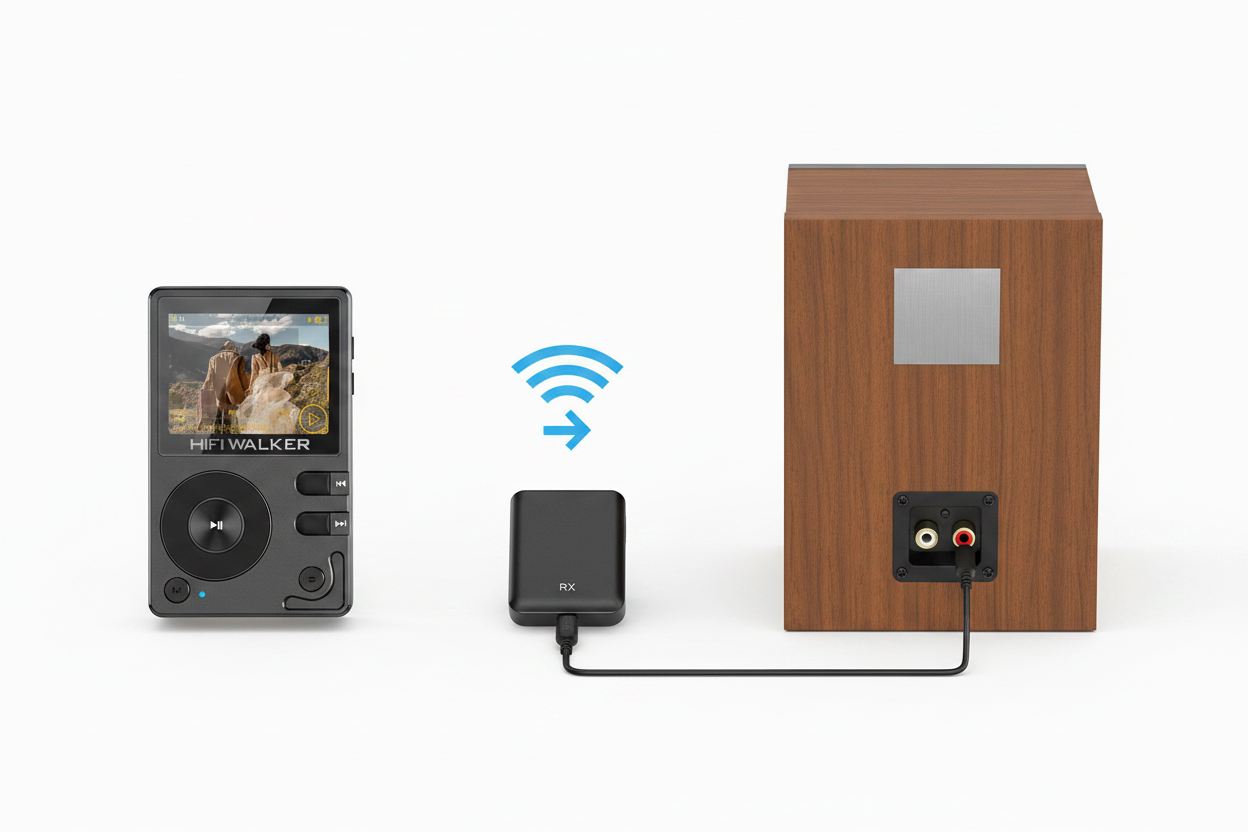
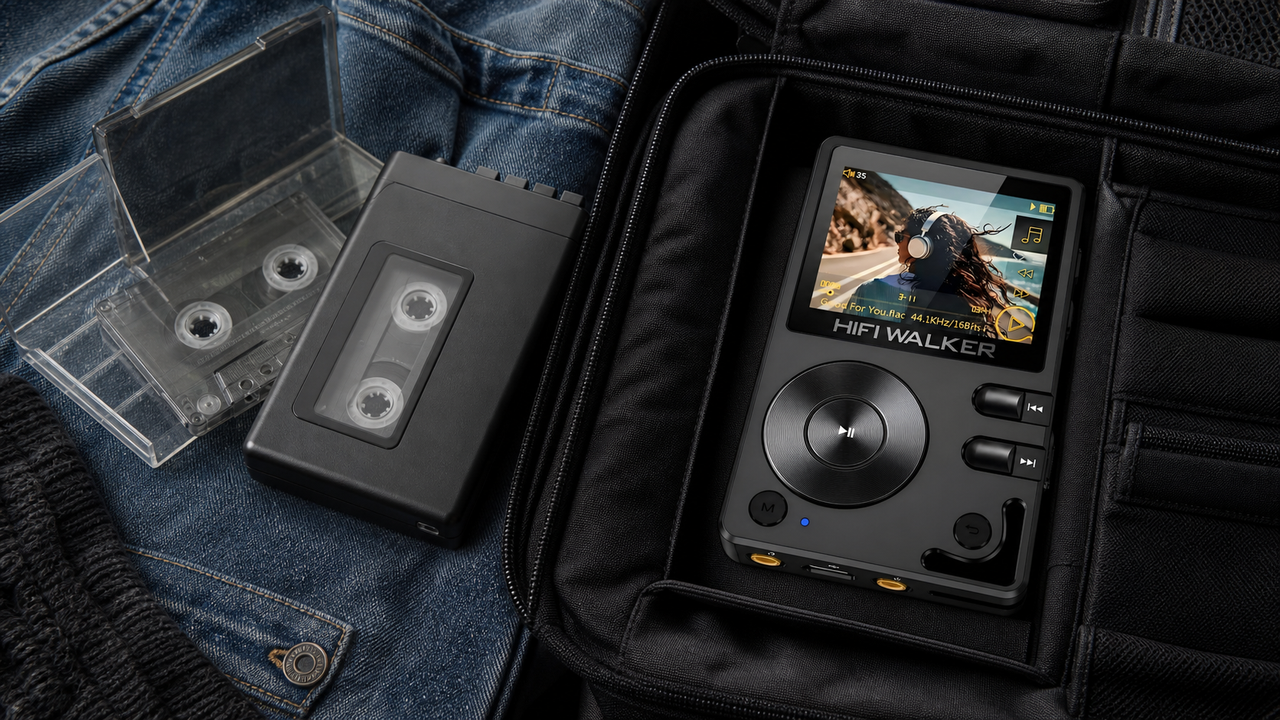
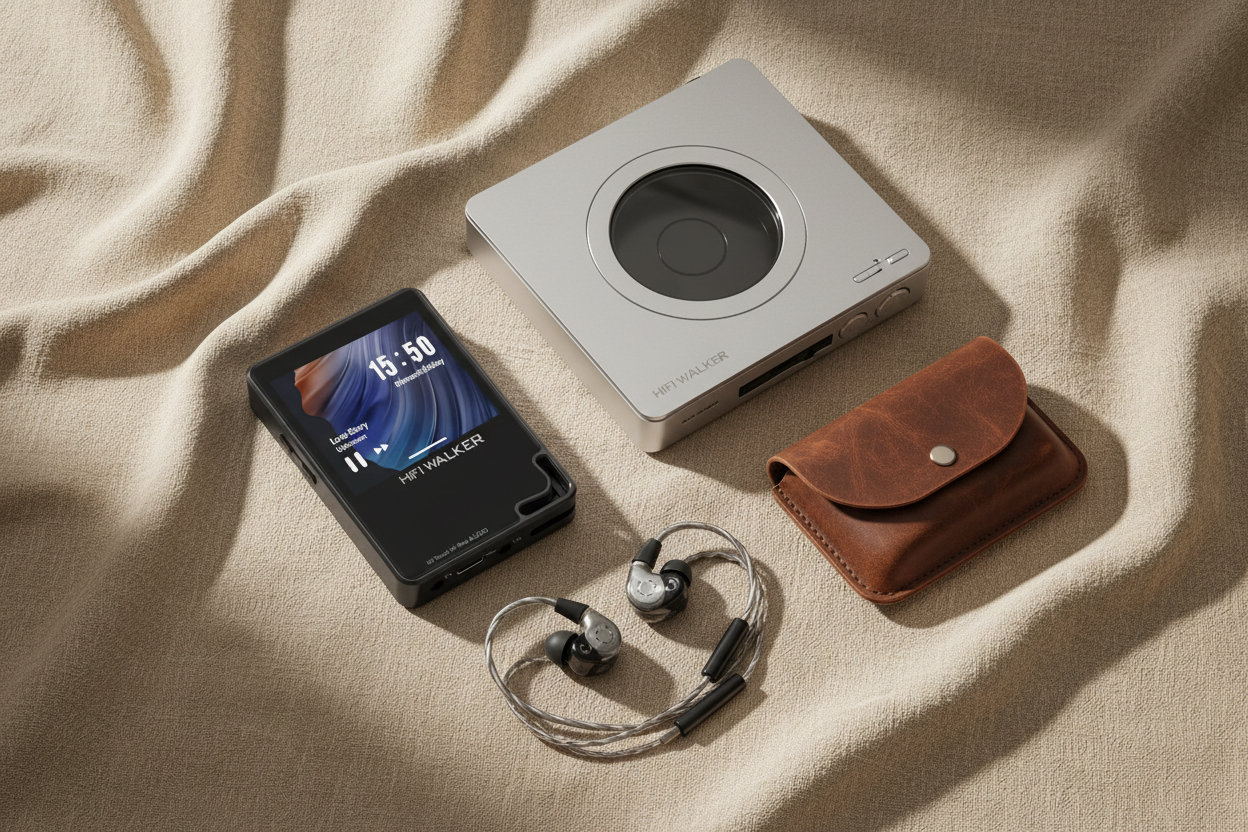
If you're drawn to radios with CD player mainly for their offline, subscription-free nature and audio quality, a dedicated hi-res audio player gives you all of that—and more. Here are two HIFI WALKER options that genuinely compete on every axis that matters.

For listeners who want serious hi-res playback without the flagship price tag, the H2 series delivers remarkable bang-for-buck. It handles every major lossless format and pairs beautifully with quality IEMs—no subscription, no algorithm, no compromise.

↑ Back to Top
Back to Top ↑Convenience and Lifestyle: Where Each Format Really Lives
Sound quality alone doesn't decide a purchase. Let's be honest about what each option actually looks like in day-to-day use for different listener types.
CD Player Radio — Best For
- Kitchen or bedroom background listening on a fixed unit
- Older listeners with large existing CD collections
- Anyone who wants AM/FM news radio alongside music
- Listeners who prefer a no-setup, plug-in-and-play device
- Gift purchases for non-tech-savvy family members
Hi-Res DAP — Best For
- Headphone listeners who demand accurate, transparent audio
- Commuters and travelers wanting pocket-sized performance
- Audiophiles tired of paying streaming subscriptions monthly
- Anyone building a digital library of FLAC or DSD files
- Users who want both offline files AND streaming apps in one device
The lifestyle gap is real. A CD radio is a room device. A hi-res DAP is a personal device. If your listening is anchored to one spot, a CD radio has genuine appeal. But if you move around—or if you care deeply about what your music actually sounds like in headphones—there's no competition.

Cost Breakdown: What You Actually Spend Over Three Years
Budget comparisons for audio gear are often misleading because they ignore the total cost of ownership. Let's run the real numbers across three years for each setup.
Over three years, streaming costs significantly more than owning a dedicated player and buying select hi-res downloads. Pair that financial reality with superior audio quality, and the value proposition for a dedicated DAP becomes hard to argue against. Explore the full HIFI WALKER player collection to find the right fit for your budget.
Our Verdict: Which Should You Actually Buy?
Here's the straight answer: if you're specifically searching for radios with CD player because you want a simple, no-fuss unit for a room, go for it—a quality all-in-one CD radio serves that need well. But if audio fidelity, portability, and long-term value are priorities, a hi-res digital audio player from HIFI WALKER is objectively the better investment.
The H20Ultra Hi-Res Audio Player sits at the top of the range for listeners who want everything: lossless offline playback, Android streaming apps, balanced output, and a battery that outlasts any CD radio. For a more accessible entry point, the H2 Touch Hi-Res Audio Player delivers genuine hi-res performance at a price that undercuts many mid-range CD combos.
For deeper comparisons and buying guides, check out our DAP Reviews & Comparisons blog where we regularly test and rank the latest portable audio gear. Your ears deserve better than a budget disc mechanism—and in 2025, getting better has never been more affordable.
Frequently Asked Questions
Q1: Are radios with CD player still worth buying in 2025?
For casual, room-based listening where you have an existing CD collection, yes—they offer offline playback and AM/FM radio without subscriptions. However, for serious audio quality or portable use, a dedicated hi-res DAP outperforms them significantly at comparable price points.
Q2: Can a hi-res audio player replace a CD player radio?
In most ways, yes. A hi-res DAP plays your ripped CD collection in lossless FLAC format, supports higher-resolution files a CD can't hold, and fits in your pocket. The only thing it doesn't replace is the AM/FM tuner functionality or the tactile ritual of loading a disc.
Q3: Does CD audio actually sound better than streaming?
CD audio (16-bit/44.1kHz) is technically lossless and sounds excellent. Modern hi-res streaming services like Tidal HiFi Plus and Apple Music Lossless can match or exceed CD quality—but only if you're playing back through hardware with a quality DAC. Streaming through a smartphone's built-in DAC often sounds worse than a good CD player.
Q4: What's the best HIFI WALKER player for someone switching from CD?
The H2 Touch Hi-Res Audio Player is a natural transition device—it has a simple touchscreen interface, supports all major lossless formats, and is priced competitively. If you want streaming apps alongside your local library, the H20Ultra Hi-Res Audio Player is the flagship choice with Android built in.
Q5: How do I transfer my CD collection to a hi-res audio player?
Use a free application like Exact Audio Copy (Windows) or XLD (Mac) to rip your CDs to FLAC format at 16-bit/44.1kHz. Copy the files to a MicroSD card and insert it into your HIFI WALKER player. The process takes 5–15 minutes per album and the result is a bit-perfect copy of your disc, playable anywhere without the disc.